

American Revolutionary War Released!

The day you have been waiting for! After many, many long hours of work, we are pleased to bring you our latest offering in the Musket & Pike series of games - American Revolutionary War. This title is available in our store now!
Note: This is only available directly from WDS at this point. We are very early in our Steam endeavor, and so we do not have it set up there yet. The plan is for it to be up for wishlisting in early May, with a July 4th release for sale date on that platform. Purchasers who buy directly will be issued a Steam key by the time it goes live there.
This title is jam-packed with content. "American Revolutionary War" is hands-down the most complete treatment of the conflict in a single product on the market today. From tiny skirmishes to the largest battles, and all points in between, this title is sure to please those with an interest in the period. So, let's dive in and see some specifics.

The American Revolution arose from growing disagreements over power and political principles within the British Empire, not a single event. After the Seven Years’ War, Britain, victorious but in debt, expected the colonies to aid in defense and administration and reassert Parliamentary sovereignty. Colonists, however, viewed this as an unjust claim to tax and govern without consent. Acts like the Stamp Act and Townshend duties highlighted threats to colonial liberties, while the Proclamation Line of 1763 and settlement restrictions fueled frustration. What started as a constitutional dispute evolved into a crisis of trust, ultimately leading to revolution.
The early phase of what would become the American Revolutionary War was marked by rising tensions, uncertainty, and failed compromises. British leaders believed firm measures would restore order, despite shifting policies. Many colonists hoped resistance would bring change, not separation, but each clash widened the divide. Events like the Boston Massacre, the Tea Act, and the Coercive Acts hardened opinions. Colonists organized through meetings, committees, and militias. Fighting at Lexington and Concord in April 1775 turned the crisis into open war. The siege of Boston followed, and Bunker Hill showed that British success came at a high cost. By 1776, the American Revolution was a struggle for independence, with the Declaration of Independence clarifying its purpose.
The American Revolutionary War then unfolded across three main theaters, each with its own character. In the north, from New England through the Hudson corridor to Canada, the focus was on major cities, waterways, and the effort to divide the colonies. Boston, New York, and Philadelphia were key objectives. Washington's army suffered major losses near New York and retreated across New Jersey, but regained confidence with the winter blows at Trenton and Princeton. In 1777, the British surrender at Saratoga became a decisive turning point. It proved that the American cause could endure and helped persuade France to support the rebellion, even though the British also captured Philadelphia that same year.
A second theater emerged in the west and along the frontier, where the war was rougher and less formal. Fighting centered on forts, raids, river routes, and shifting alliances rather than large cities or set-piece battles. Native nations fought to defend their own interests as the balance of power in the interior was threatened. British troops and loyalists often found support there, while American leaders tried to secure the backcountry and defend claims beyond the Appalachians. These western campaigns never had the fame of the eastern ones, but they were important to the wider contest for the continent.
The South became the third main theater of the American Revolutionary War, and after 1778, the conflict there entered a new stage. British leaders believed Georgia and the Carolinas contained enough loyalist support to restore royal authority from the south northward. At first, this seemed to work. Savannah and Charleston fell, and British forces pushed inland. But the southern campaign became a grinding struggle rather than a quick victory. Battles at Camden, Cowpens, Guilford Courthouse, and Eutaw Springs showed how difficult it was for Britain to hold territory in a hostile countryside. Nathanael Greene's campaign did not destroy the British army in one stroke, but it wore it down and forced it into an increasingly difficult position.
Foreign involvement was crucial to the outcome. Britain brought in German auxiliaries, especially Hessians, to reinforce its armies. These troops had military value, but their presence also convinced many Americans that Britain intended to subdue them by force. On the American side, French support proved decisive. After Saratoga, France openly allied with the United States in 1778. French money, supplies, troops, and especially naval power transformed the war. What had begun as a colonial rebellion became part of a wider international struggle. Spain and the Dutch Republic also entered the conflict against Britain, though Spain was not a formal American ally in the same way that France was.
The American Revolutionary War ended not with a sudden collapse, but because Britain was worn down militarily and politically. In 1781, the Yorktown campaign brought together American determination and French support for a decisive victory. Washington and Rochambeau marched south while the French fleet blocked British relief by sea. Cornwallis was trapped, besieged, and forced to surrender. Although some fighting continued, Yorktown ended any serious chance of restoring British rule by force. The Treaty of Paris in 1783 recognized American independence.
Yet the American Revolution was larger than the war itself. The fighting ended in 1783, but the broader revolutionary process continued as Americans worked out what independence would mean in practice. The break with Britain created a new country, but it did not automatically settle how that country should govern itself, how power should be distributed, or what kind of republic would replace imperial rule. In that sense, the American Revolution was not only a war for independence, but also the beginning of a larger political experiment that reshaped North America.
(All images can be clicked for full-sized viewing.)
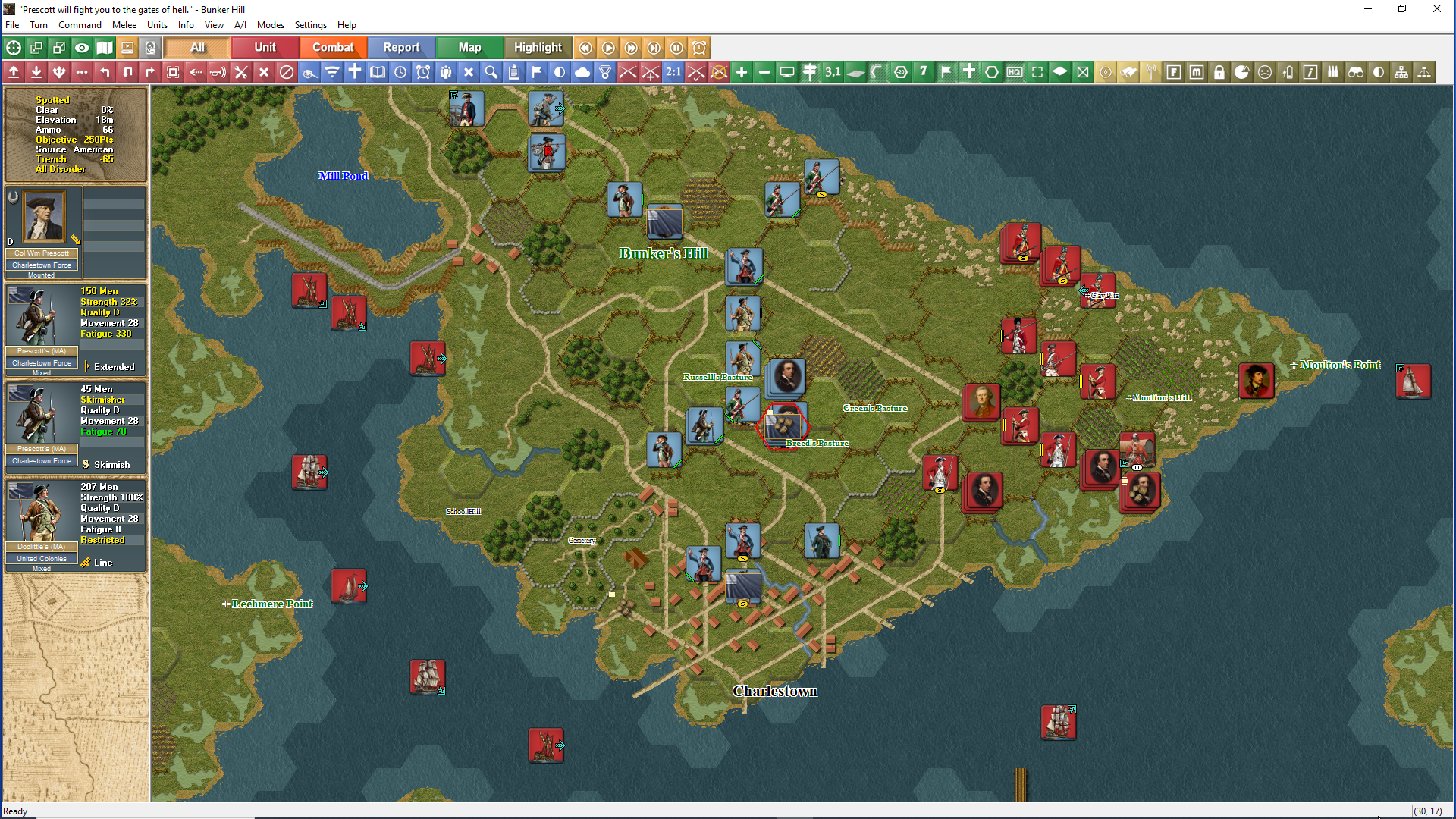
American Revolutionary War includes 148 Scenarios – covering all sizes and situations, including three tutorial scenarios plus specialized versions for both head-to-head play and vs. the computer AI. An additional 37 scenarios are available in the Campaign module.
A sampling of the battles covered is:
Concord
Lexington
Bunker Hill
Ninety Six
Quebec
Long Island
Harlem Heights
White Plains
Trenton
Princeton
Bennington
Brandywine
Germantown
Freemans Farm & Bemis Heights
Monmouth
Savannah
Ramseurs Mill
Camden
Kings Mountain
Cowpens
Hobkirks Hill
And much, much more!
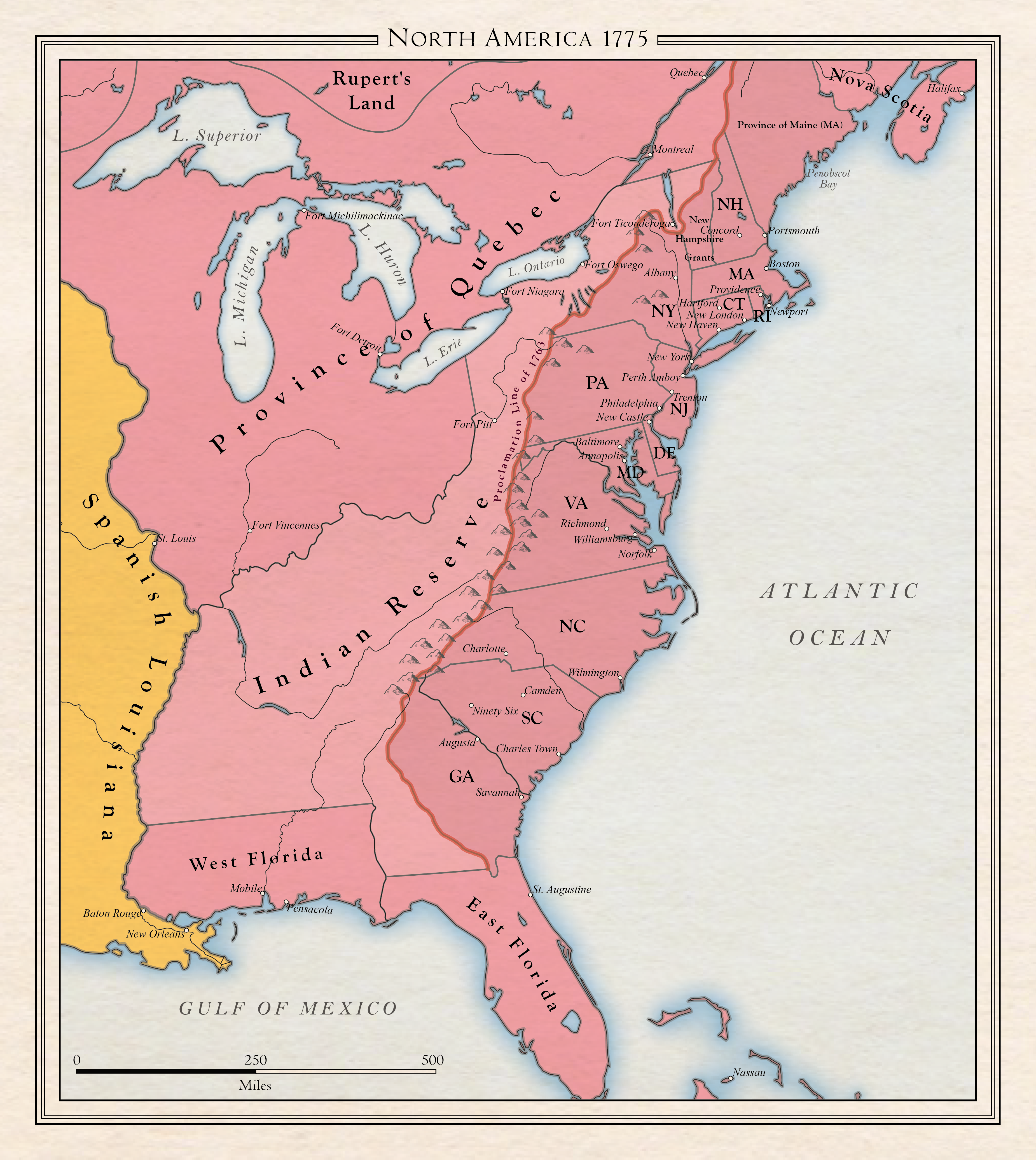
If you would like to take a deep dive into what's included in this title you can check out the 144-page Design Notes. It includes a historical overview, design thoughts and philosophy, details on the various graphical elements within the game and a complete Operations section with full details on every scenario included. Check it out here.
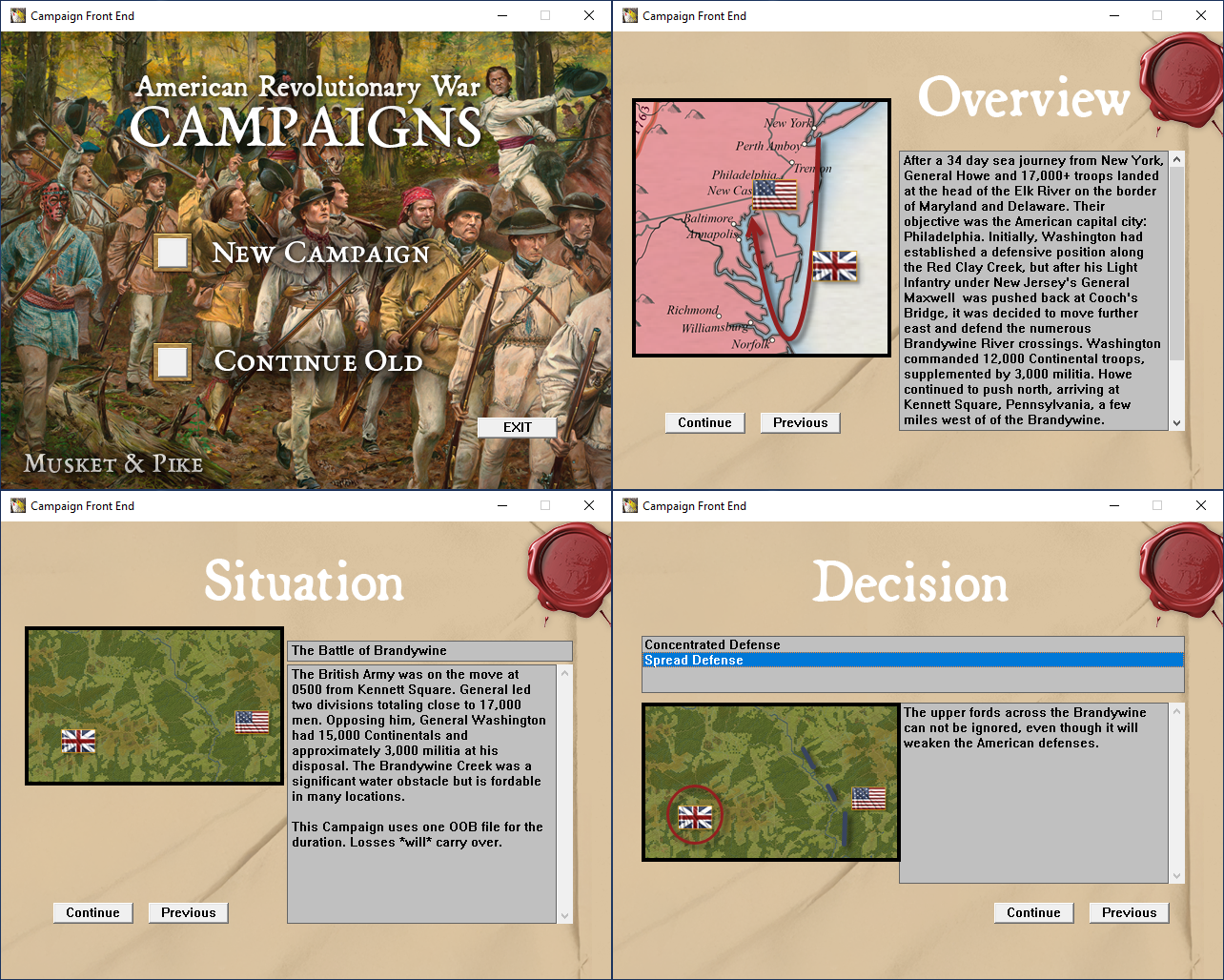
There are four campaigns included with this title, all of which allow for losses carrying over between battles where applicable. They are in sets of two, with Brandywine being a standalone campaign that gives the players various choices for deployment. Then we have the Philadelphia Campaign of 1777, which includes Brandywine and other battles. Then there's a Saratoga "Lite" campaign, which takes you through the battles that unfolded at Freeman's Farm and Bemis Heights, and finally, there's the Saratoga Campaign of 1777, which offers players more choices than the Lite version.
As mentioned in our preview post, the Unit art featured in this game was done by Don Troiani, and is part of his "Soldier Study" series, which can be found on his website - https://dontroiani.com/



Now we'd like to share some resources with you so you can get some companion reading in. Mike has included a Massive Bibliography as part of the Design Notes, but here are a few items to get you going.
First off, a few websites of interest:
Journal of the American Revolution - https://allthingsliberty.com/
On-Line Institute for Advanced Loyalist Studies - https://www.royalprovincial.com/
American Revolutionary War - https://revolutionarywar.us/
American Battlefield Trust - https://www.battlefields.org/learn/revolutionary-war
Open Yale Courses, "American Revolution" by Prof. Joanne Freeman - https://oyc.yale.edu/history/hist-116
And then a selection of books to choose from:
For Tactics:


For Overviews: The first two are part of a planned trilogy, with the third still unpublished.


And then a few battle / campaign specific titles:


Now for some video content. Epic History has five videos out on the topic thus far.
And Kings & Generals has a 4-hour video on the topic:
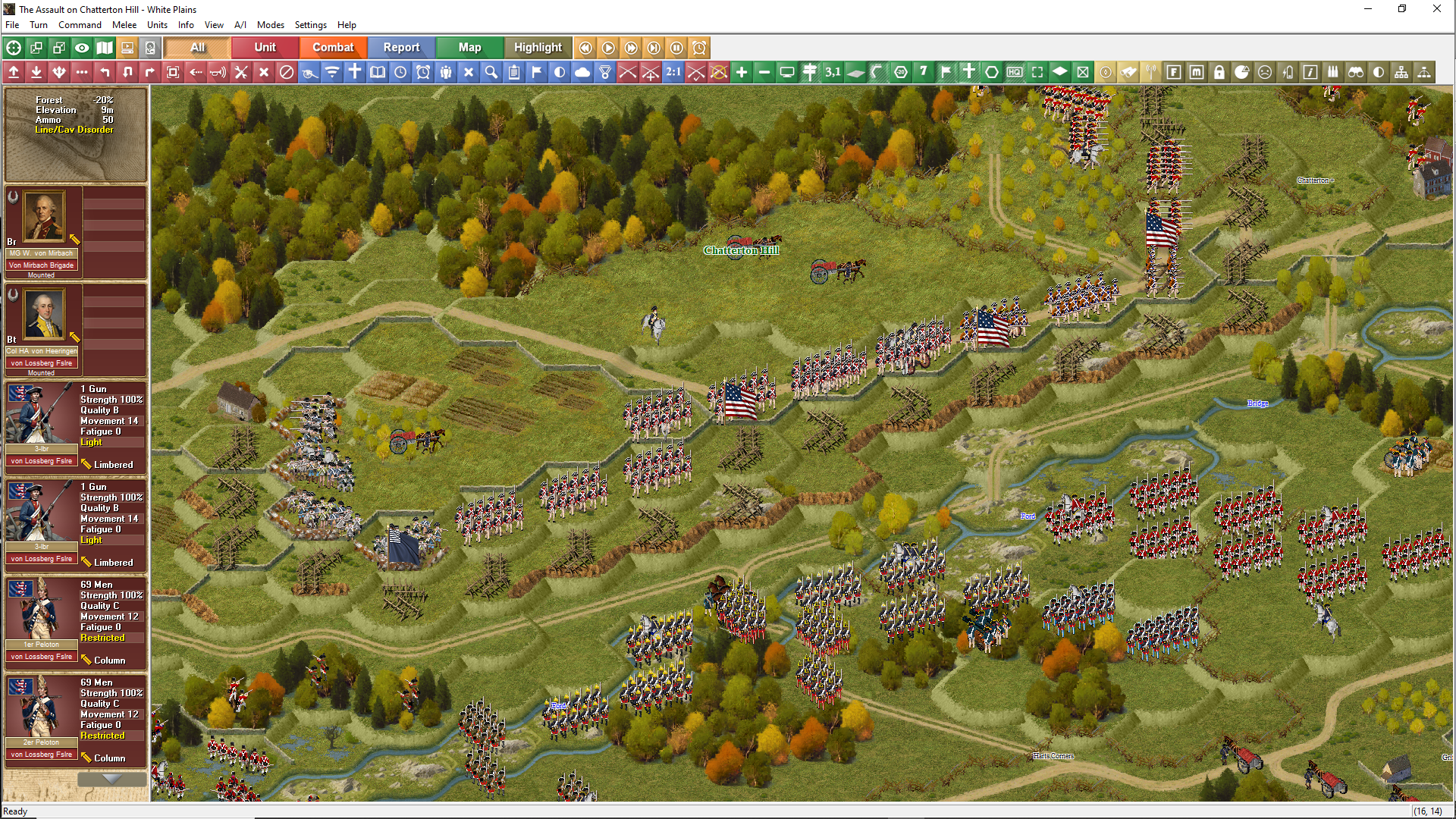
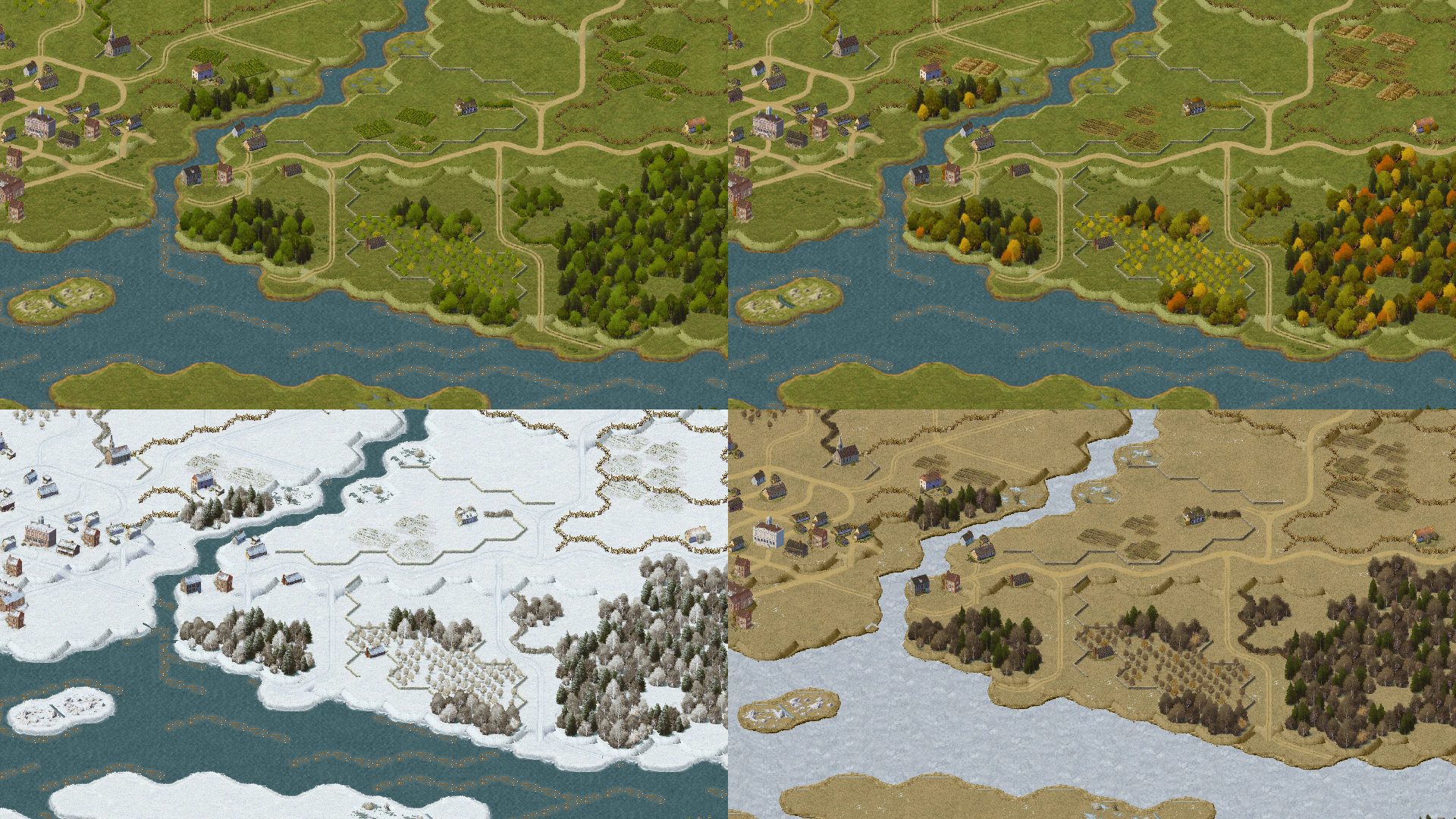
We'll conclude today's announcement with a series of screenshots from the game. Three 2D views and two 3D views are included, with three different symbol sets to choose from for 2D play and four different "Season" terrain sets to give the appropriate look to each battlefield for the time of year in which it was fought.
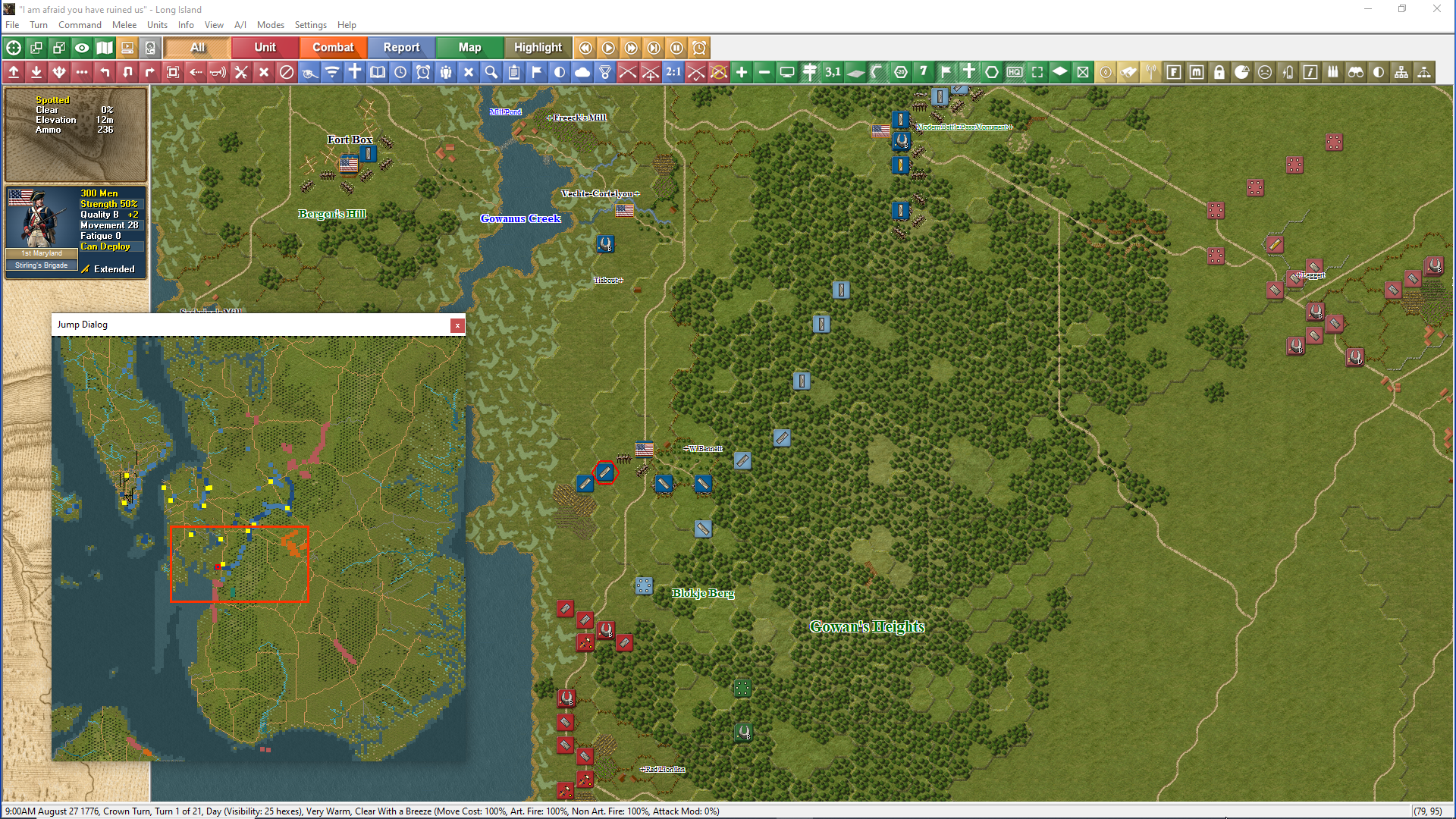
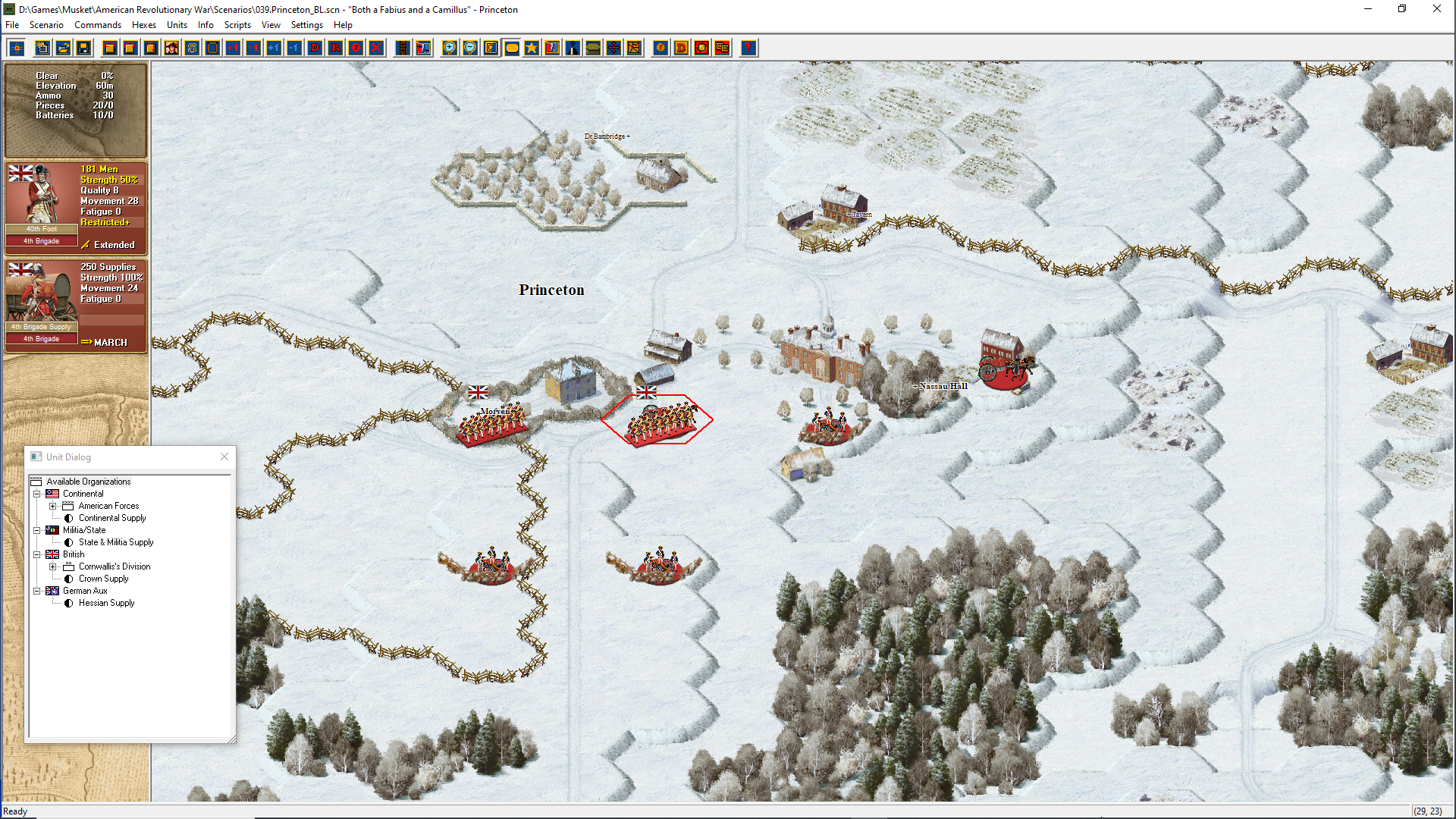
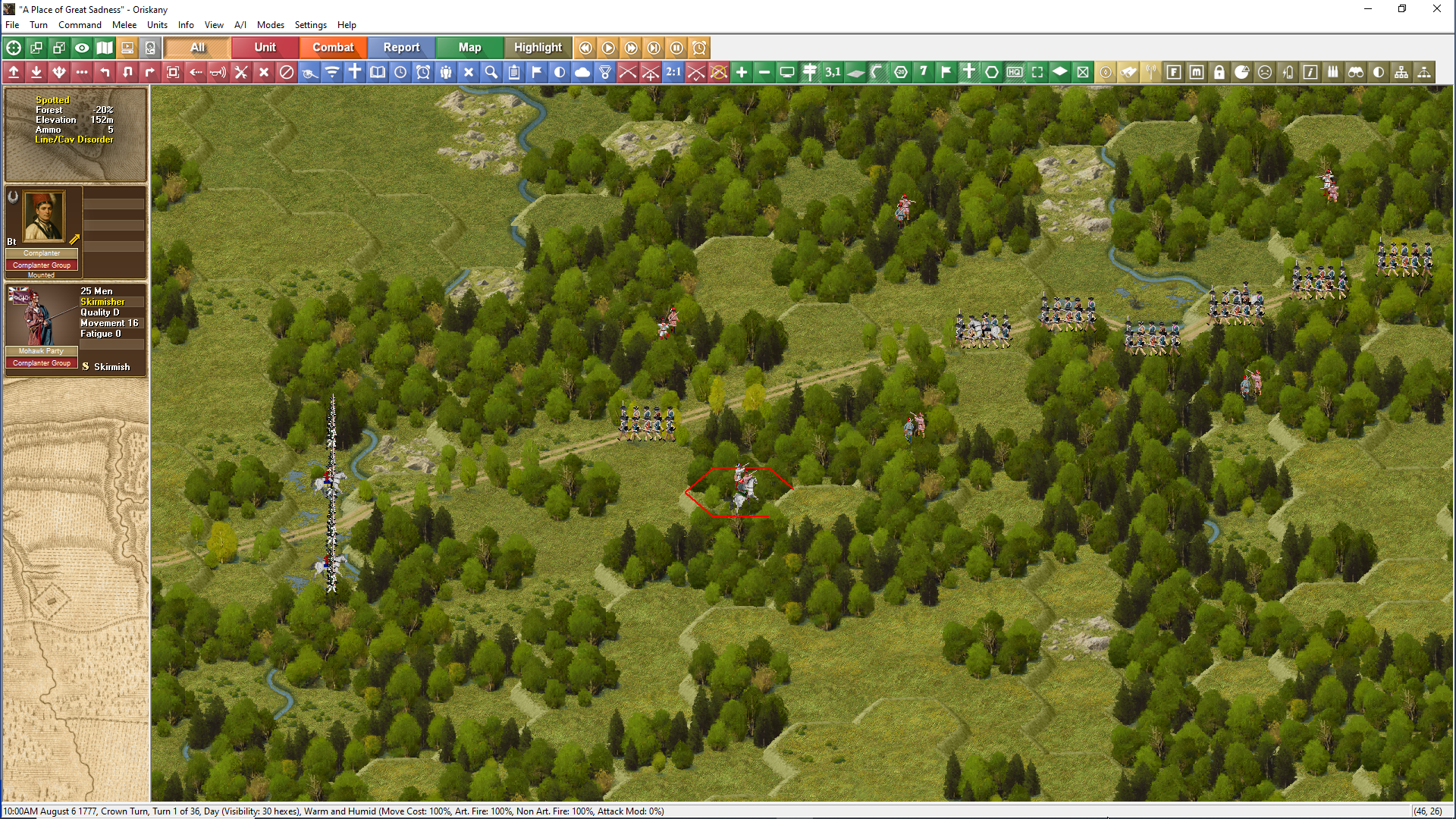
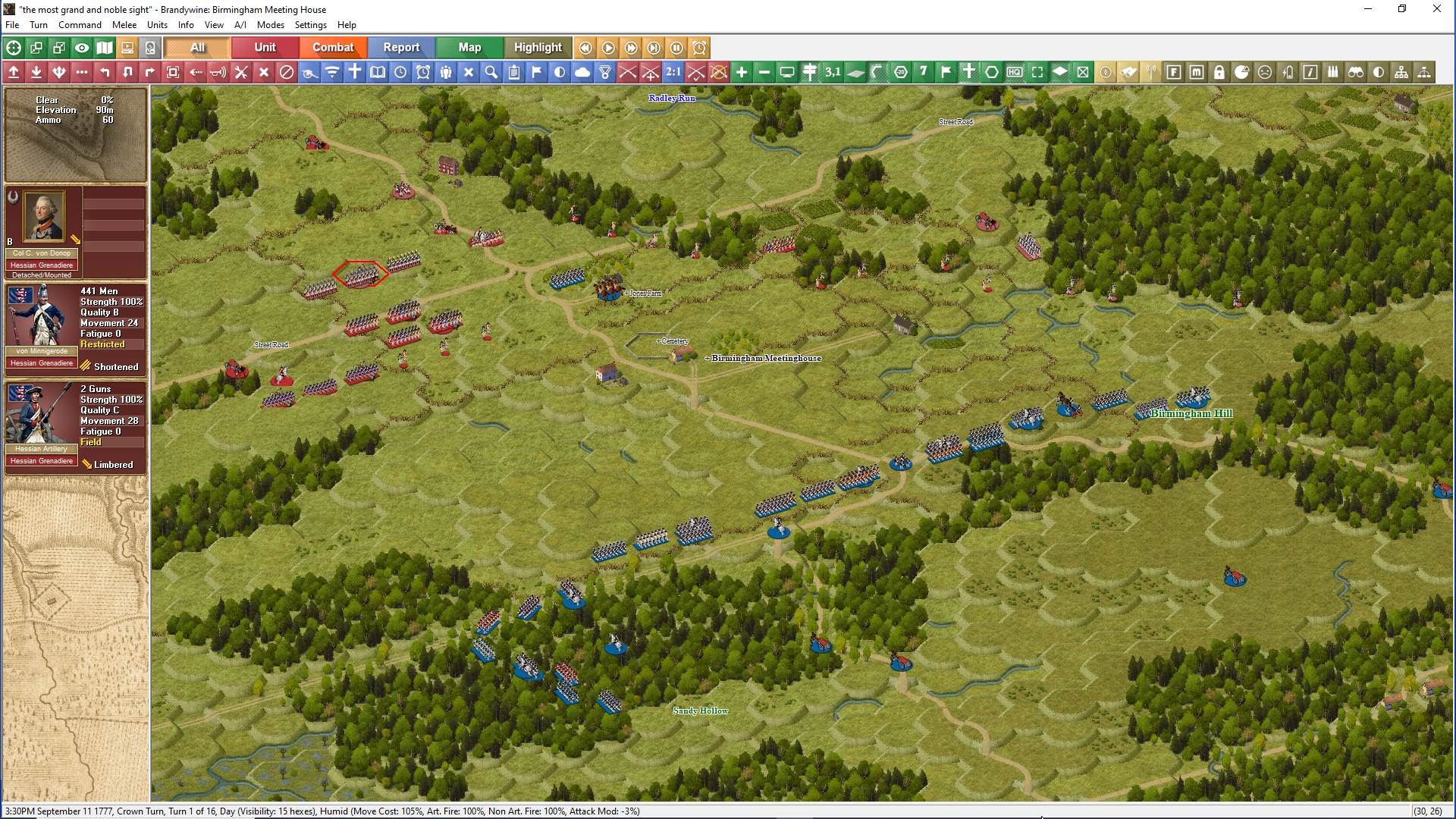
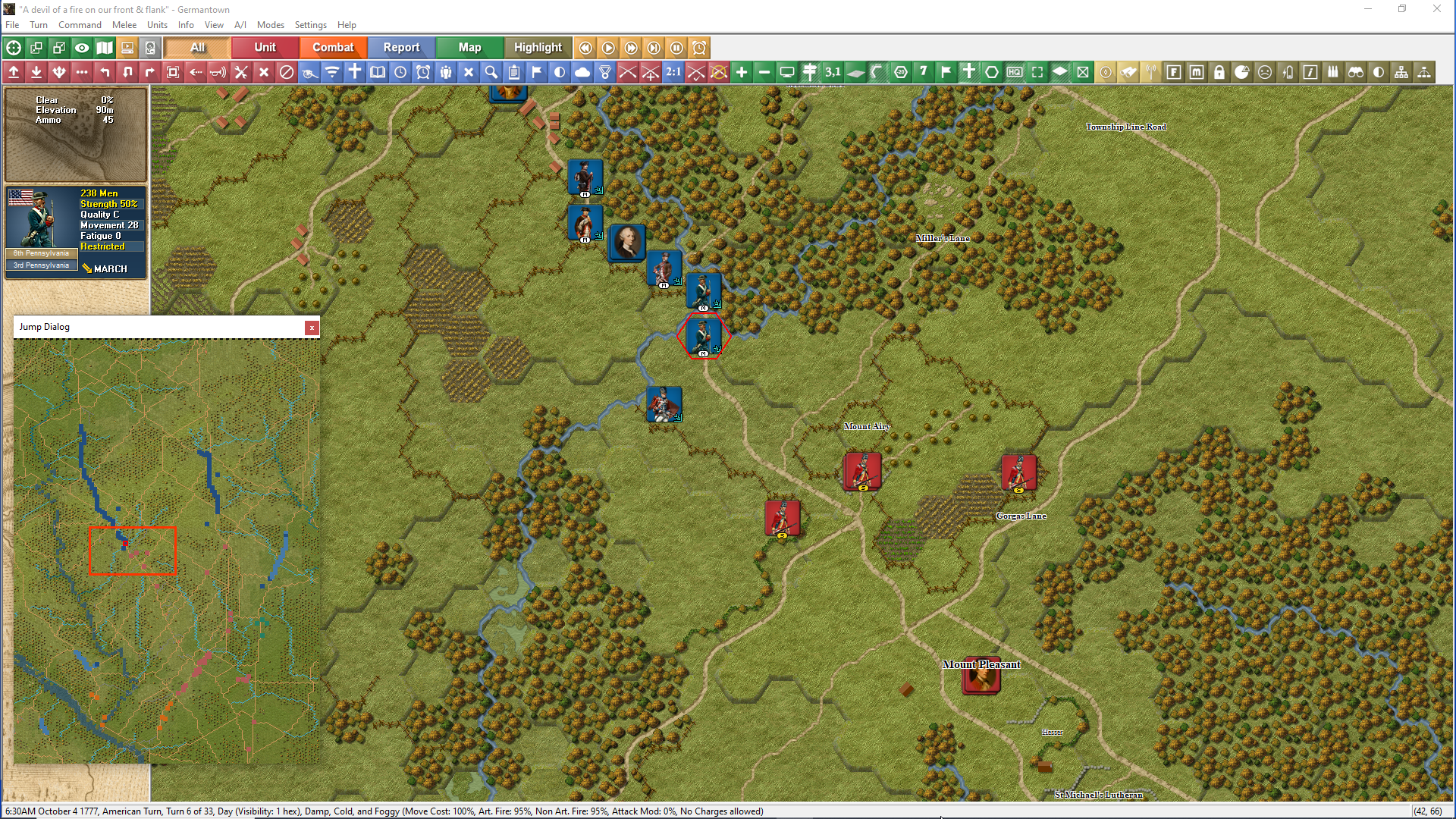
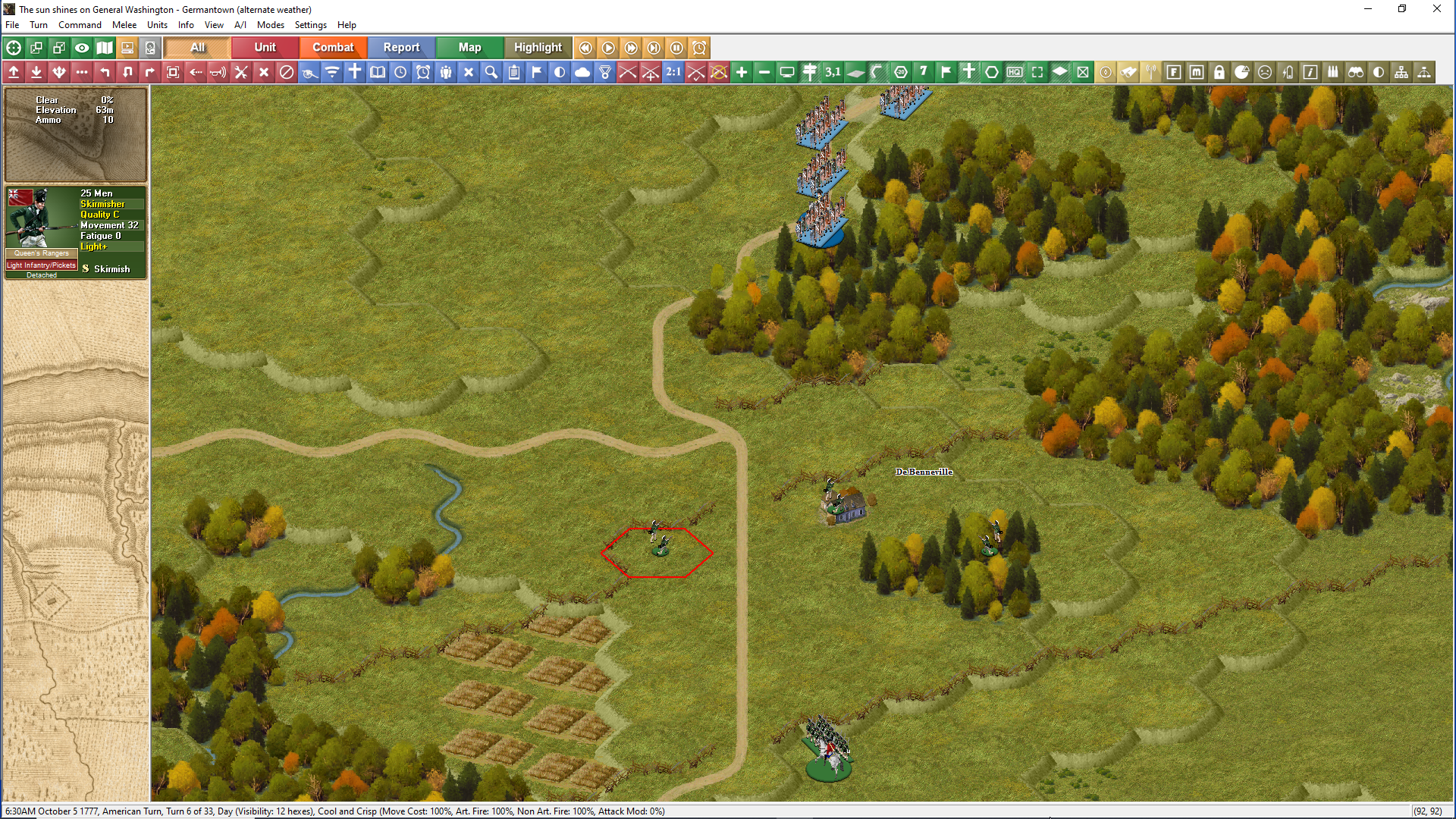
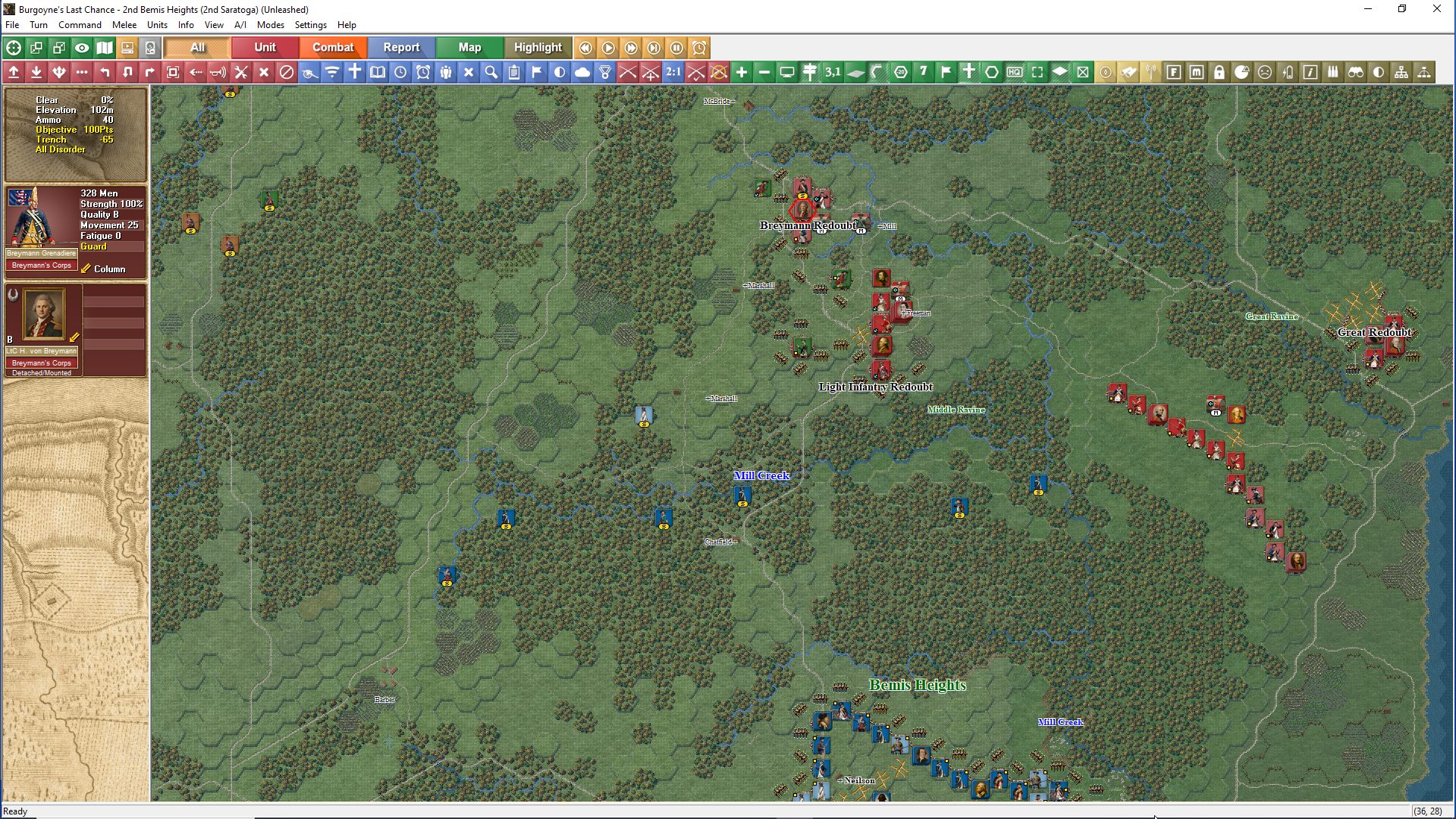
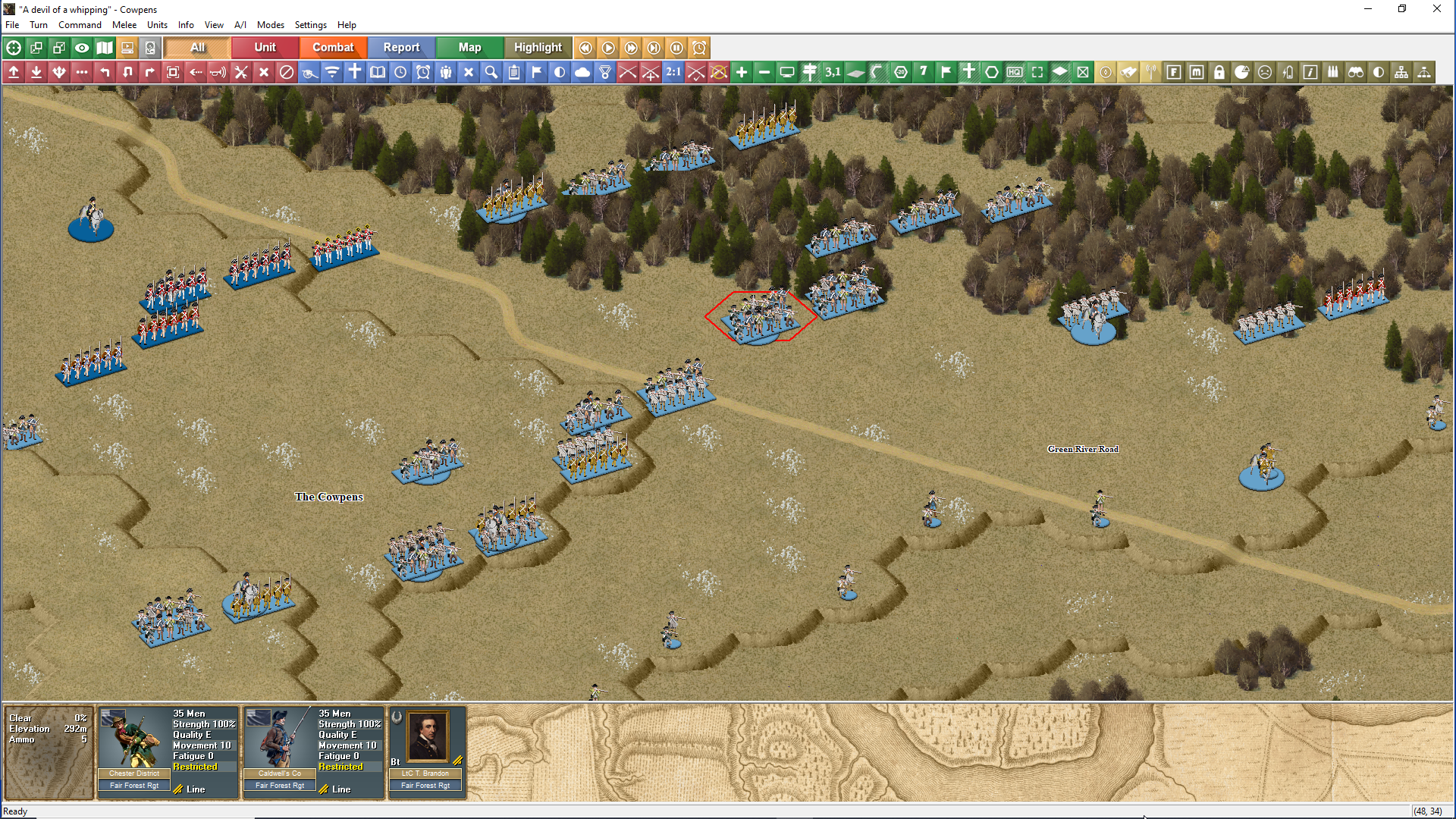
An immense amount of content is waiting for you... So what are you waiting for?? Head on over to the American Revolutionary War product page and pick up a copy for yourself! Enjoy!


Great work again. Any plans for Roman campaigns or battles?
WOW! Beautiful beyond expectations and imagine my delight to find a Cooch’s Bridge scenario after growing up around that battlefield. EXCELLENT!
Congrats on a fantastic new release! Great graphics and game play. One suggestion on the Oriskany scenario: Add three 20-man Indian Department Rangers units to the Crown’s ambushing force. They were present to attempt to bolster the Iroquois morale. For reference, see my book Liberty March: The Battle of Oriskany pages 148 – 149 or my film documentary and board game of the same name. Cheers and best wishes for further success.
Thank you so much!
Wow. I do not have words! Looks like everything I would want in this title. (Oh, and I do hope that – eventually – the Napoleonic and Civil War titles will be similarly enhanced. You folks are amazing, innovative, and responsive. Can’t say more than that!
Leave a comment