Game of the Week, April 6-12
From April 6 through April 12, this week's Game of the Week is Squad Battles: Eagles Strike, available at 25% off. Focussing on the American campaign in northwest Europe from Normandy to the final battles in Germany, it places players in the kind of close, tactical fighting that defined the campaign: assaults on fortified positions, bitter village battles, defensive stands, and the constant struggle to seize and hold key ground under pressure.
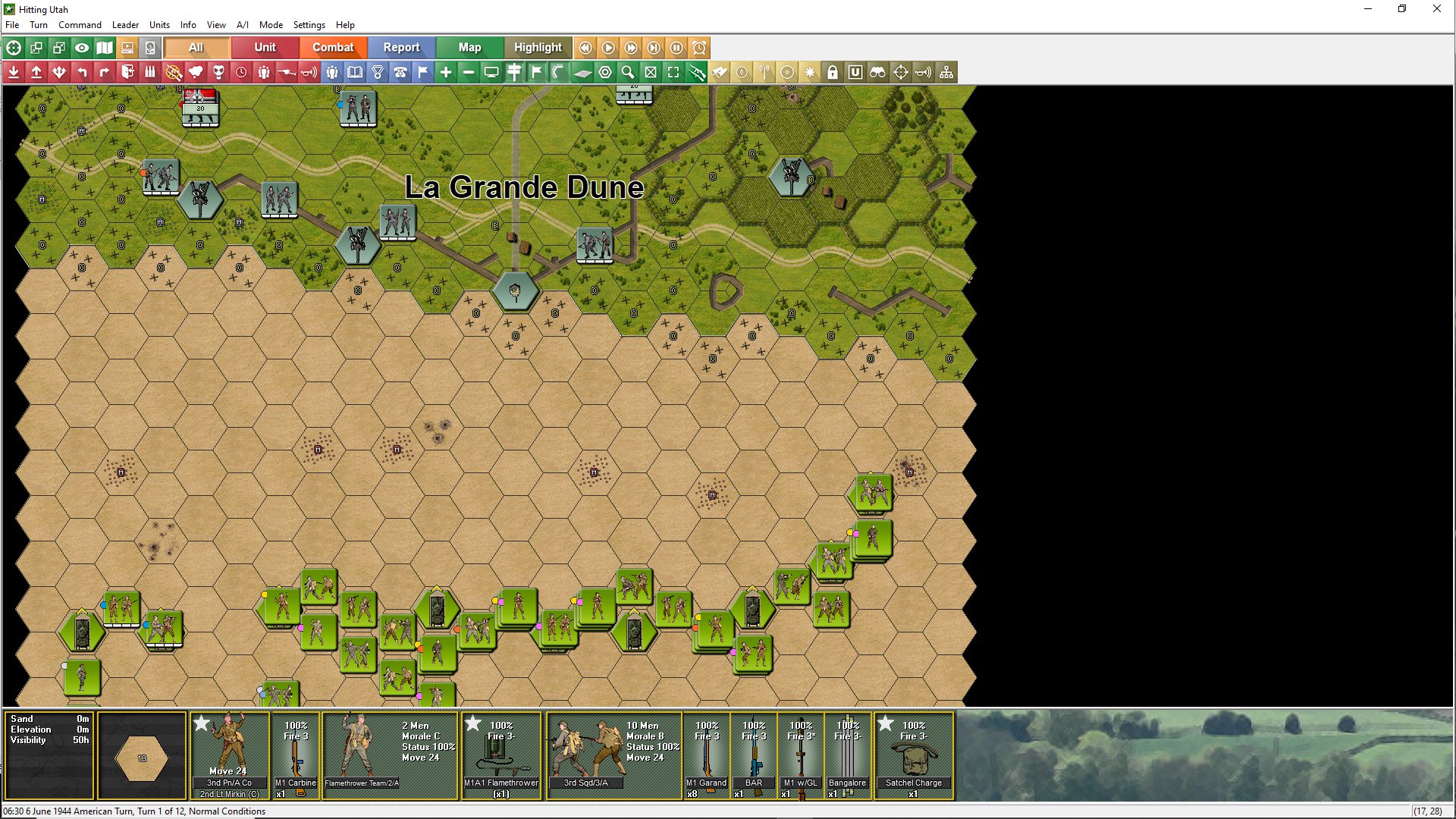
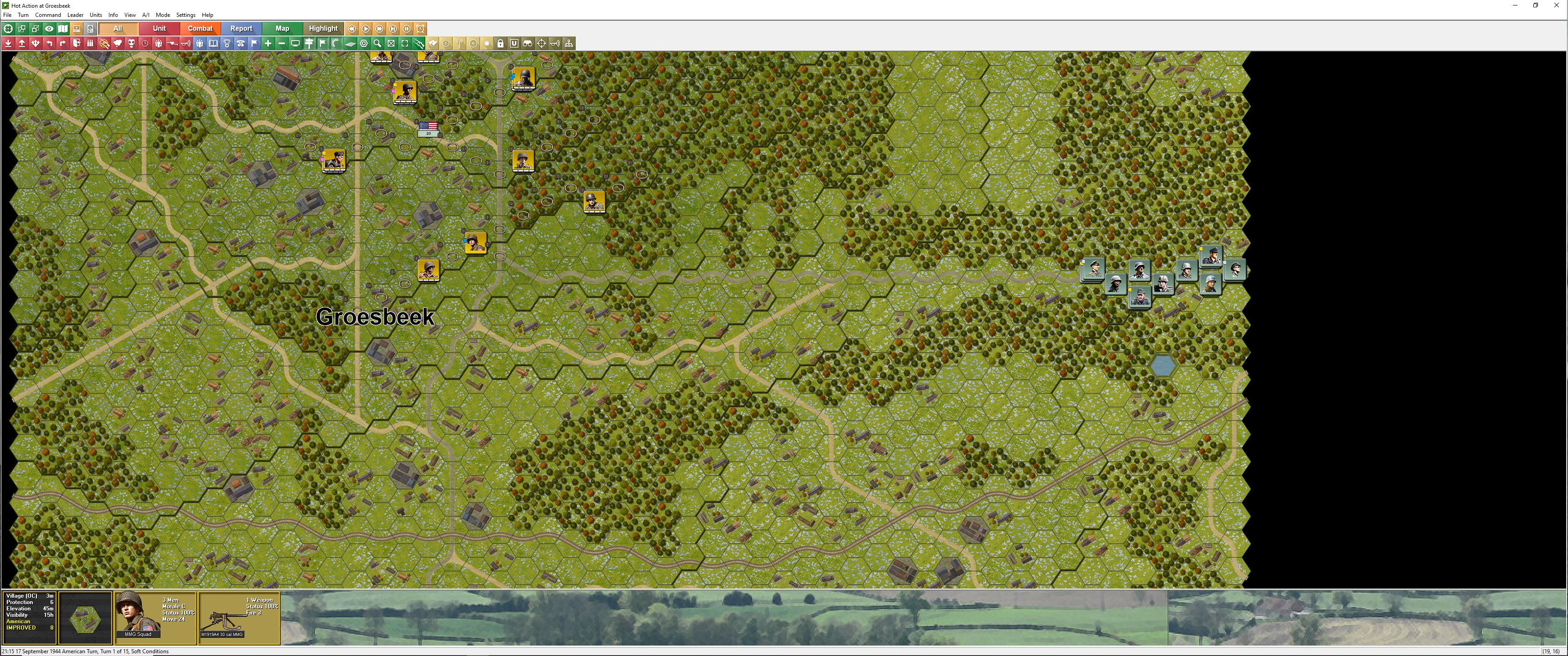
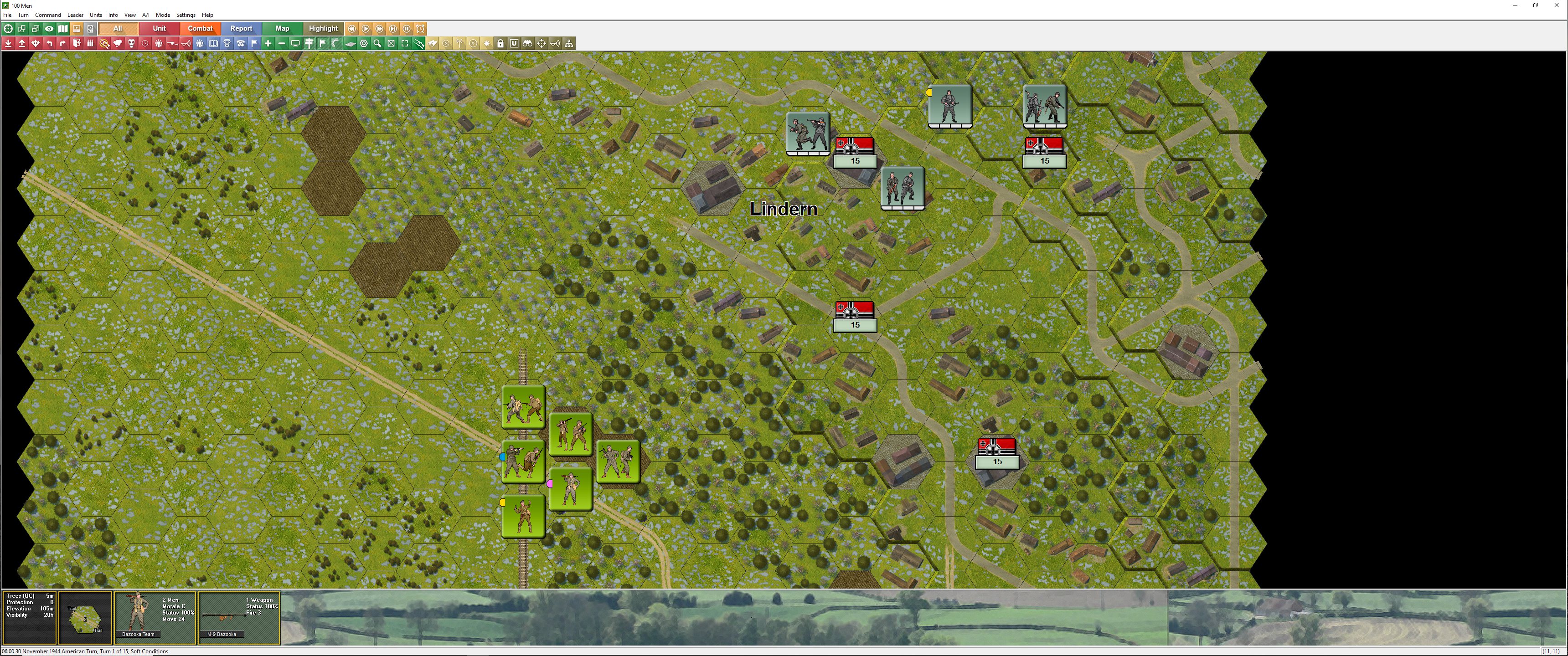
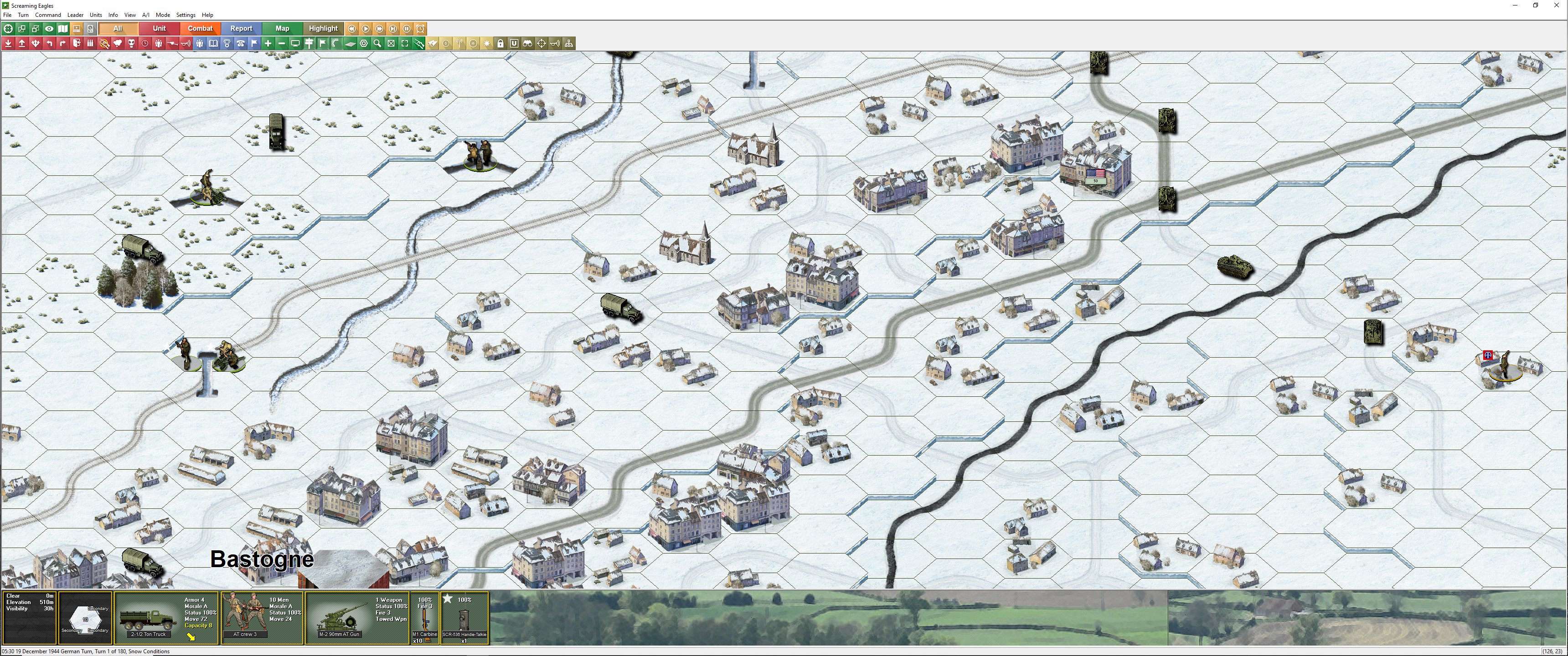
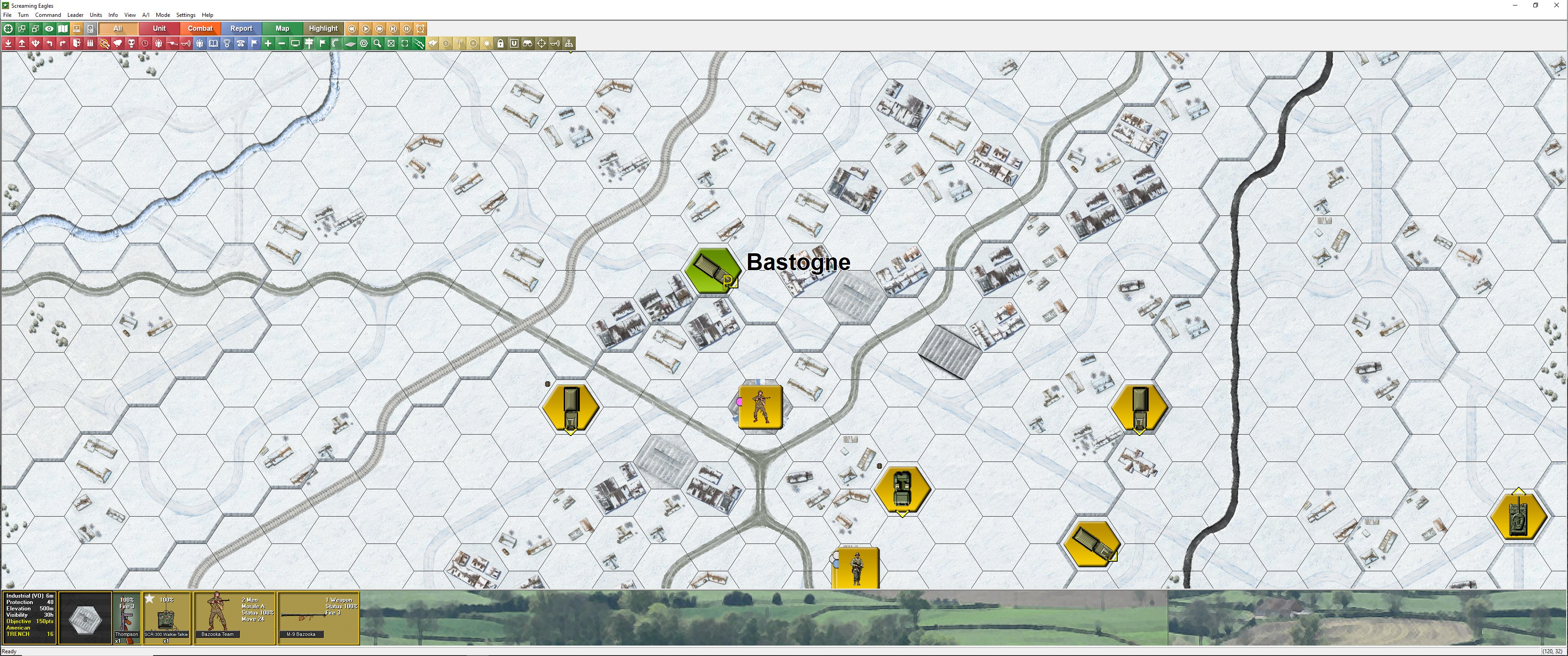
Eagles Strike has also just been updated to the latest version, bringing it into line with WDS's newest Squad Battles standard and adding major graphical improvements alongside the broader gameplay and interface enhancements. These visual upgrades include extensively reworked 2D and 3D effects, expanded terrain and urban graphics, and a generally sharper battlefield presentation.

From Overlord to the Berghof
In the summer of 1944, the United States, Great Britain, Canada, and their allies launched the decisive campaign in northwest Europe, one that would carry them from the Normandy beaches to the final battles in Germany. Operation Overlord began on 6 June 1944 with the landings in Normandy, where American troops fought ashore on Utah and Omaha while British and Canadian forces assaulted their own sectors farther east. Airborne troops landed inland on both flanks of the invasion, seizing bridges, road junctions, and key terrain in support of the seaborne attack. Yet the larger battle depended on the combined efforts of infantry, engineers, tanks, artillery, naval gunfire, and air power across the entire Allied front. From the outset, even this vast operation fragmented into small, violent struggles over causeways, hedgerows, farmhouses, strongpoints, and village streets, where local initiative under extreme pressure mattered as much as careful planning.
„Glauben Sie mir, Lang, die ersten vierundzwanzig Stunden der Invasion sind die entscheidenden. Für die Alliierten wie für Deutschland wird es der längste Tag sein.“
“Believe me, Lang, the first twenty-four hours of the invasion will be decisive. It will be the longest day for both the Allies and Germany.”
— Generalfeldmarschall Erwin Rommel to his aide Hauptmann Hellmuth Lang, early 1944
Once the bridgehead had been secured, the Allies faced the grim battle for Normandy. For the Americans, the bocage became the defining battlefield: thick hedgerows, sunken lanes, orchards, and enclosed fields reduced visibility, slowed movement, and made coordinated attacks difficult. German infantry and armored units used the terrain skillfully, forcing American troops into a brutal series of local actions in which every field and road junction seemed to have to be won separately. At the same time, British and Canadian forces were locked in their own hard fighting around Caen and beyond, tying down major German formations and helping shape the wider campaign. Tanks could not always move freely, artillery could suppress but not always destroy, and infantry often had to close with the enemy at very short range. This was a type of combat in which junior leadership mattered enormously. A squad pinned in a lane, a platoon trying to outflank a strongpoint, or a tank edging through a narrow gap could determine the pace of an entire local advance.

Members of the French Resistance and the US 82nd Airborne Division during the Battle of Normandy in 1944. (US Signal Corps/ Public Domain)
The eventual breakout from Normandy changed the tempo but not the danger. German resistance began to crack, and American forces pushed rapidly across France, pursuing a retreating enemy and trying to turn retreat into collapse. Elsewhere, Allied armies advanced on parallel axes, keeping pressure on the Germans across a broad front. The fighting became more mobile, but every advance still depended on securing bridges, clearing towns, and overcoming sudden rearguard resistance. Roads, ridgelines, and rivers remained natural points of friction, and the Germans were still capable of sharp local blows, especially when armored formations were committed. By September, the campaign had carried into Belgium and the Netherlands, where canals, dikes, bridges, and flooded ground created a different kind of battlefield. Market Garden is the best-known operation of this phase, and airborne divisions played an important part in it, but the wider Allied experience in the Low Countries was broader than the airborne story alone, involving ground troops from several nations fighting to keep momentum in terrain where one blocked road or demolished bridge could disrupt an entire offensive.
“Nuts!”
— Anthony C. McAuliffe, Bastogne, 22 December 1944:
By December 1944, the war had taken another dramatic turn. In the Ardennes, the Germans launched their last major offensive in the west, throwing primarily American units into a winter battle of shock, confusion, and stubborn resistance. Snow, fog, poor roads, and freezing temperatures made everything harder. Visibility was limited, movement was slow, and formations were often committed piecemeal into a rapidly changing situation. German armored columns tried to break through by seizing road centers and splitting the Allied front, which meant that villages, roadblocks, and wooded ridges became fiercely contested. Bastogne became the most famous episode, but the larger battle was full of isolated defensive stands, emergency counterattacks, and bitter fighting in the forest, snow, and ice. As the crisis deepened, other Allied forces on the wider front also helped contain the offensive and restore the strategic balance.

Panzergrenadiers of SS Kampfgruppe Hansen during clashes in Poteau against Task Force Myers, 18 December 1944. (NARA 12010184 / Public Domain)
When the Ardennes offensive failed, the final phase of the campaign began. In early 1945, Allied armies resumed the advance into Germany itself, with American forces playing a central role in the drive west of the Rhine and beyond. Rivers and prepared positions now became the principal obstacles. The Roer, the Rhine, and the network of towns, woods, and defensive lines beyond them offered the Germans opportunities to delay any careless advance. Yet by this stage, the US Army had accumulated hard tactical experience and was operating as part of a coalition that had mastered large-scale combined warfare. Infantry, armor, artillery, engineers, and air support could be combined with increasing effectiveness, and German resistance, while still dangerous, was steadily being worn down by superior resources and relentless pressure. The fighting remained costly, but the direction of the campaign was no longer in doubt.
“I am a soldier. I fight where I am told, and I win where I fight!”
— George S. Patton Jr., address to Third Army headquarters, 19 December 1944
That is the world Eagles Strike draws on: the campaign in northwest Europe from Normandy to the final battles in Germany. Here are beach assaults under fire, bitter hedgerow fights, narrow Dutch roads hemmed in by water, and frozen crossroads threatened by German Panzers. Here are villages fought over house by house, bridges whose fate can shape an entire advance, and final assaults across cold rivers into a collapsing but still dangerous enemy homeland. It is exactly the kind of war that suits Squad Battles. In Eagles Strike, history is not experienced as arrows sweeping across a map, but as the struggle for one field, one street, one bridge, and one objective at a time.
What's in the Game
- Eagles Strike includes 120 Scenarios – covering all sizes and situations, including specialized versions for both head-to-head play and vs. the computer AI.
-
Included are a range of maps, with layouts for Utah and Omaha Beach to support user-created scenarios.
- The Order of Battles includes German, German SS, Luftwaffe, American, and American Airborne soldiers.
-
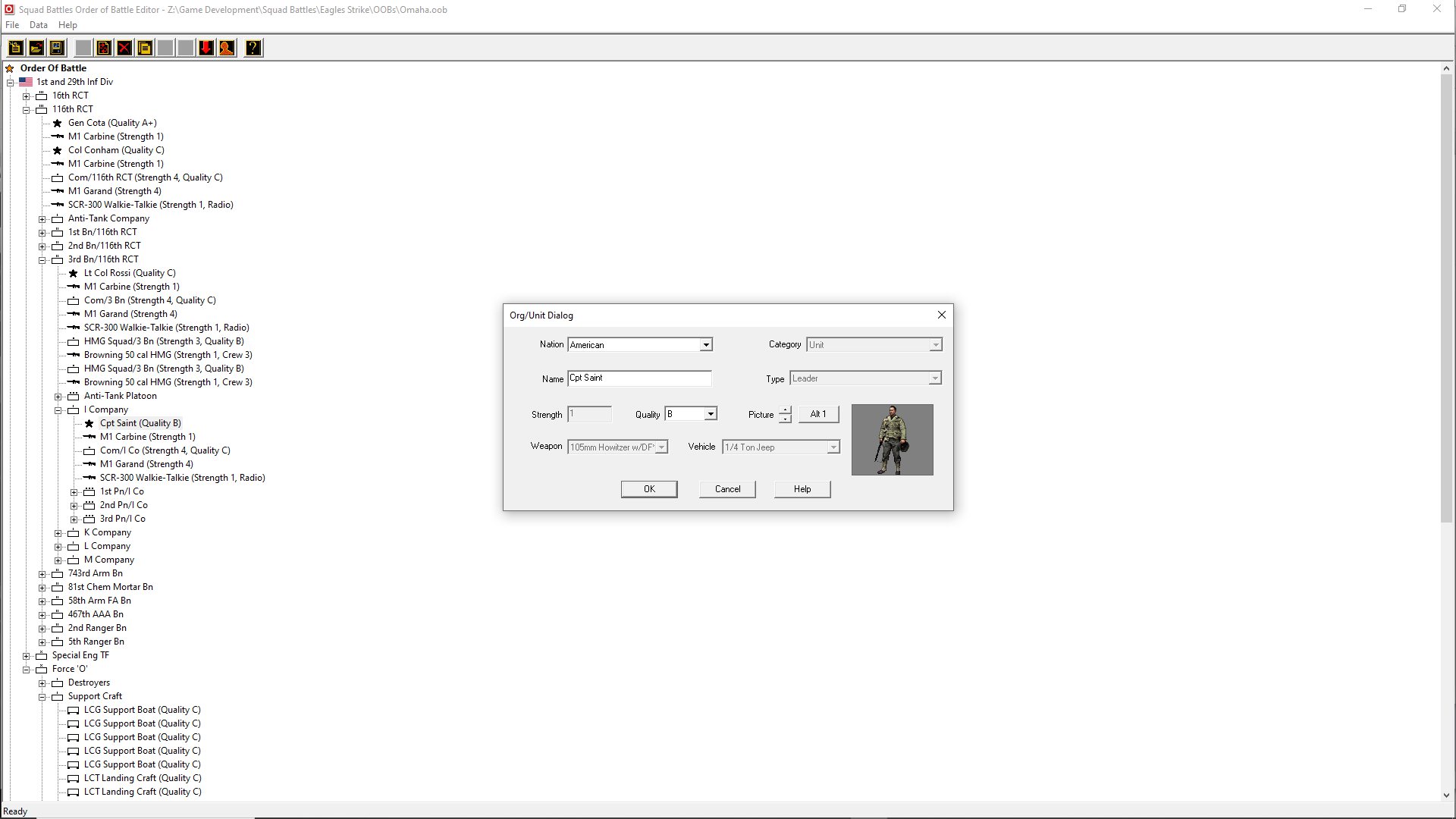
Unit component, Order of Battle, and Scenario Editors, which allow players to customize the game.
-
Map & Sub-map editors allow map creation and the "chopping" of any included map into smaller segments for custom scenario creation.
- Eagles Strike provides multiple play options, including play against the computer AI, Play by E-mail (PBEM), LAN & Internet "live" play, and two-player hot seat.
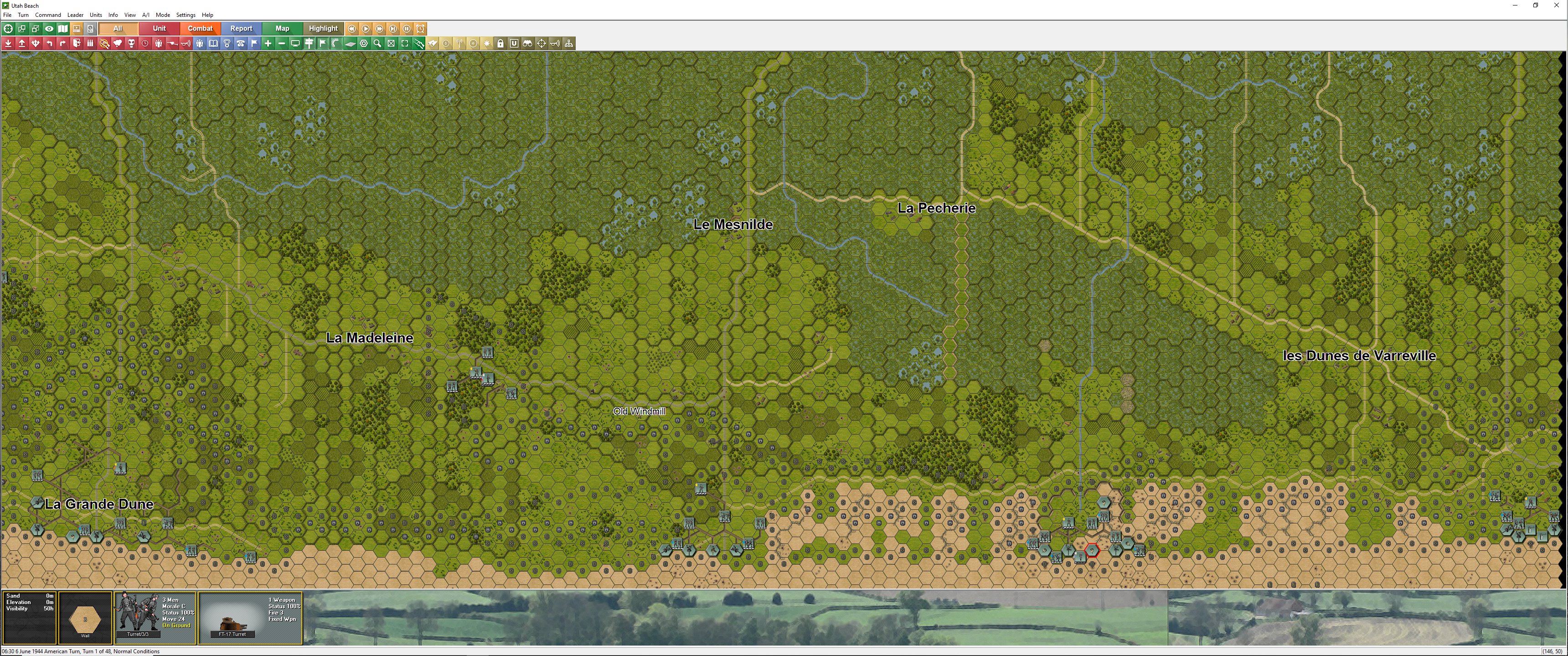
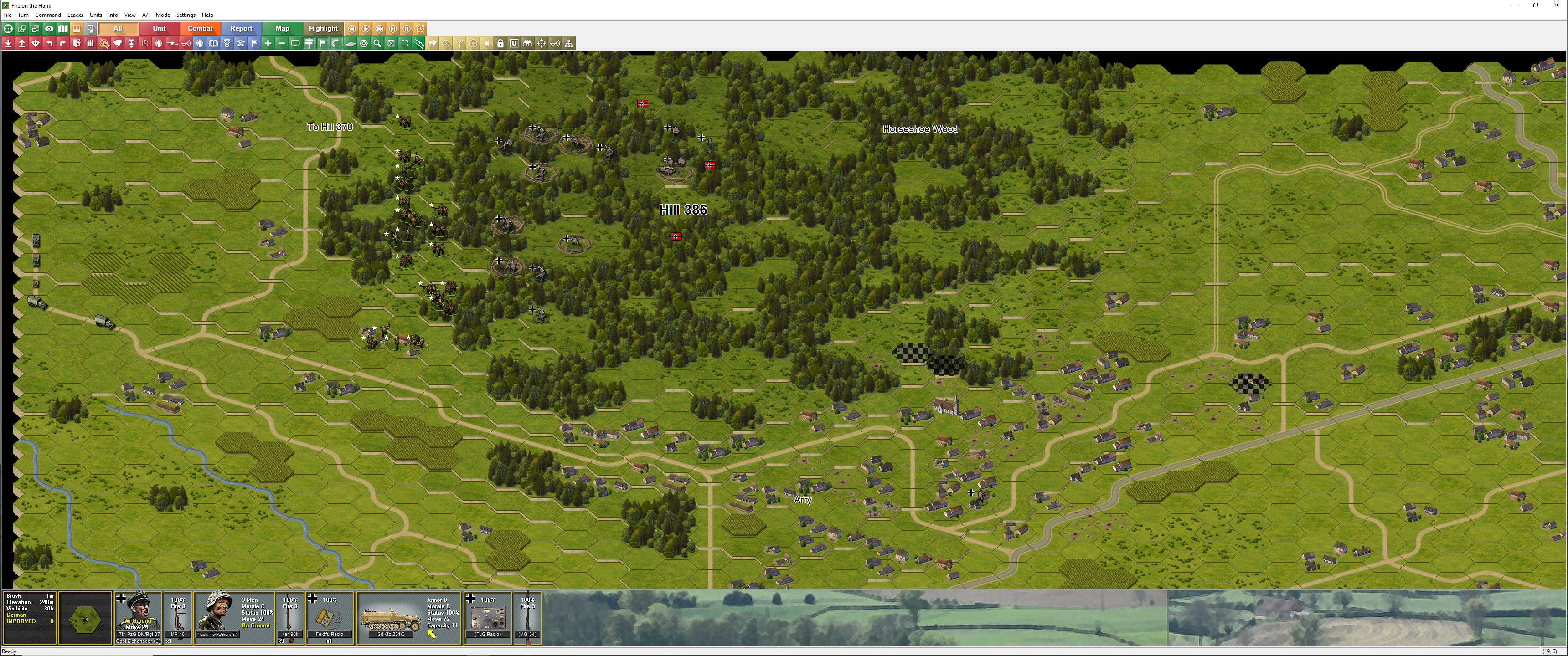
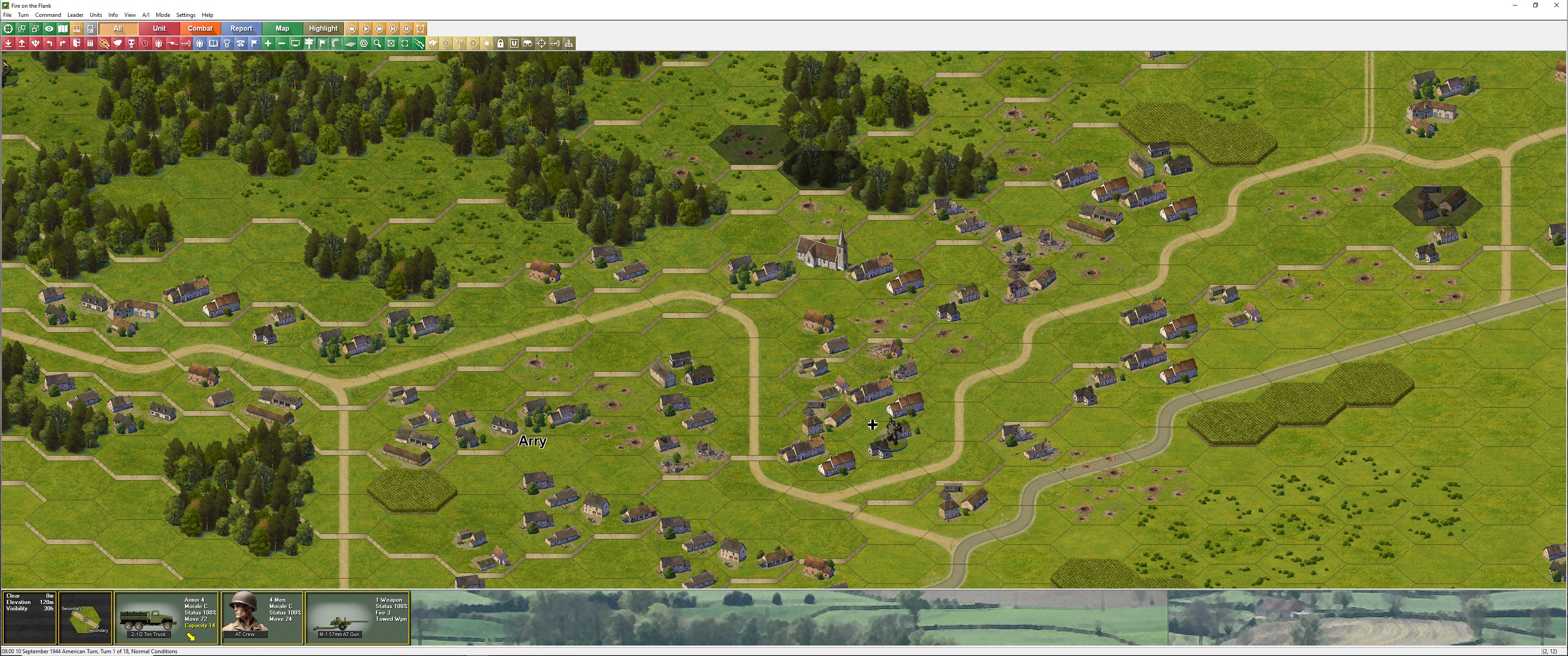
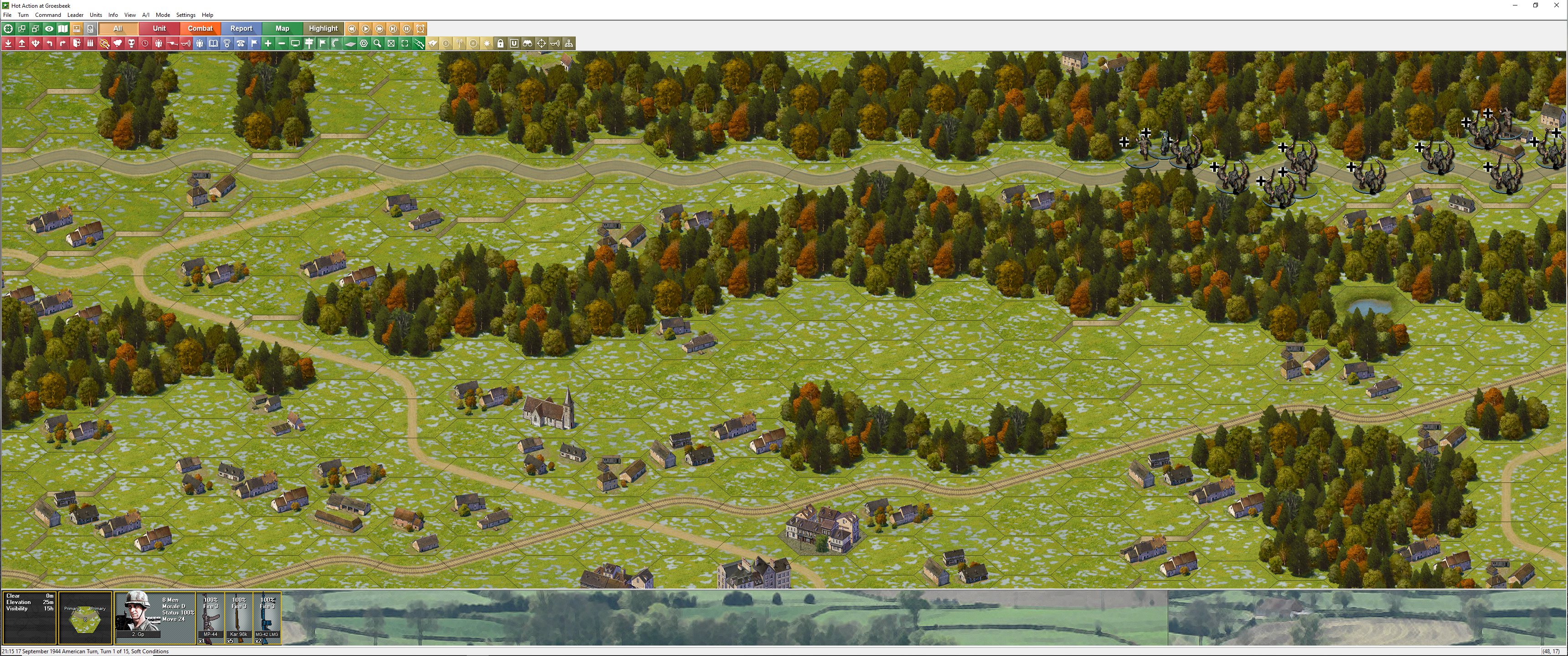
- The game is updated to the latest version, which introduces a visual overhaul with higher-resolution unit and terrain graphics, improved map clarity, and a transition to modern PNG-based assets, alongside new biome-based terrain sets that give maps a more distinct regional character. These changes enhance readability and immersion.
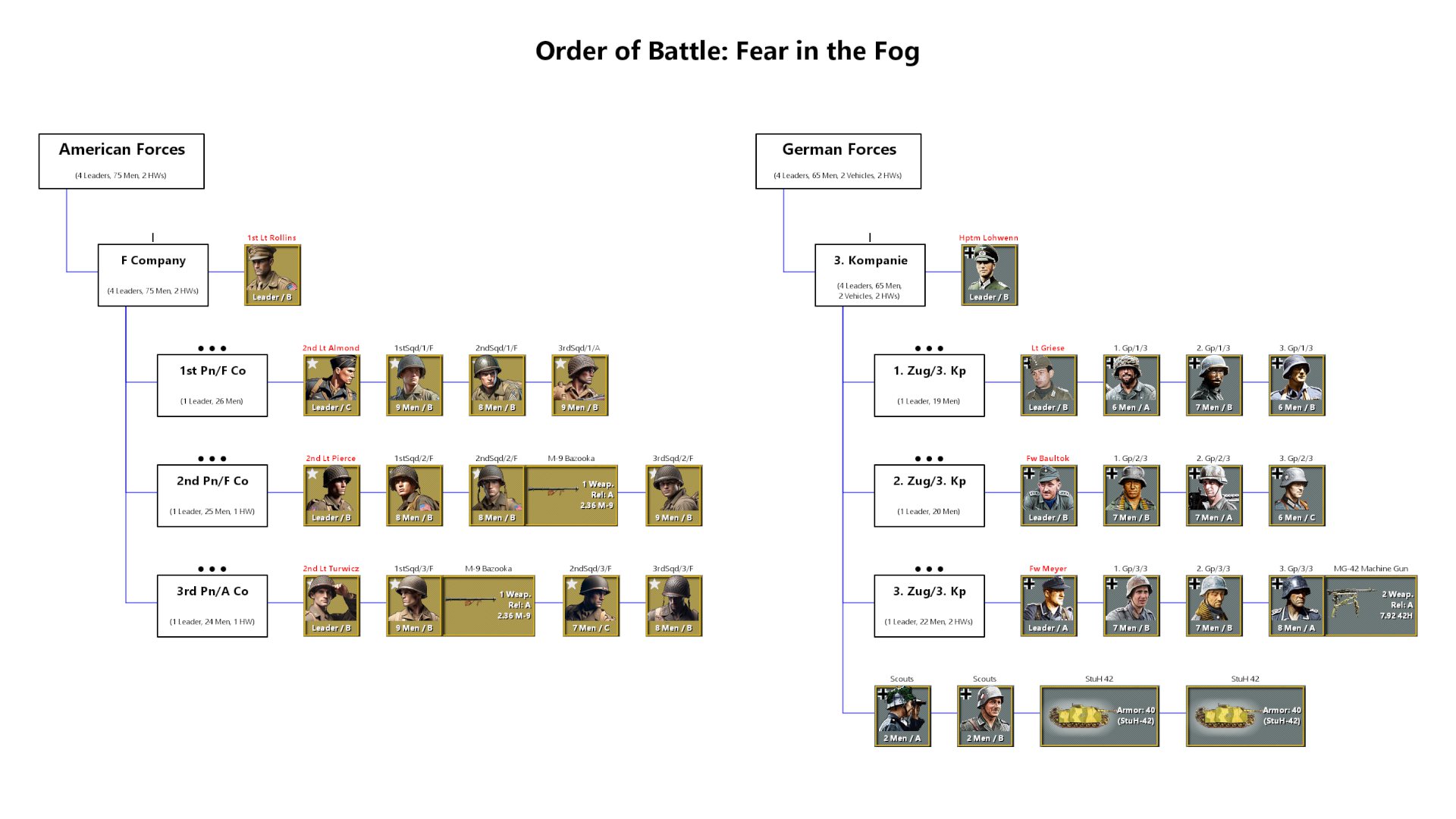
- There are also two versions of the Visual Order of Battle, one for ‘figures’ and one for ‘heads’. These are included in the game but can also be downloaded by clicking on the images below.


Here is an example of an OOB included in game in both formats.


There is also a Vehicles & Weapons Encyclopedia that provides statistics on all the equipment modeled in the game.

Book and Video Recommendations
Rick Atkinson, The Guns at Last Light: The War in Western Europe, 1944-1945. New York: Henry Holt, 2013.

Stephen E. Ambrose, Citizen Soldiers: The U.S. Army from the Normandy Beaches to the Bulge to the Surrender of Germany. New York: Simon & Schuster, 1997.

Antony Beevor, Ardennes 1944: Hitler’s Last Gamble. London: Viking, 2015.

Robert M. Murphy, No Better Place to Die: The Battle of La Fiere Bridge, June 1944. Havertown, PA: Casemate, 2011.

Charles B. MacDonald, Company Commander. Novato, CA: Presidio Press, 1999.

Screenshots
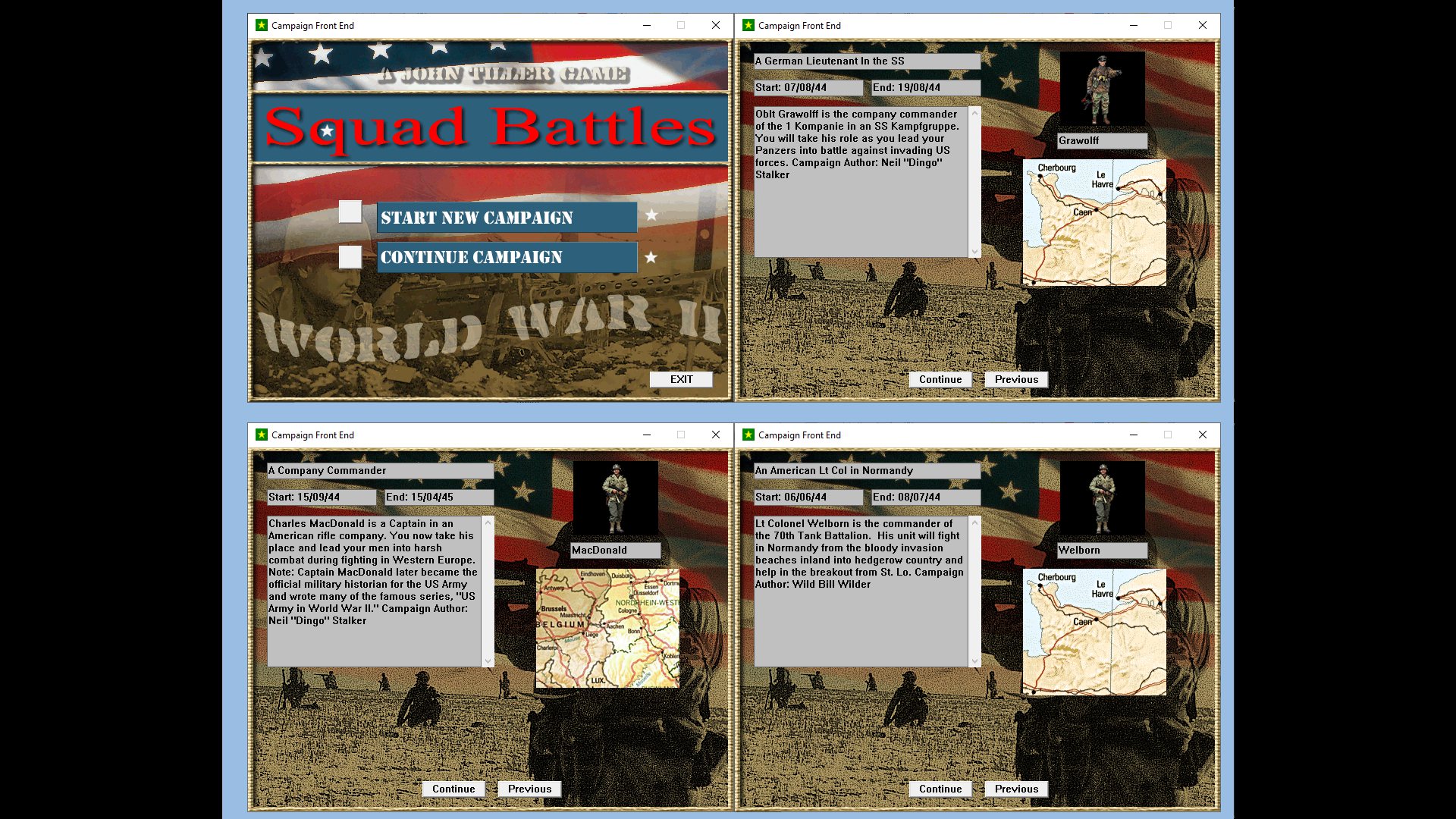
Here are some screenshots from the updated Eagles Strike title:
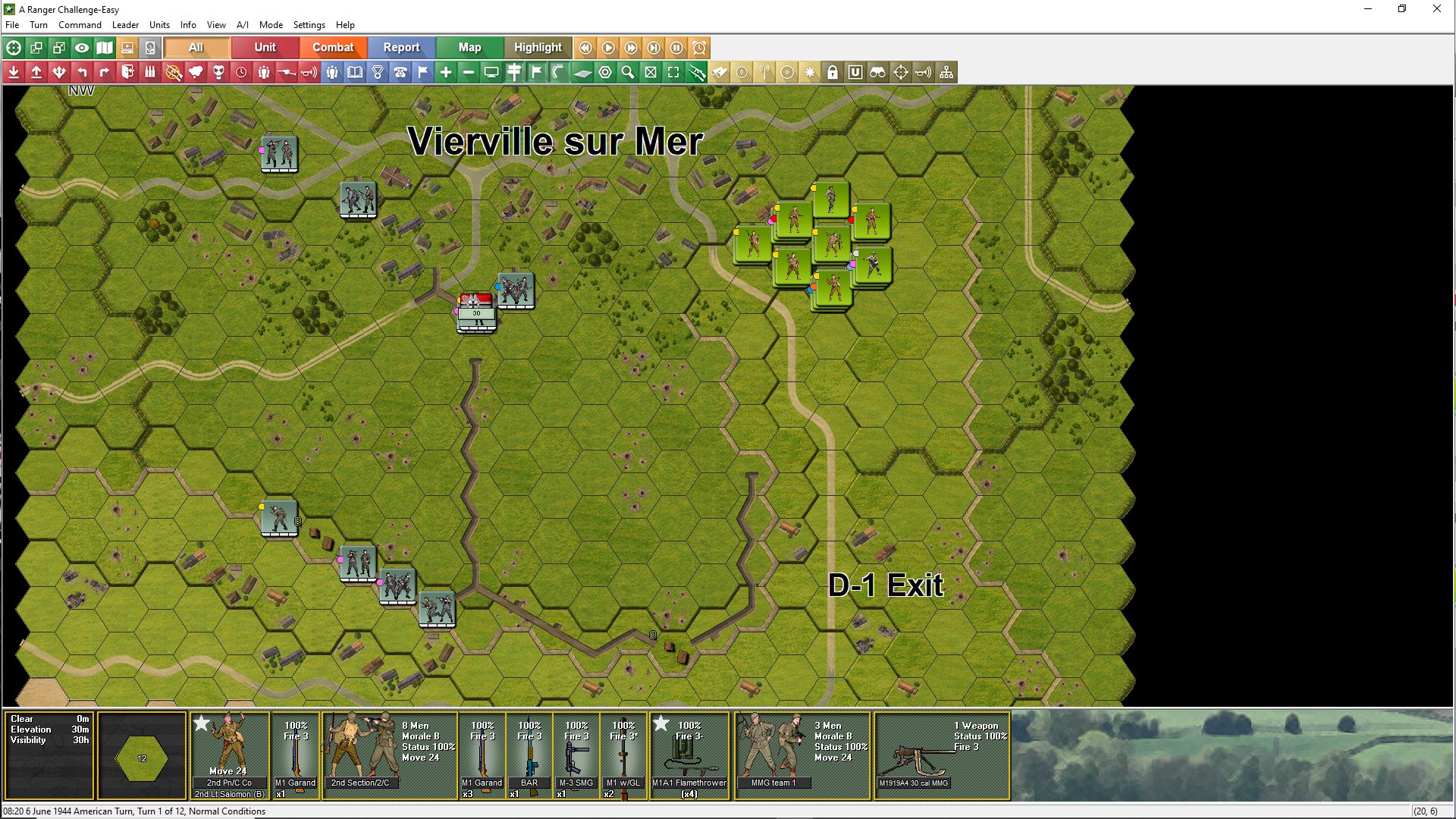
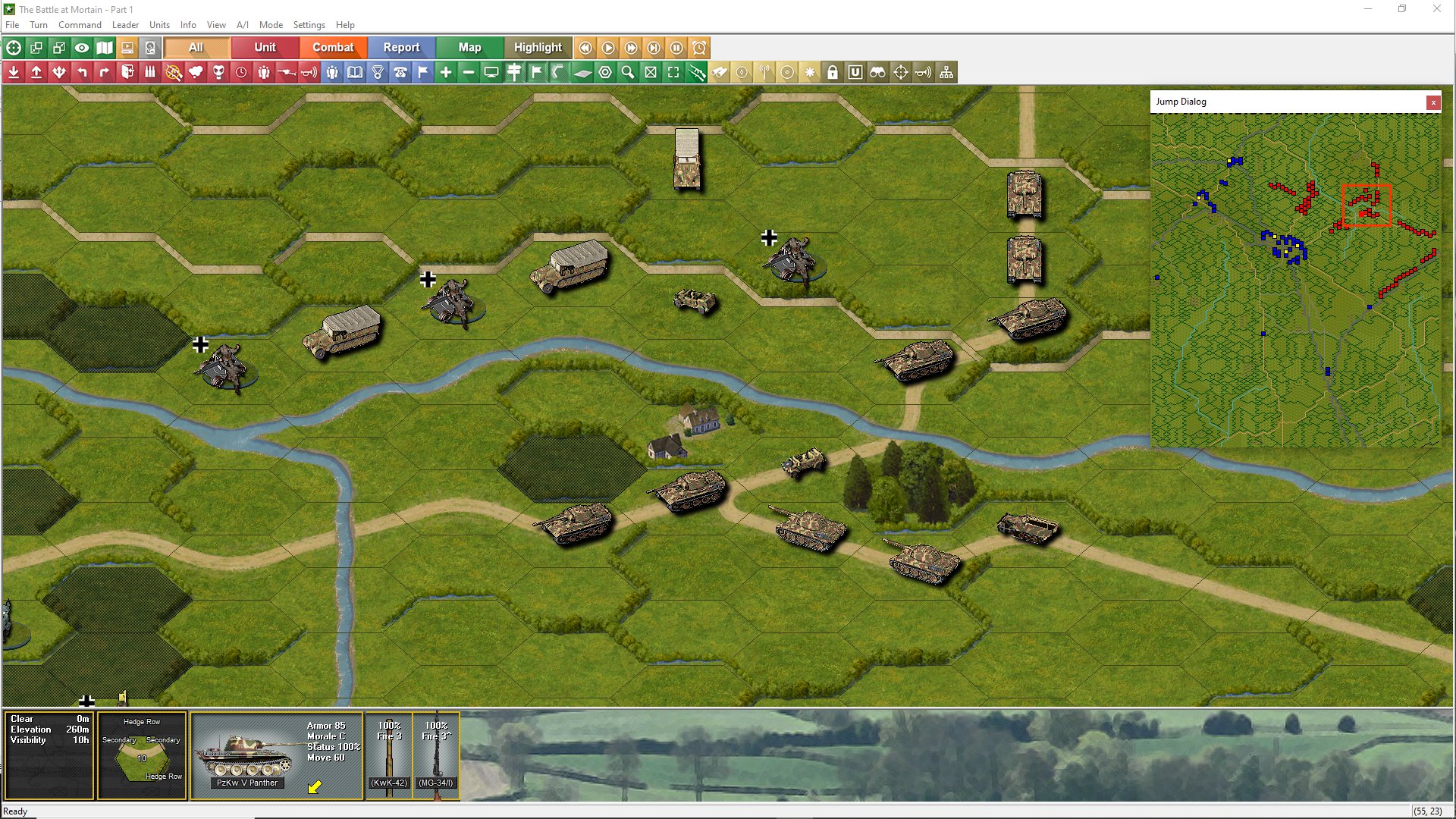
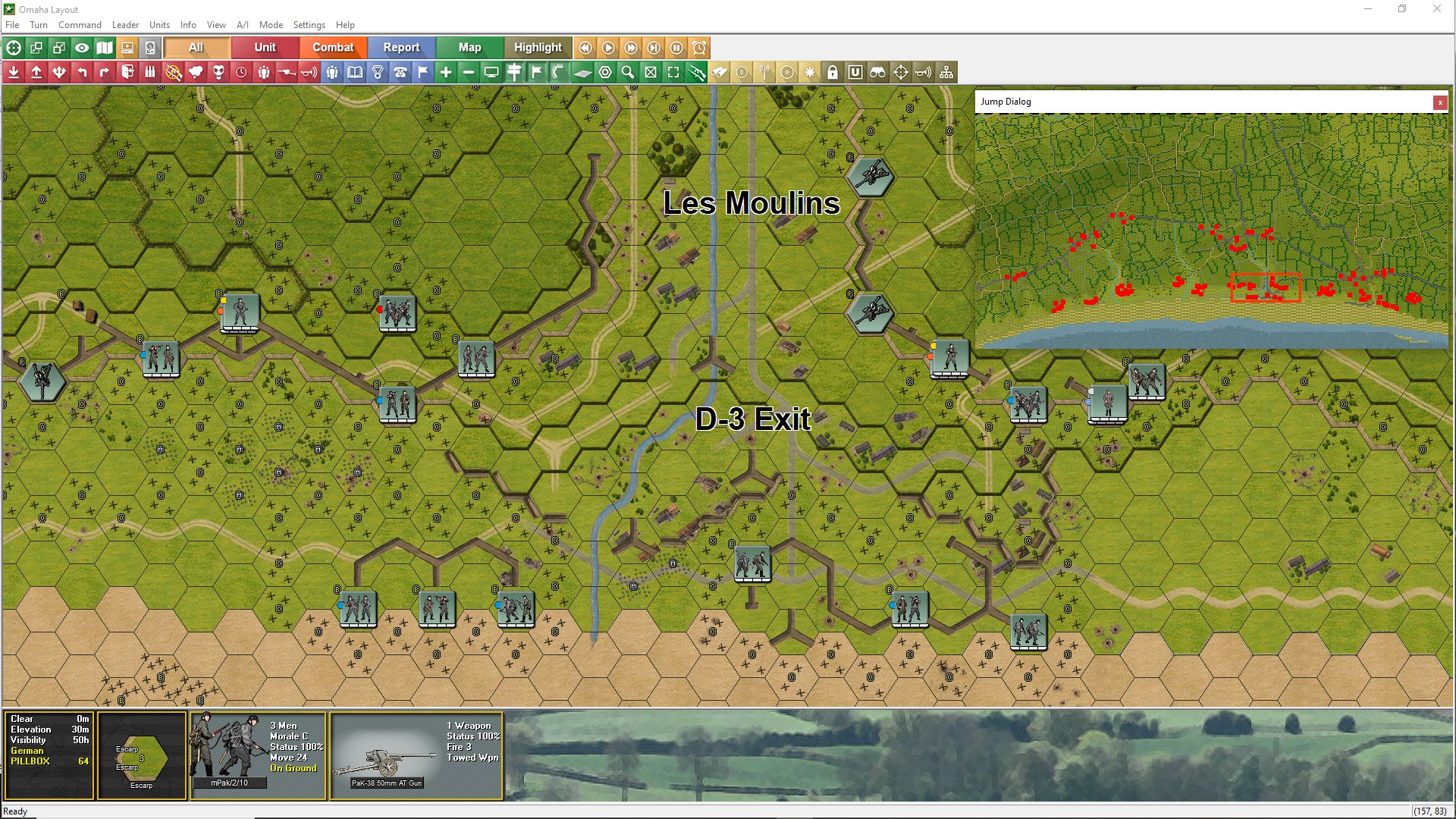
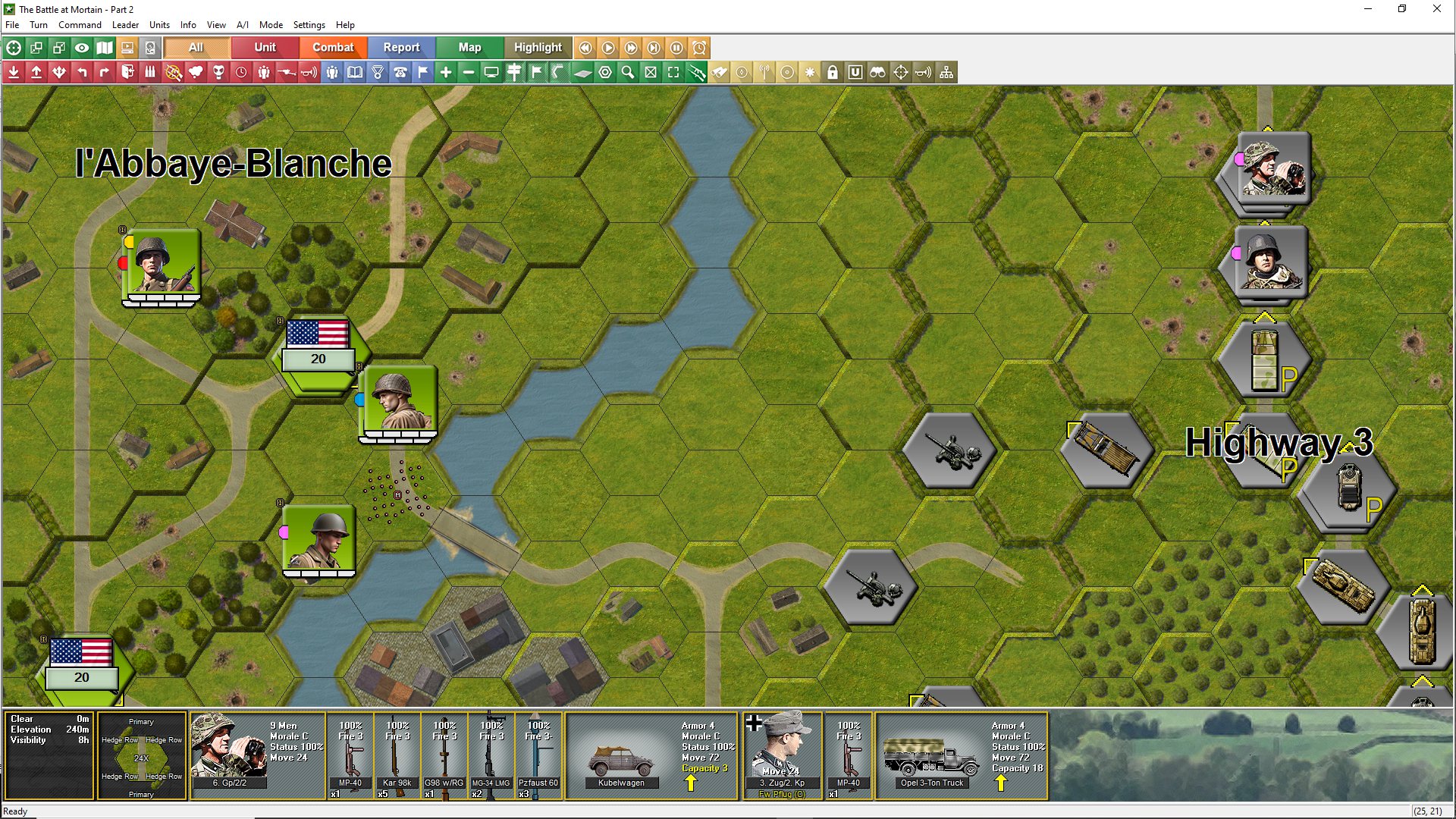
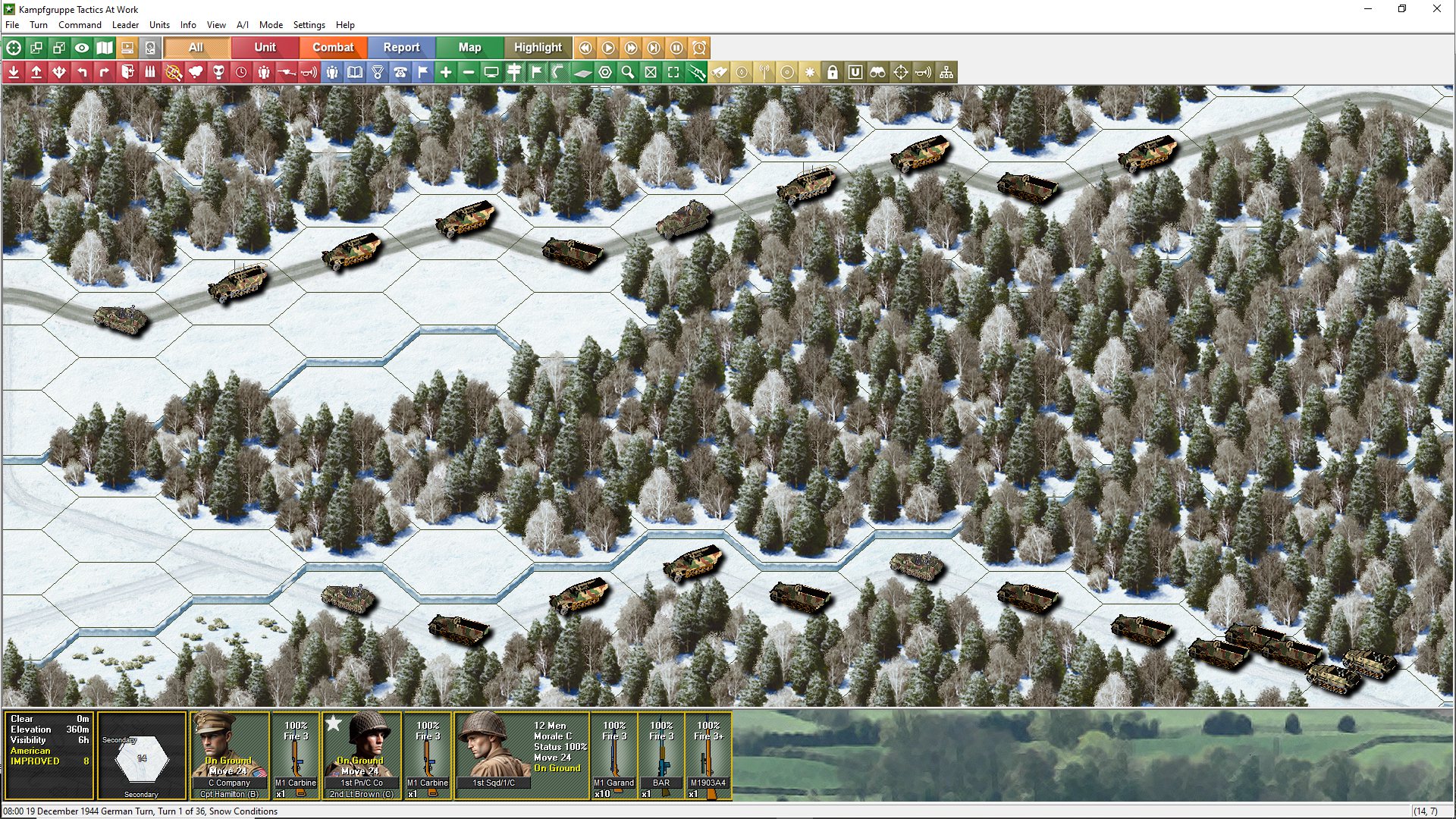
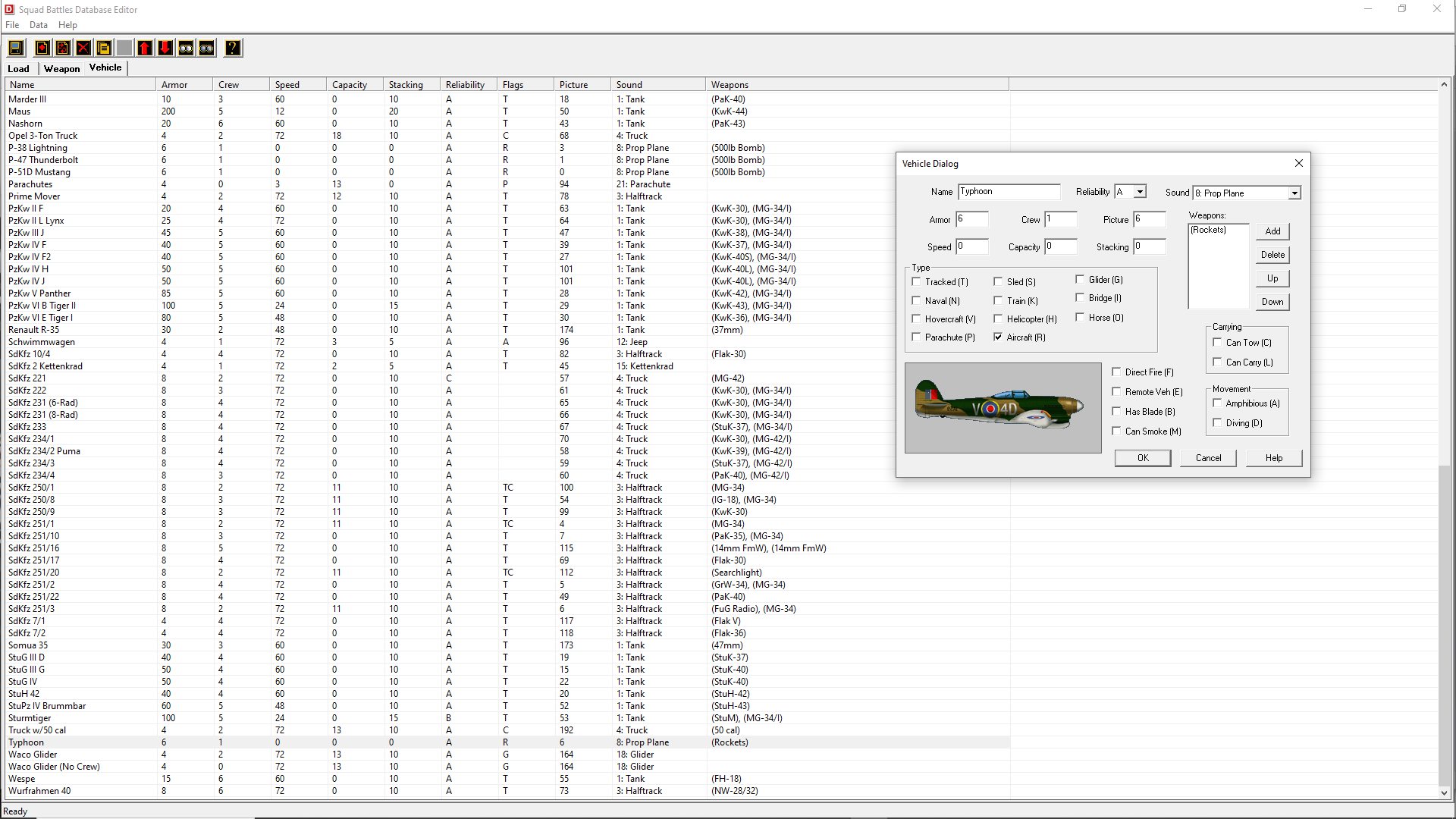
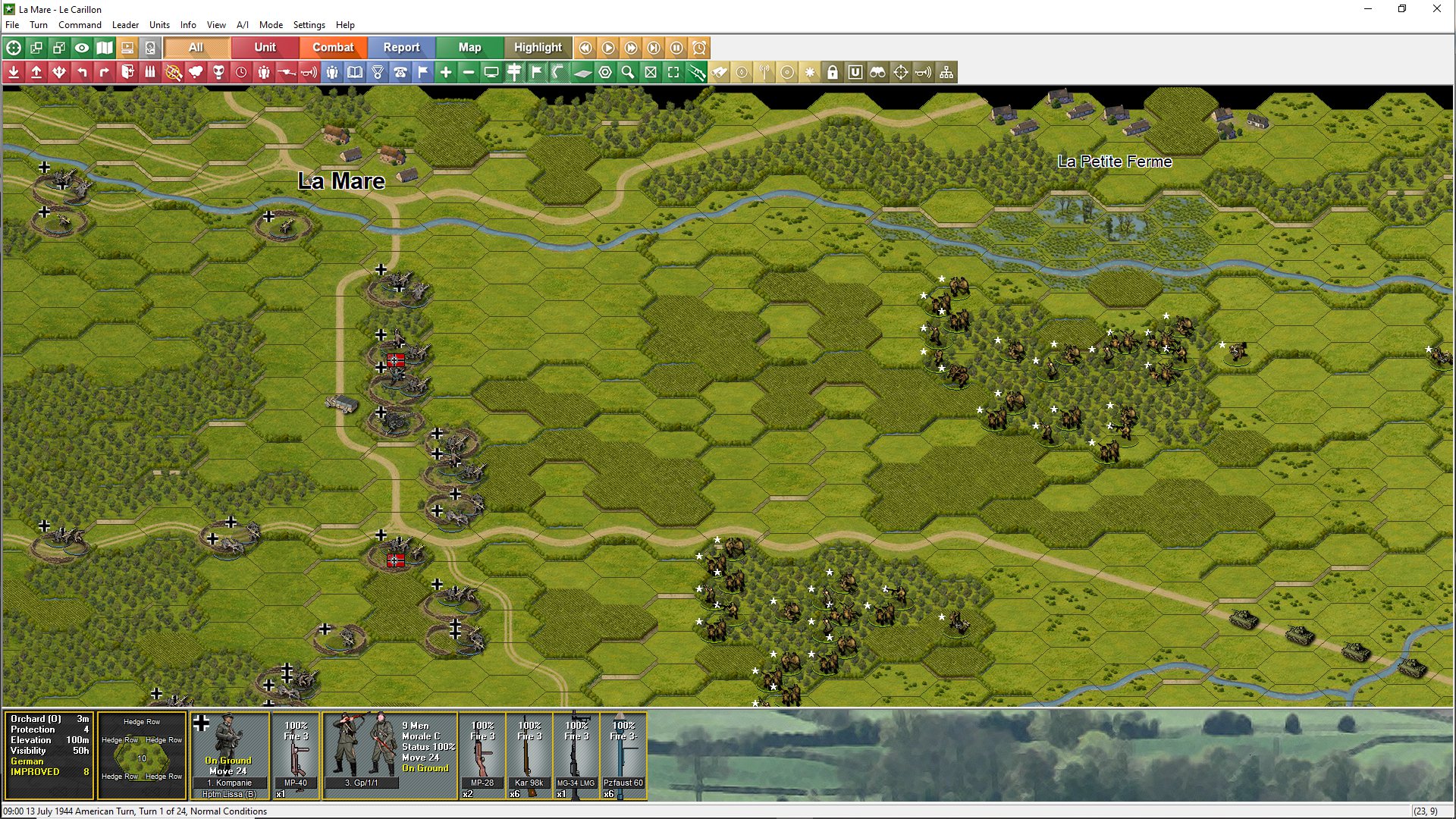
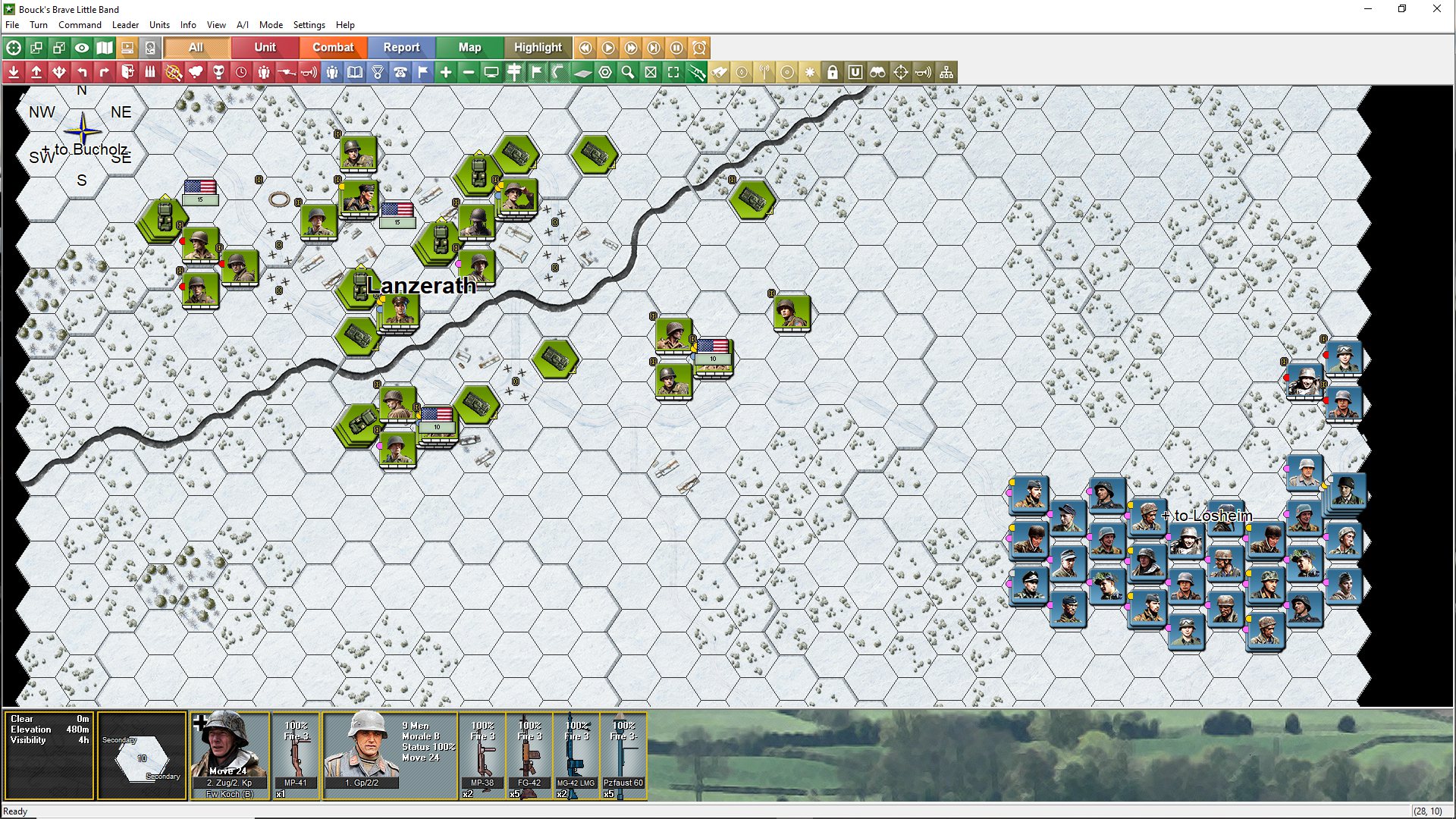
The following are some widescreen shots to show additional details.
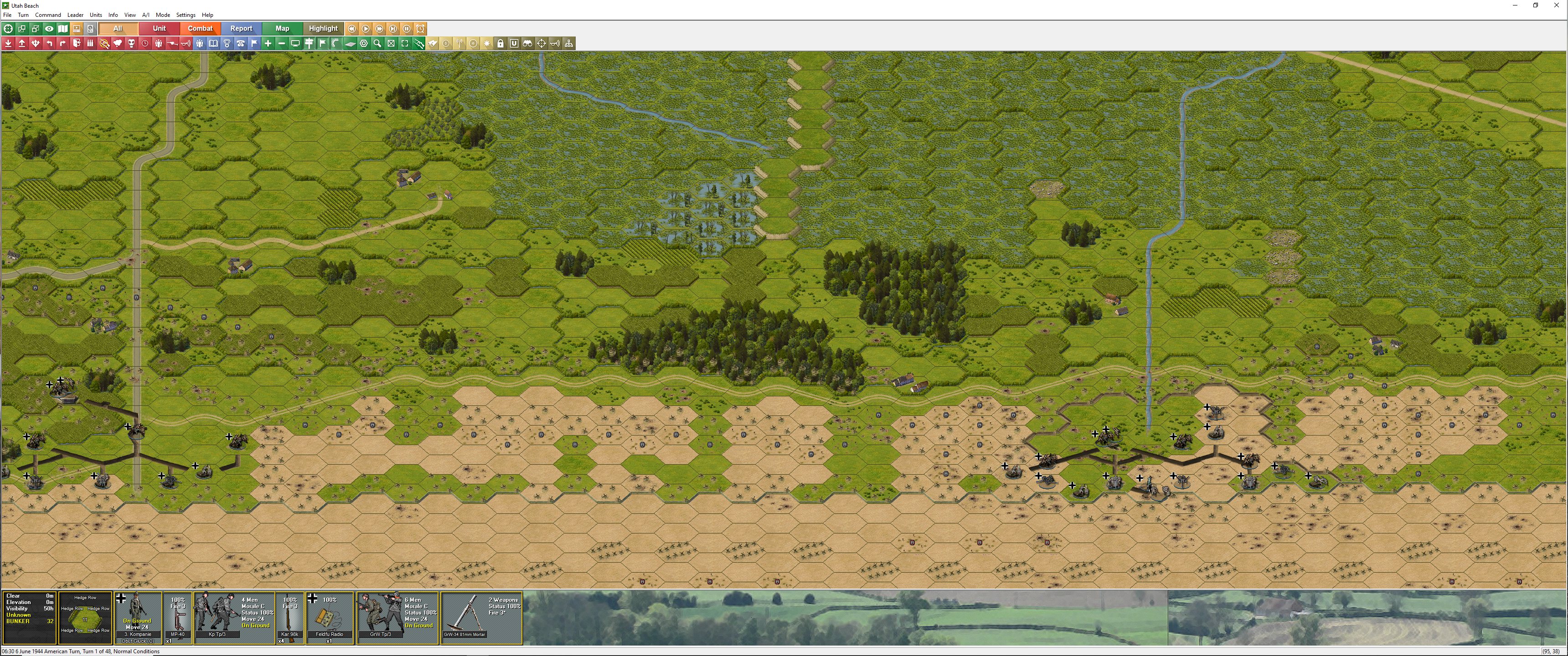
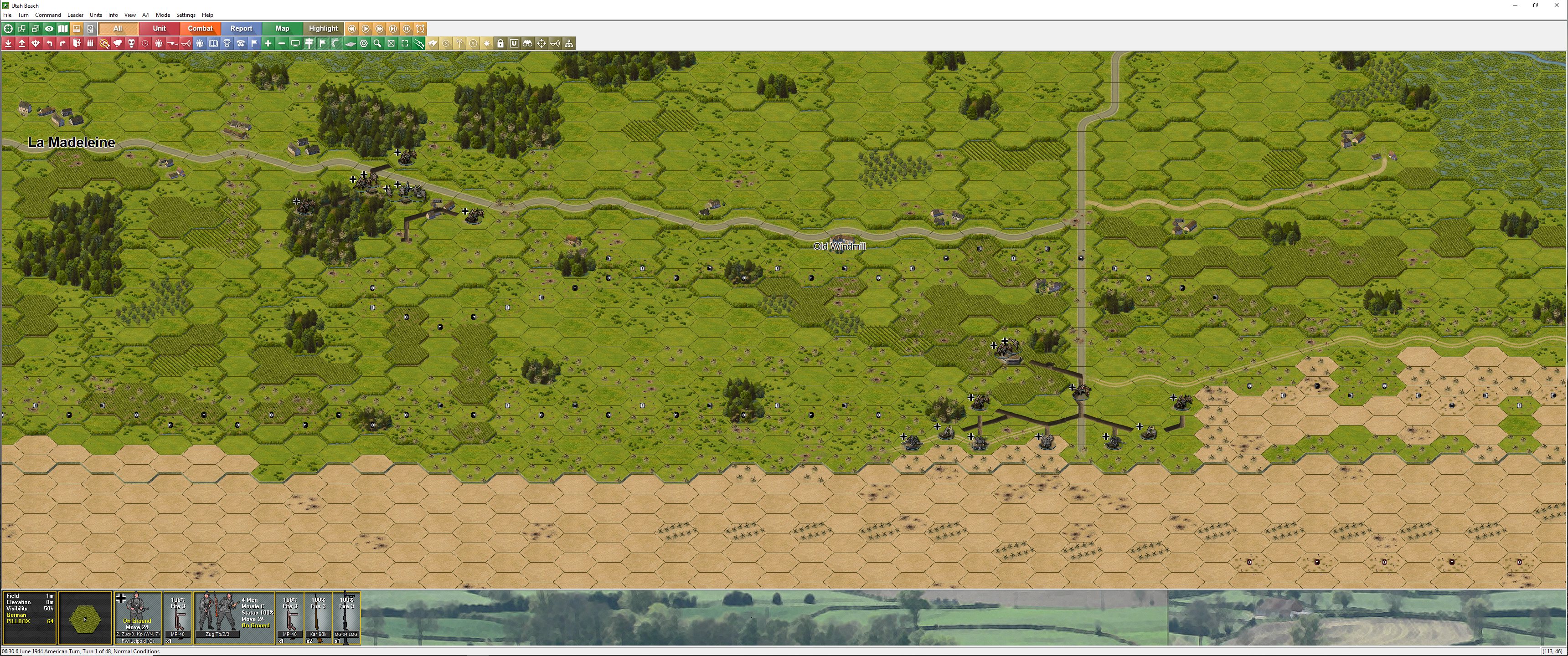
The new 4.03.4 Eagles Strike can be bought directly from the store page here.
Note for existing Eagles Striker owners: The latest patch must be applied to a clean 4.03 or 4.03.1 installation—do not patch over earlier versions. We strongly recommend downloading the full 4.03.4 installer from your store account rather than patching the previous 4.03/4.03.1 version, as the graphics have undergone extensive changes.


Great game. This series have really improved since the new updates. I have all the new ones. Now i,m just waiting for an update to the other ones….
Leave a comment