Crusades: Book II Released!

We are pleased to announce our latest new title, Crusades: Book II which is the second title in a planned trilogy documenting the Crusades launched against the Levant over several hundred years.
In the mid-12th century, the eastern Mediterranean was a complex region of competing powers. The Latin crusader states, though wealthy in ports and castles, were short on manpower. The Roman (Byzantine) Empire, a Christian great power, had its own strategic priorities and a history of lost provinces. The Muslim world, while not unified, was increasingly capable of consolidating resources under strong rulers in Syria and Egypt. Warfare was constant, influenced by both politics and piety, with alliances shifting and control of strategic locations often more important than holding empty land.
Crusades: Book II picks up after the Second Crusade’s failure outside Damascus in 1148. The Crusader forces abandoned the siege due to supply issues, conflicting goals, and mistrust among allies. The Levant was left with a frontier society, the Latin states of the Holy Land, which were rich in sacred significance but lacked manpower. These states aimed to maintain their territories, secure routes, and expand influence where possible.
The early period of this era was marked by vulnerability in the north. The first battle in 1149 at Inab saw Nur al-Din defeat the Principality of Antioch’s army and kill its prince, highlighting the fragility of the crusader frontier. The Latin East was not a unified “Crusader Kingdom” but a collection of lordships—Jerusalem, Antioch, and Tripoli—each with its own priorities and rivalries. Cooperation was possible but not guaranteed, and a concentrated enemy force could turn a local defeat into a broader crisis.
From the 1150s to the 1170s, the strategic landscape shifted as Muslim power consolidated. Nur al-Din’s expansion in Syria escalated the conflict from border raids to a struggle for regional dominance. The Crusader states retained strengths such as formidable castles, access to the sea for supplies and reinforcements, and the ability to attract periodic aid from Europe. However, these advantages could be undermined if an opponent could choose the time and place of battle, coordinate multiple armies, and maintain pressure on several fronts.
The rise of Saladin marked a major turning point. Emerging from the politics of Egypt and Syria, he unified resources previously divided between rival courts to wage a more coherent war. This led to a growing ability to concentrate forces and apply pressure to the Crusader states’ weakest points. In 1187, the Frankish field army was defeated at Hattin, followed by the rapid loss of inland strongpoints, most notably Jerusalem. Even where garrisons held out, the strategic balance had shifted: the crusader presence could survive but no longer dominate.
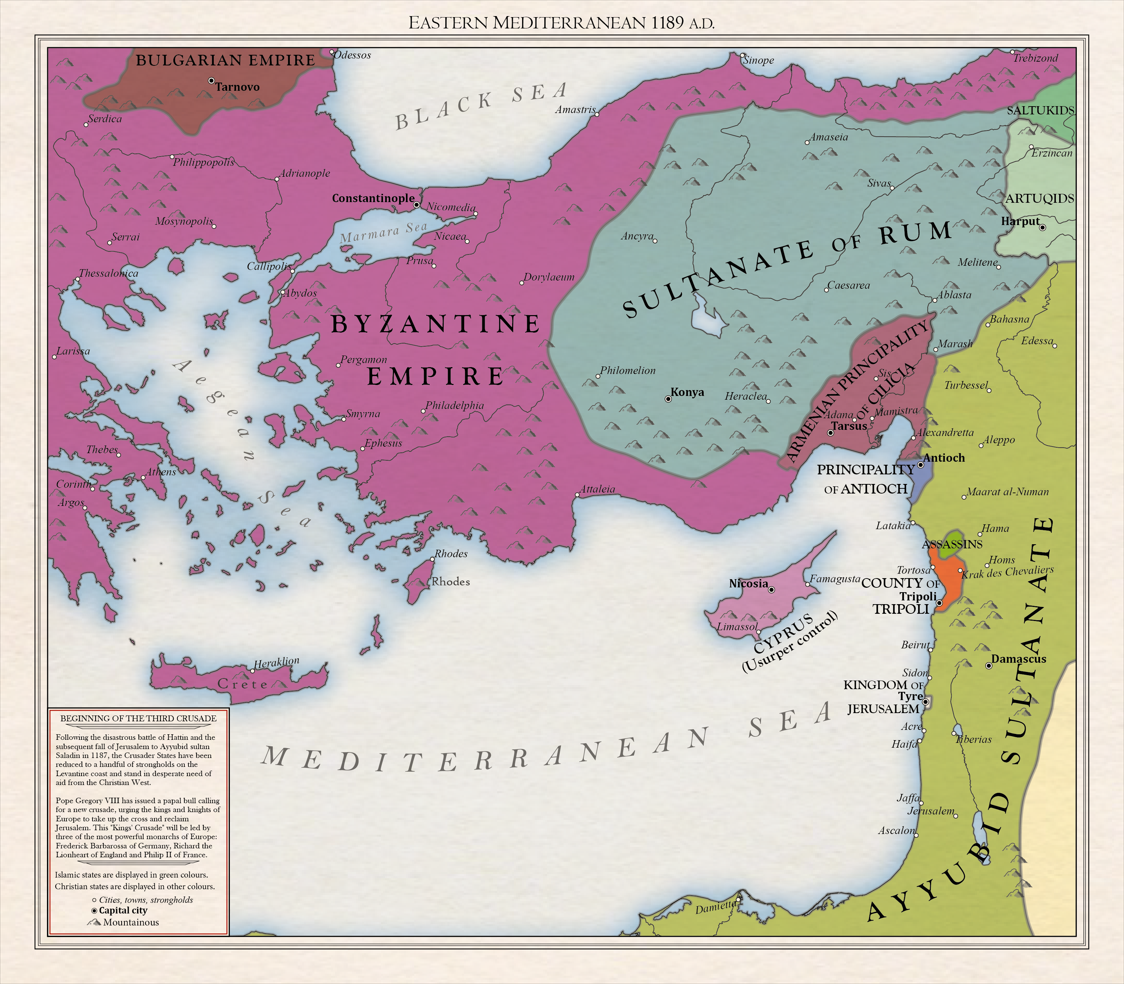
Once the news of Saladin's victories, along with the capture of Jerusalem, had reached Europe, there was an immediate call for a new Crusade by Pope Gregory VIII. And of all the Crusades for the Holy Land, this The Third Crusade (1189-1192), would be long remembered to this very day. From the towering personalities of King Richard I of England, the Lion Heart, King Philip II of France (Philip Augustus), Emperor Frederick Barbarossa of Germany, to the aforementioned Saladin, the Lion of Islam.
Book II will take you through the battles one by one. From the near two-year siege of Acre to the storming of the beach at Jaffa with King Richard leading the charge to save the besieged Crusader garrison. And if you want to fight the battles of this Third Crusade as a campaign, you'll have three choices at your fingertips. Who will be victorious, the Lion Heart, or the Lion of Islam? Regardless, the struggle for the Holy Land would not end with the Third Crusade.
The years after 1192 marked the era's challenging middle, characterized by raids, sieges, and relief marches through towns, castles, and along connecting routes. The crusader states, now focused on coastal cities and fortifications, had to defend supply lines and prevent enemy armies from isolating strongpoints. Their opponents faced operational challenges, such as assembling forces over long distances, coordinating commanders, and sustaining pressure through repeated campaigns. This period saw the strategic balance tested directly by who could seize, hold, and relieve key positions.
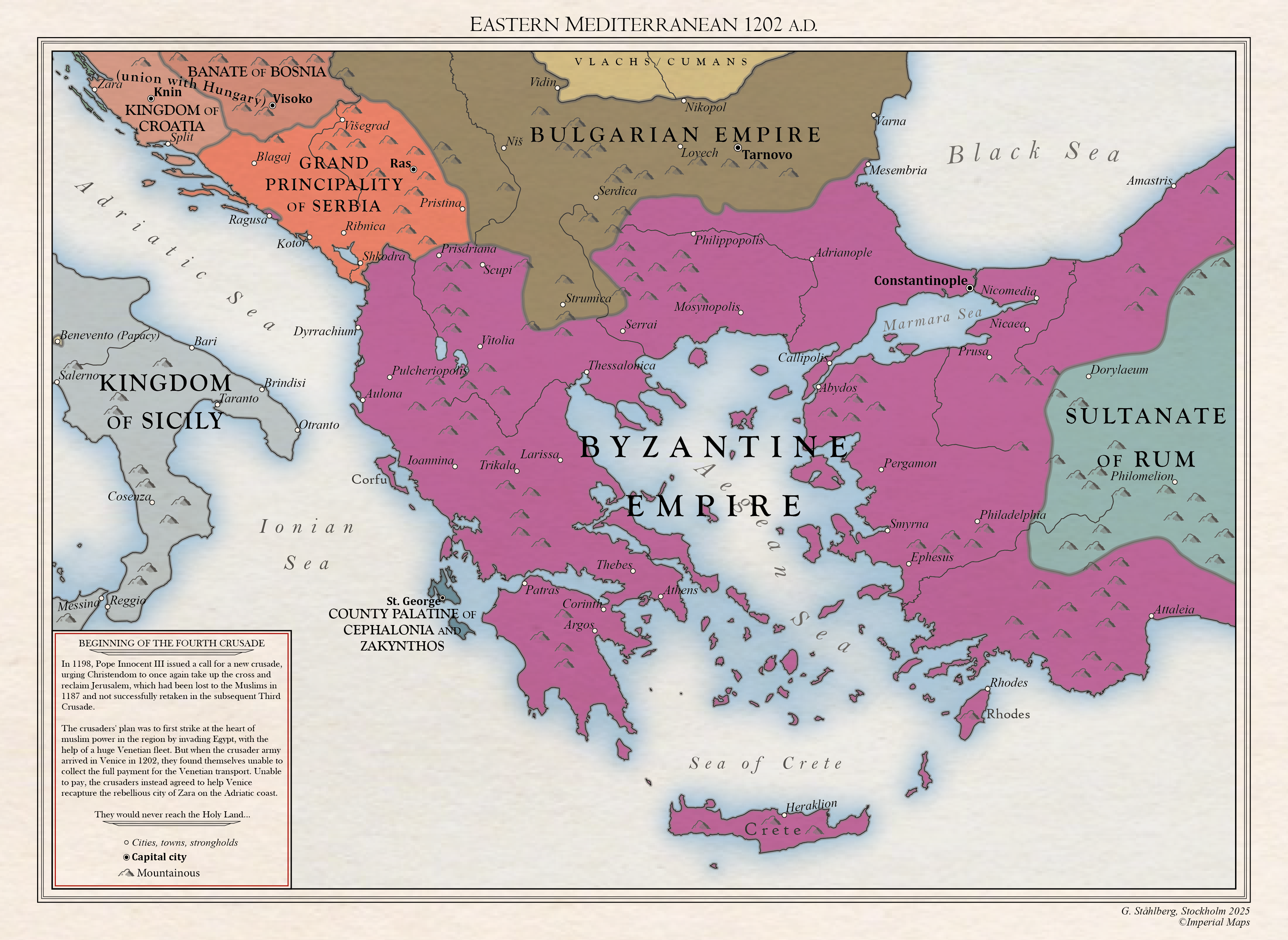
From this unstable equilibrium emerged the Fourth Crusade, intended to strike eastward but ultimately remembered for a catastrophic diversion. The decisive factors were practical rather than ideological: fleets, transport capacity, and the ability to deploy an army where needed. Entangled in Byzantine internal struggles and supported by Venice, the crusading force turned against Constantinople. In April 1204, the city fell and was sacked, shocking contemporaries and reshaping the balance of power in the eastern Mediterranean.
Between 1149 and 1204, the background covered in Book II is a story of momentum and miscalculation: how a frontier society tried to survive in a hostile landscape, how its opponents learned to coordinate and concentrate, how charismatic leaders and hard geopolitics could turn containment into reconquest, and how grand plans of kings could be derailed by money, weather, and temptation. If Book I ended with disappointment outside Damascus, Book II shows the subsequent long struggle to endure between crusade and counter-crusade, culminating in a finale that transforms the eastern world even as the original goal slips further out of reach.
The region where the game’s battles unfold encompasses the modern-day territories of Israel, Gaza, the West Bank, Jordan, Lebanon, Syria, parts of Turkey, and Iraq. This area has been a theater of nearly 3,300 years of continuous warfare, spanning from the Battle of Kadesh (dated to 1274 B.C., the first battle to be recorded with significant detail) to the present-day conflicts.
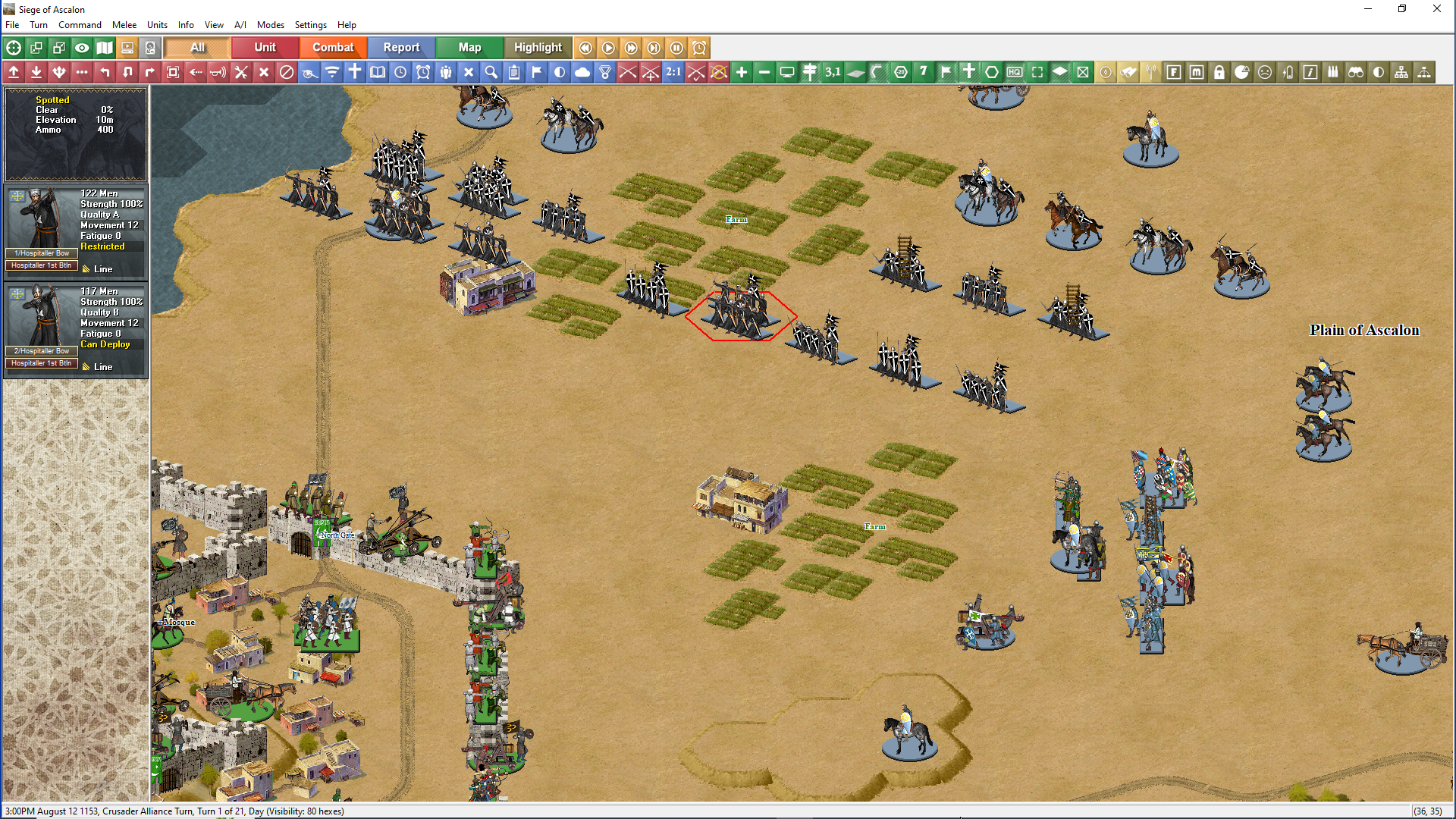
Crusades: Book II includes 102 Scenarios – covering a variety of sizes and situations, including a solo tutorial scenario, five Training scenarios, Historical, Variant and What If versions for both head to head play and vs. the computer AI.
A sampling of the battles included would be:
Inab
Ascalon
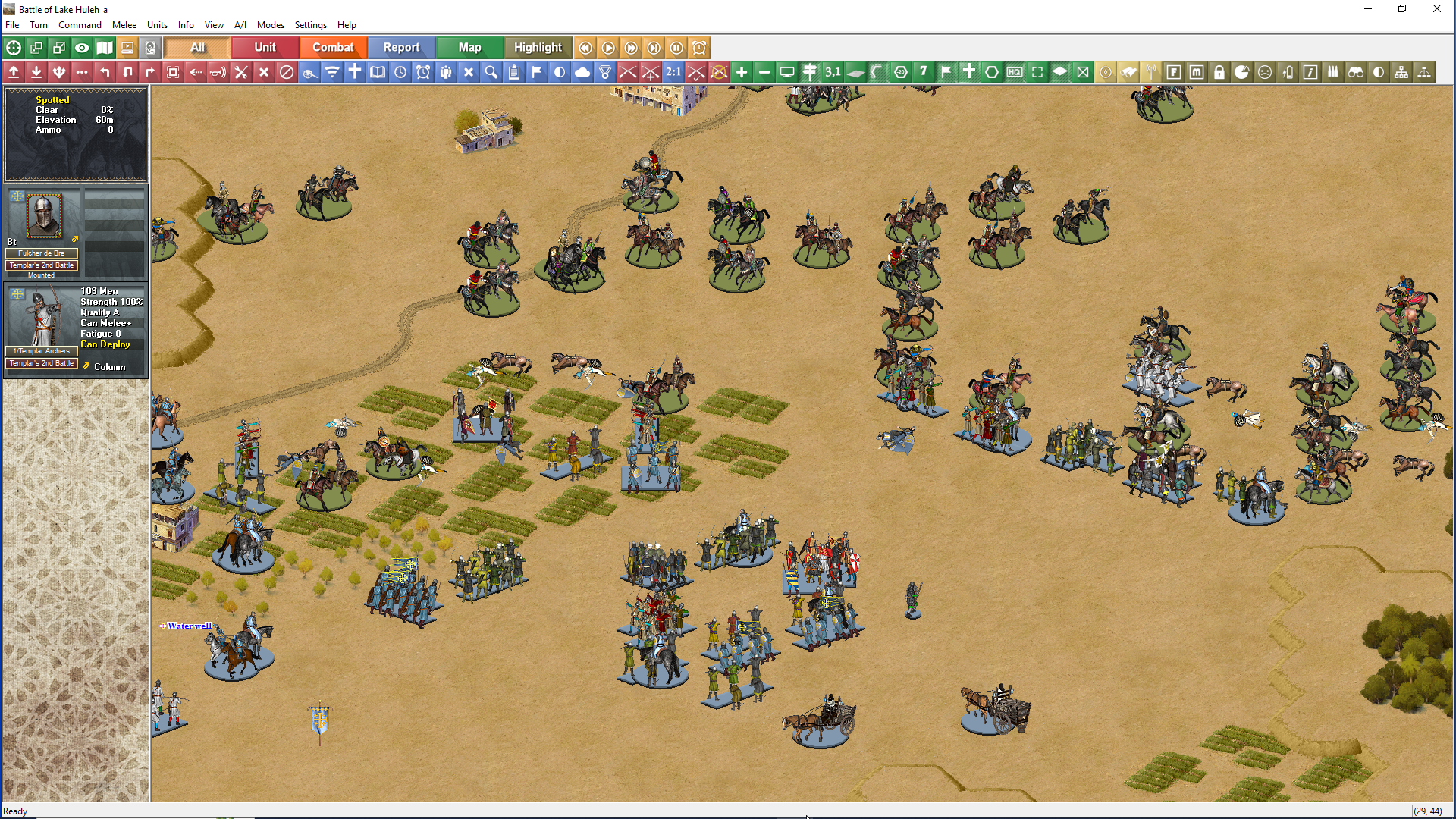
Lake Huleh
Butaiha
al-Buqaia
Harim
Bilbeis
al-Babein
Alexandria
Montgisard
Damietta
Hama
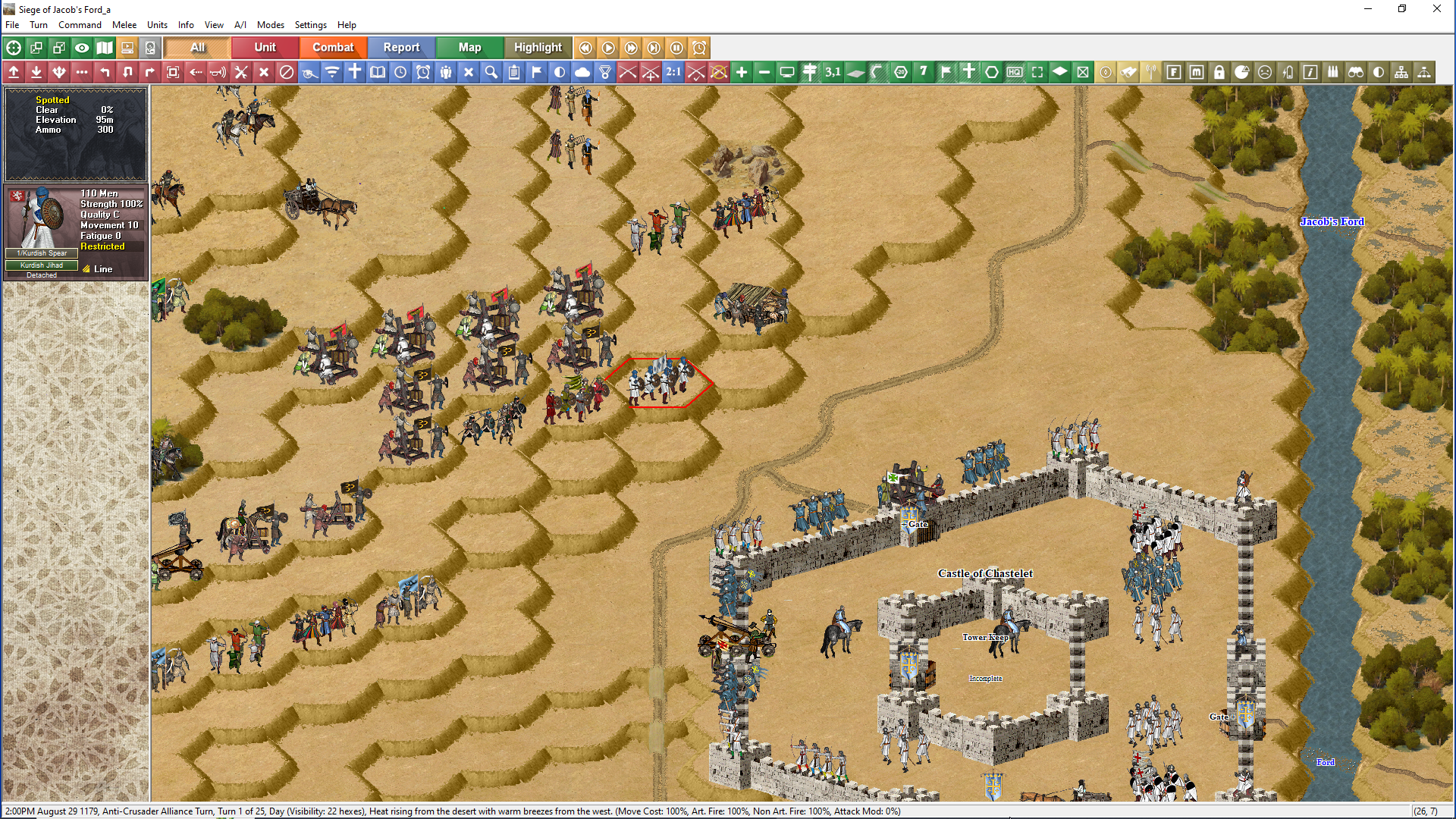
Jacob's Ford
Kerak Castle
Hattin
Jerusalem
Tyre
Safed
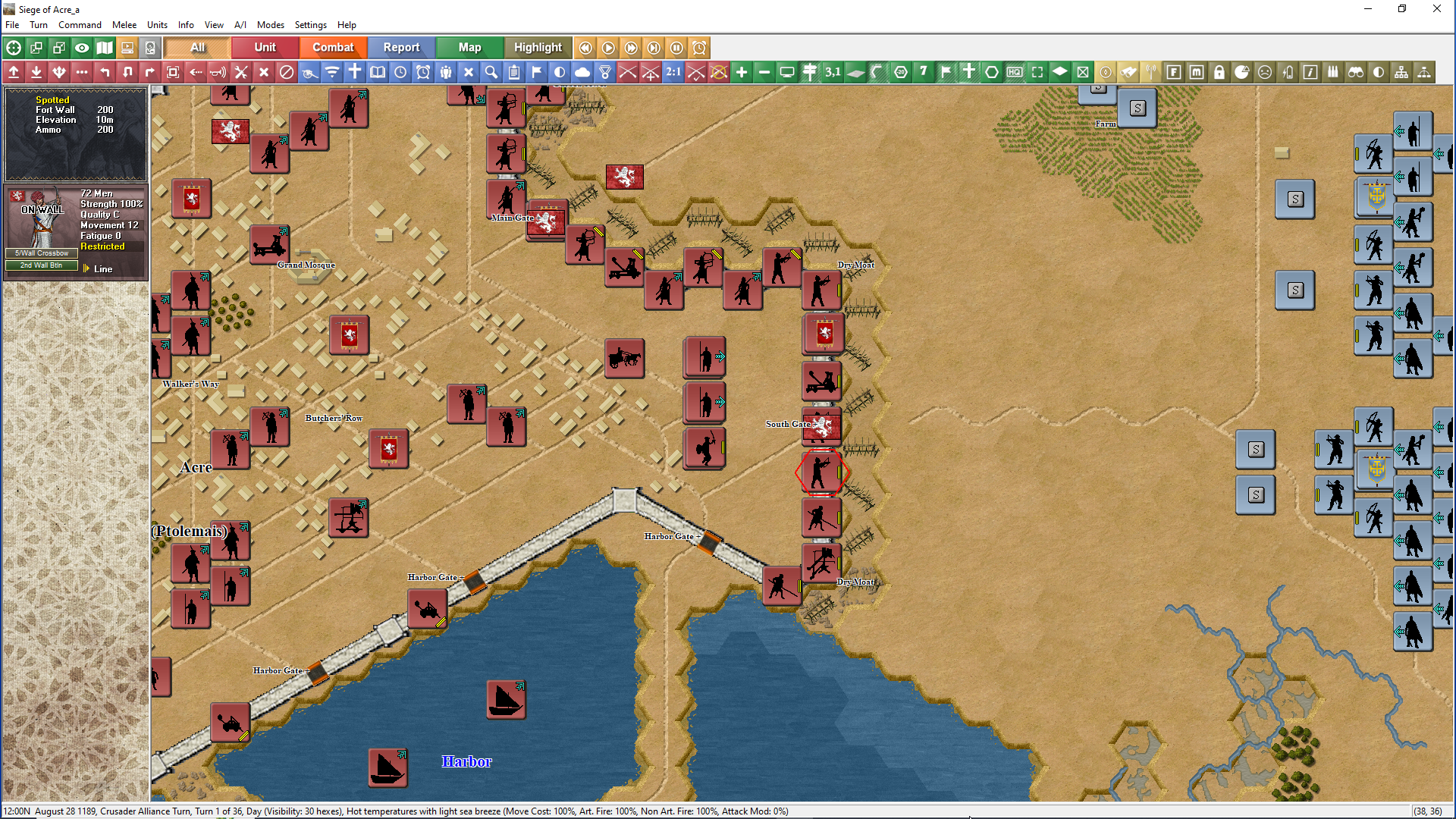
Acre
Arsuf
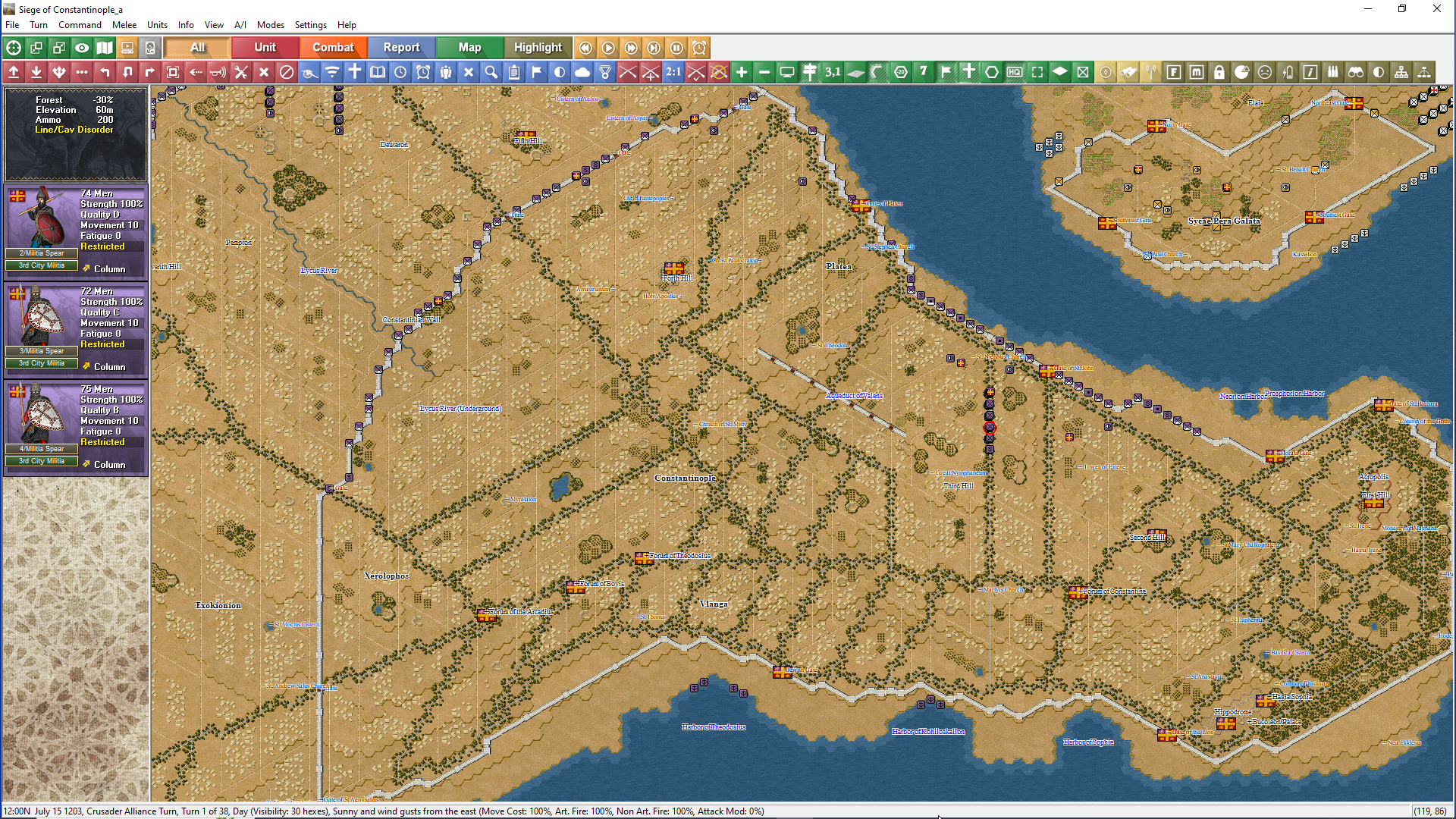
Constantinople
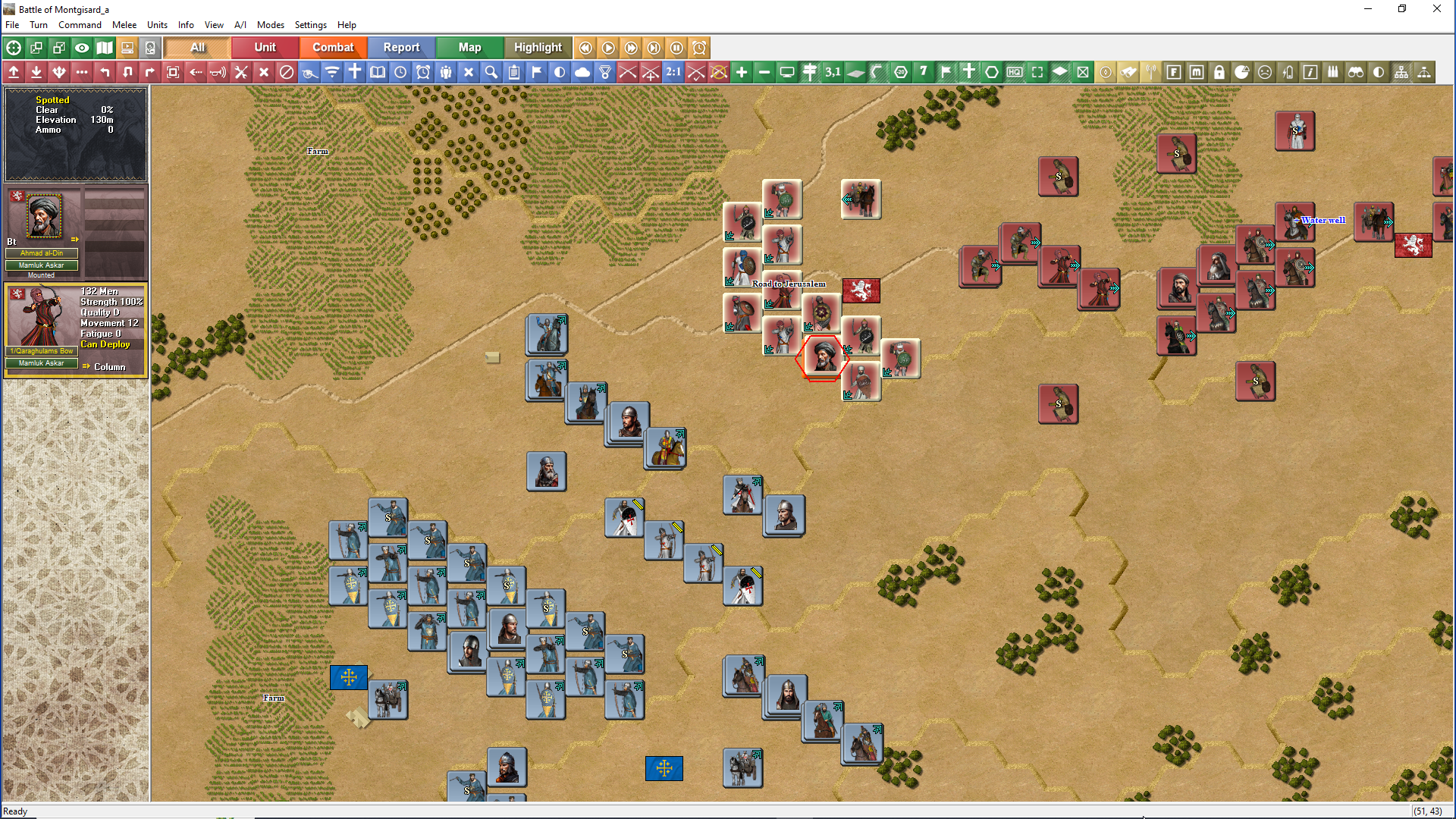
New features have been introduced with this title such as:
- Continued refinements to the AI.
- Added new “drag path” movement feature.
- Added Night Shading feature, a graphical overlay for Night and Dawn/Dusk conditions.
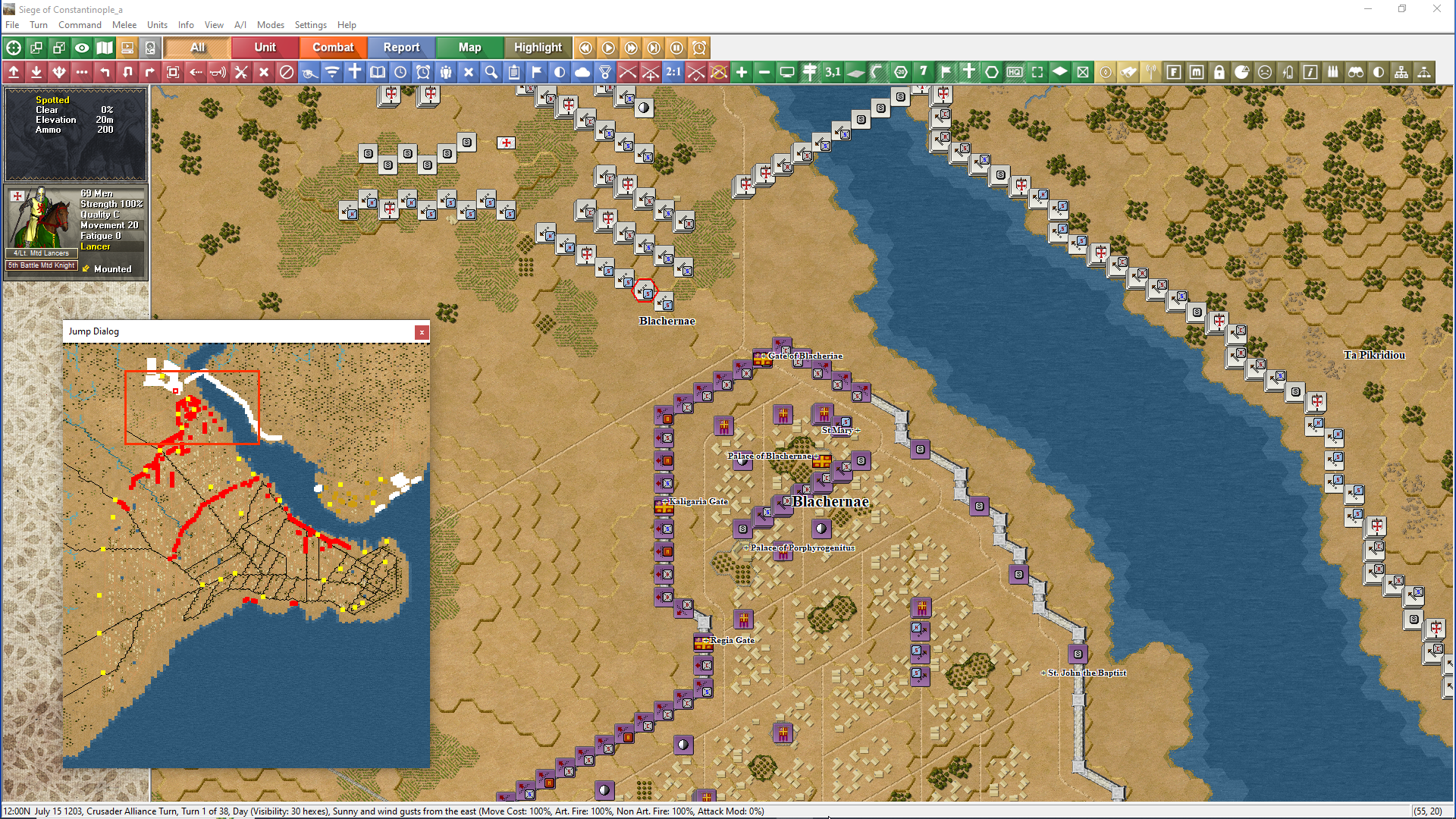
- Added an Organization Circle to the Jump Map with the Highlight Organization toggle is on.
- Added check so that Recovery from Movement Disorder will occur on following turn.
- Added Ladders in order for units to be able to scale walls.
- Added the ability for Leaders to dismount.
- The firing range function indicator not only shows the firing arc, but also differentiates between direct & indirect fire when applicable.
You can read the full changelog of what's new in this title here.
Additionally, this title features all new 2D and 3D terrain graphics in PNG format plus expanded 3D unit icons to encompass the added forces involved in these battles.
You can read more about this new title by checking out the Design Notes, which allows the scenario designer, Rich Walker, to explain some of the design decisions in the game and cover the various weapons systems and how they should be used. Additionally a Operations section is included which gives a complete overview of all the standalone scenarios included with the game. You can read that document here.

Here's some suggested reading to get yourself acquainted with this time period:


Here's some video content on the subject:
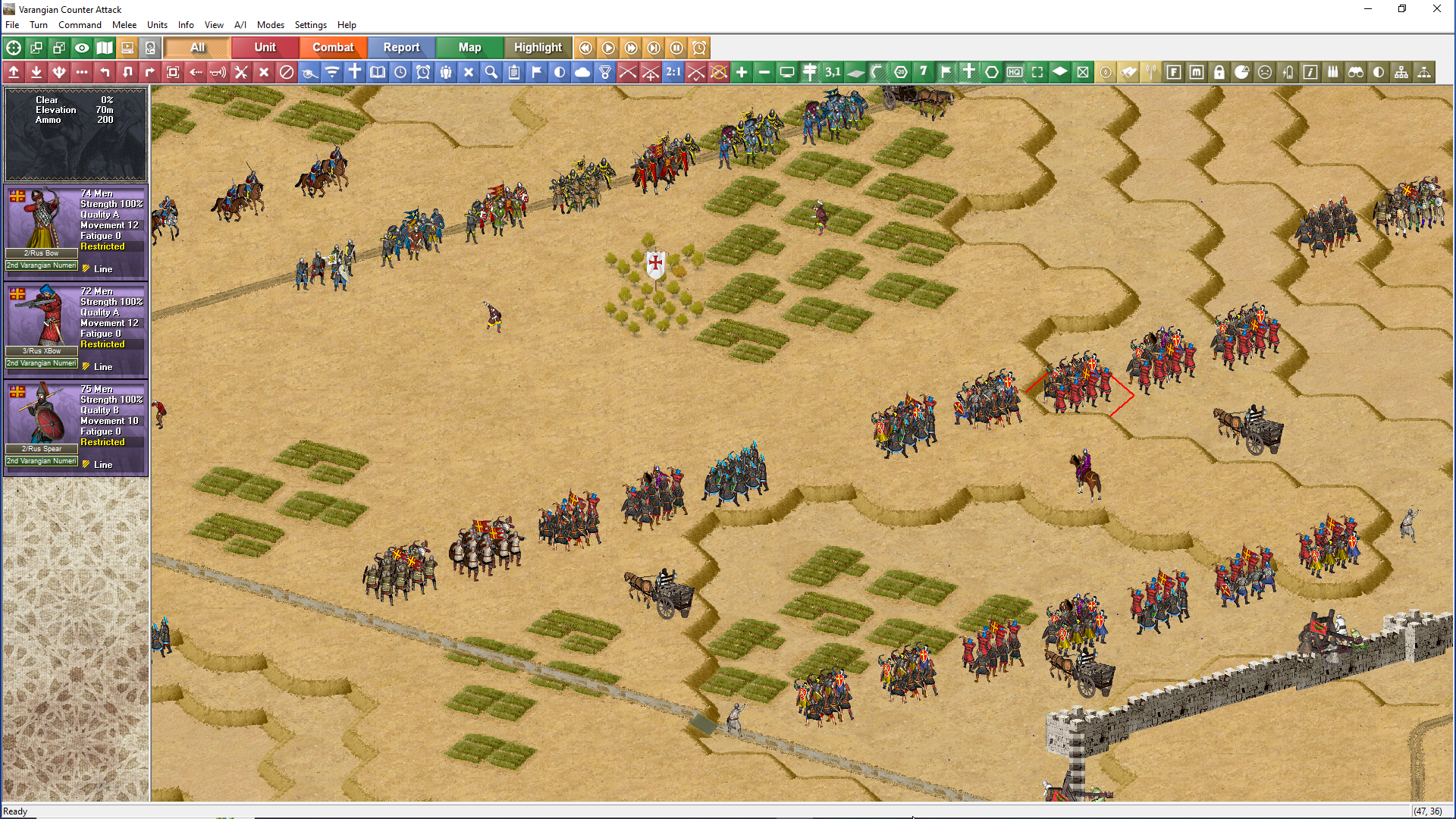
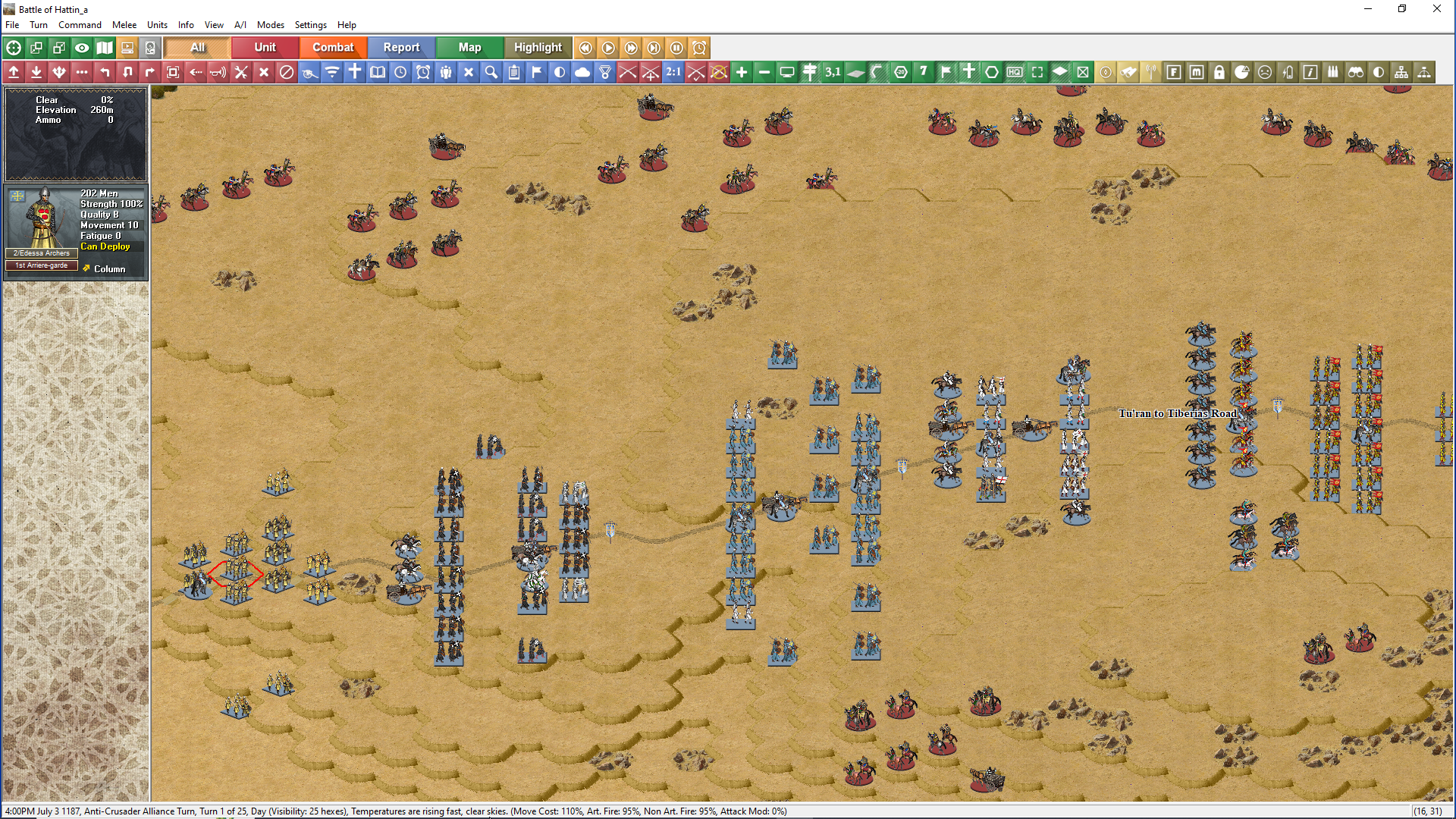
We will conclude today's announcement with some additional screenshots. As with the other titles in the Sword & Siege series Crusades: Book II presents three different 2D views and two 3D views to choose from. In 2D there are also three different symbol sets to select, to customize your view to your liking.
So what are you waiting for? Head on over to the Crusades: Book II product page to pick up a copy for yourself!


Happy to grab a new release! Love the S&S series and this makes another great addition. Can’t wait to try it out!
Will the new features be made available for the other titles with the Sword & Siege series?
Had the chance to do some playtesting of this before launch and the new scaling ladders are really cool, just make sure you have plenty of supporting archery fire laid on to suppress the defenders if you have to conduct an assault against a defended parapet. The much expanded Byzantine unit roster including their distinctive super heavy cavalry are also a real treat.
Leave a comment