Panzer Campaigns Donbas ’43 Released!
Hi All,
Wargame Design Studio is pleased to release Panzer Campaigns: Donbas ’43.
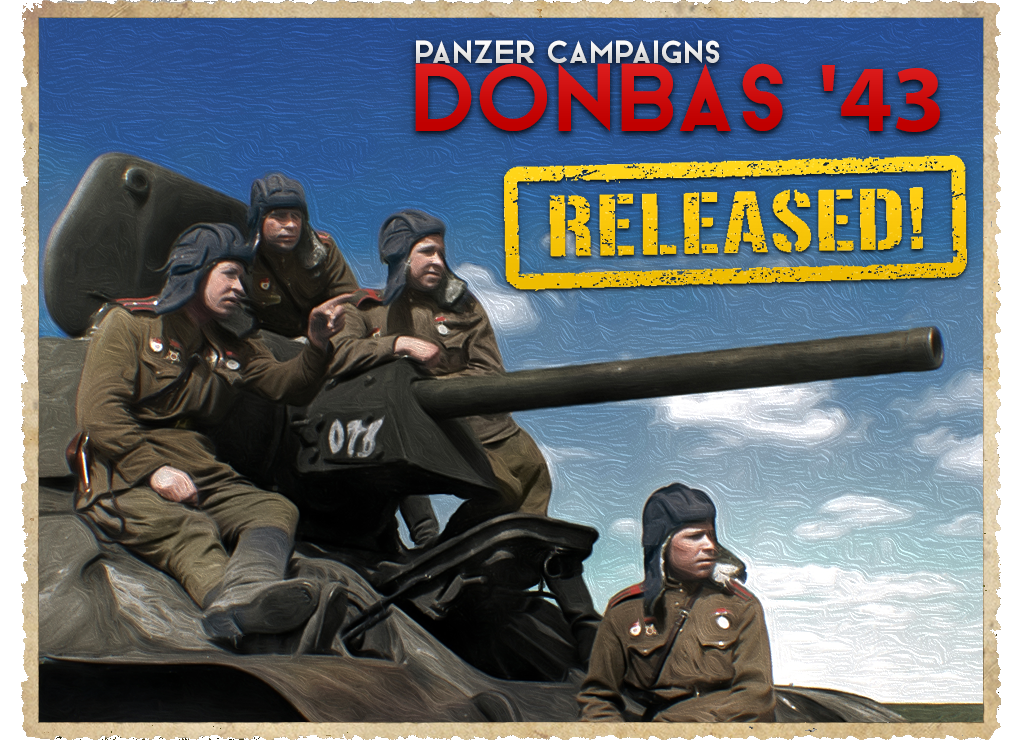
We are excited to publish this fourth title from Dani Asensio, the next volume in his 1943 series. This game continues the line established by the previously released Rumyantsev ’43, Orel ’43, and Smolensk ‘43 titles. Dani began work on Donbas ’43 at the same time as Rumyantsev ’43, which was published in 2022. The Izyum-Barvenkovo Offensive was originally meant to be part of that project, but discussions led Dani to focus on the Mius River battles, resulting in Donbas ’43. The game was nearly finished a year ago, but play-testing resources and other projects took priority.
The game map is part of the new work created beneath the existing Kharkov '43 map. We shared some images of the master map here. You will see that Donbas is a subset of this larger map, and you can expect it to be used in future titles. The Donbas ’43 map is 211,470 hexes in size, the same as France ’40, and only slightly smaller than Moscow ’42, which has 244,500 hexes.
With the experience of Dani’s previously released titles, we believe Donbas ’43 to be a worthy addition.
We are also posting the "The Operational Art of 1943" essay today, written by Thomas Wulfes. Thomas explains the changes and challenges faced by both sides in the summer of 1943. Click on the image below to read.

You can also read the blog post below, which ties together the various 1943 titles, to both understand the chronology and the strategic situation.

The following is the information that will be up on the WDS web page.
Overview
For the Germans, the Battle of Kursk was intended to be the main summer operation of 1943, aiming to slow the advancing Russians and regain the initiative. Launched on July 5, the initial victory quickly turned into a stalemate.
On July 13, Hitler summoned von Manstein and von Kluge, commanders of Army Group South and Center, to his Eastern Front headquarters, the Wolf's Lair in East Prussia. The Allied invasion of Sicily on the night of July 9–10, combined with the Soviet counteroffensive of Operation Kutuzov against the flank and rear of the northern side of the Kursk salient on July 12, along with attacks by strong Soviet forces at Prokhorovka on the same day, prompted Hitler to halt the offensive and redeploy forces to the Mediterranean theater. He ordered his generals to cancel Operation Citadel.
Kluge welcomed the decision, as he was already pulling units back to respond to Soviet attacks on his flank. Manstein urged continuing the offensive, believing he was close to a breakthrough. Hitler remained unmoved, worried about the Allied landings and the stability of his Italian allies. However, he did agree to Operation Roland, which aimed to destroy the Soviet reserves in the southern Kursk salient, caught between both the III Panzer Corps and II SS-Panzer Corps.
On July 17, the Soviet Southwestern and Southern Fronts launched a major offensive across the Mius and Donets Rivers against the southern flank of Army Group South, pressing against the 6th Army and 1st Panzer Army. In the early afternoon of July 17, Operation Roland concluded with orders for the II SS-Panzer Corps to begin withdrawing from the Prokhorovka sector back to Belgorod. The 4th Panzer Army and Army Detachment Kempf had already anticipated the order, starting to withdraw as early as the evening of July 16. Leibstandarte's tanks were split between Das Reich and Totenkopf, and the division was quickly moved to Italy, while Das Reich and Totenkopf were sent south to counter the new Soviet offensives.
In Donbas '43, as the commander of two Soviet Fronts—the Southwestern and Southern—you have multiple armies ready to defeat the proud but battered German Wehrmacht. As the German commander, you'll need to contend with limited panzer forces worn down by fighting at Kursk. Although Panzerarmee 1 is available, only the XXXX Panzer Corps has panzer divisions. Units from the 6th and 8th Armies are present, but their corps are mainly infantry defending the river lines. The Mius River defenses are strong, but both the quality and number of men available are likely to leave them vulnerable.
Lead Soviet spoiling attacks at Izyum and the Mius on July 17, while the Germans are still engaged at Kursk, or attempt a full multi-front offensive on August 16 to clear the Donbas. This will highlight how the Germans are discovering the challenges of ‘frontage versus depth’ and why the backhand blow tactics from four months earlier are no longer effective. The stage is set! All that's needed now is for you to launch one of the key campaigns of Summer 1943 on the Eastern Front!
Panzer Campaigns: Donbas ’43 covers the various operations along the Black Sea coast in July, August, and September 1943, including:
|
Izyum-Barvenkovo Offensive Operation |
July 17, 1943 |
|
Mius Front |
July 17, 1943 |
|
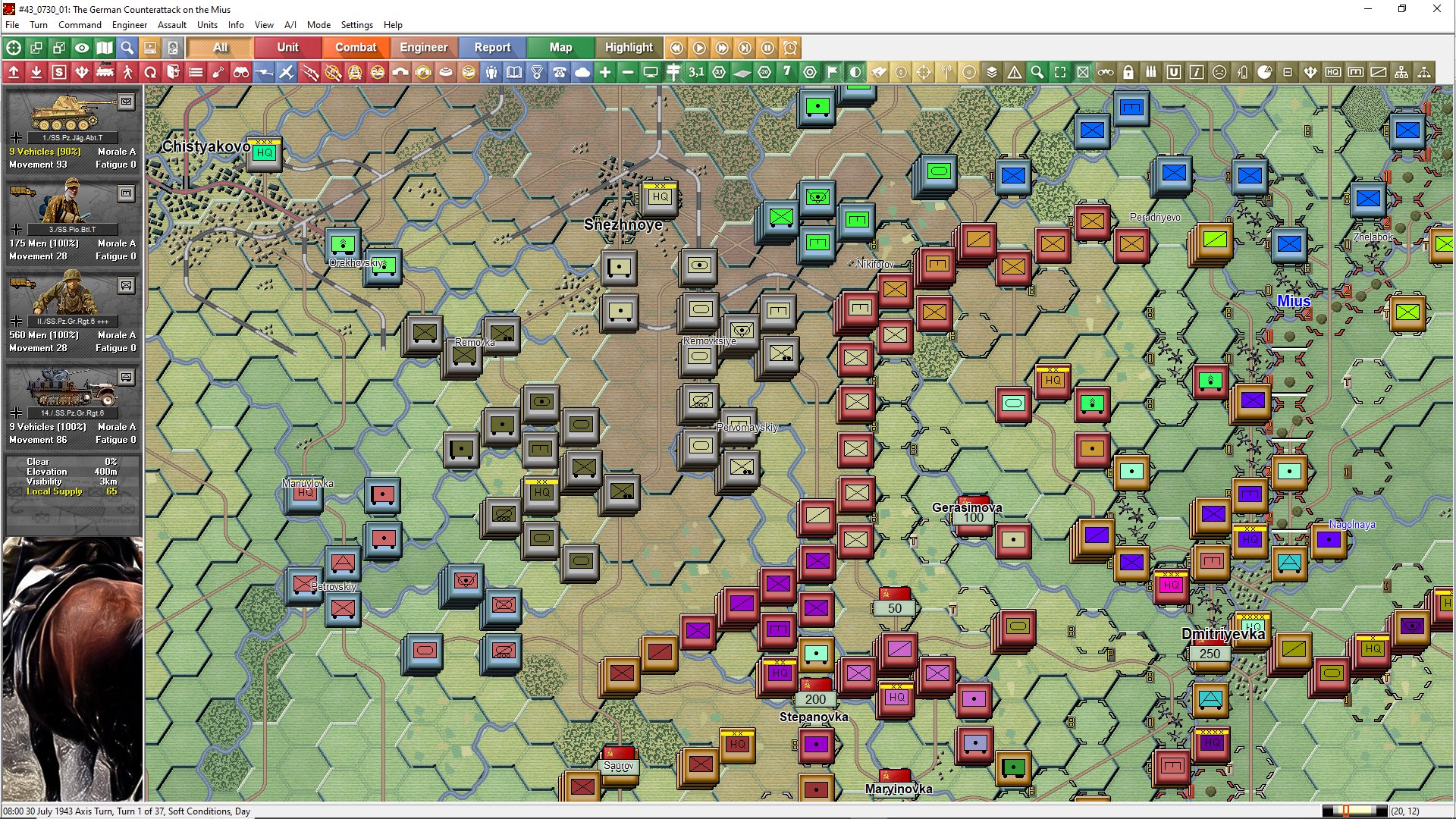
The German Counterattack on the Mius |
July 30, 1943 |
|
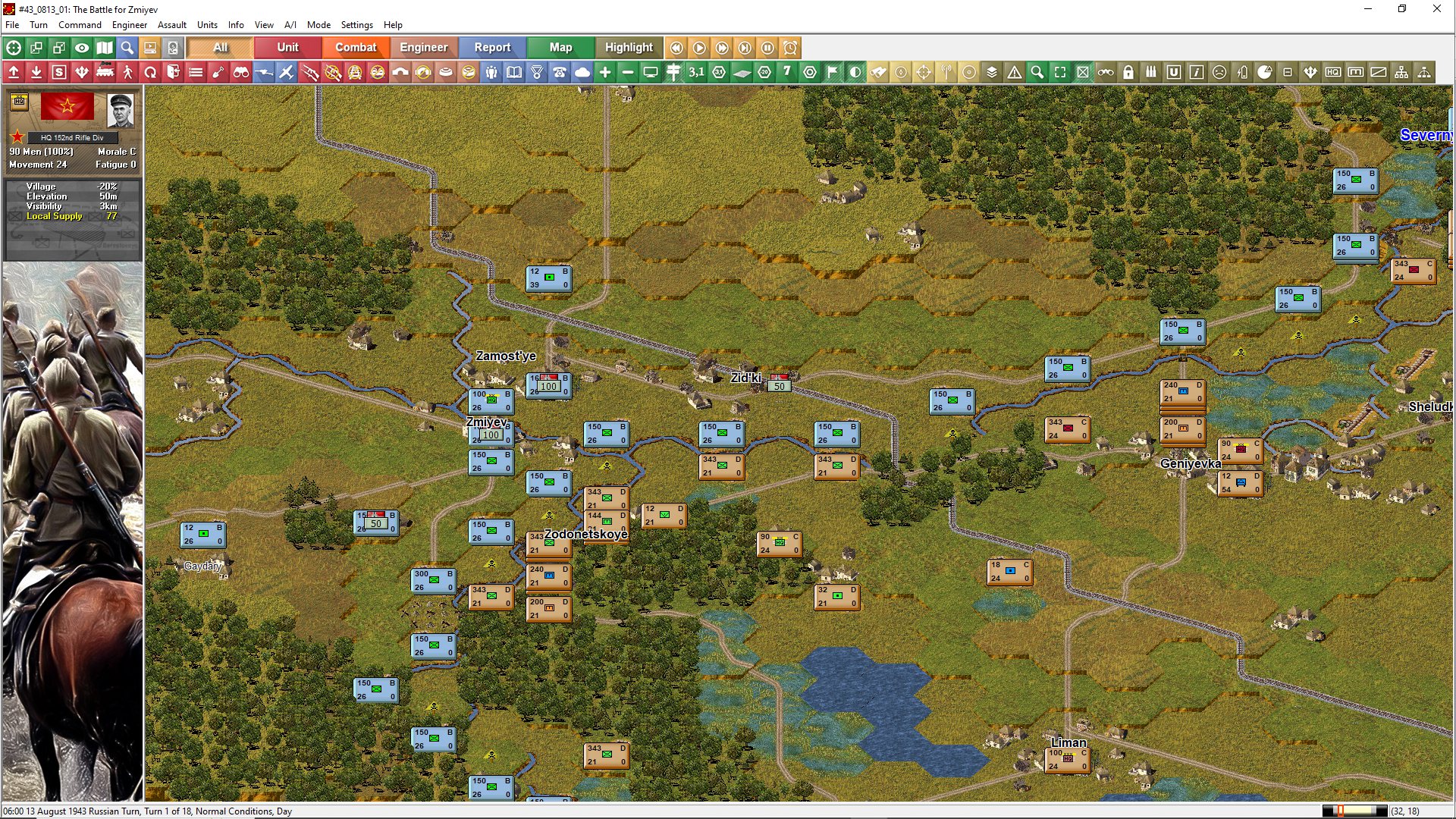
The Battle for Zmiyev |
August 13, 1943 |
|
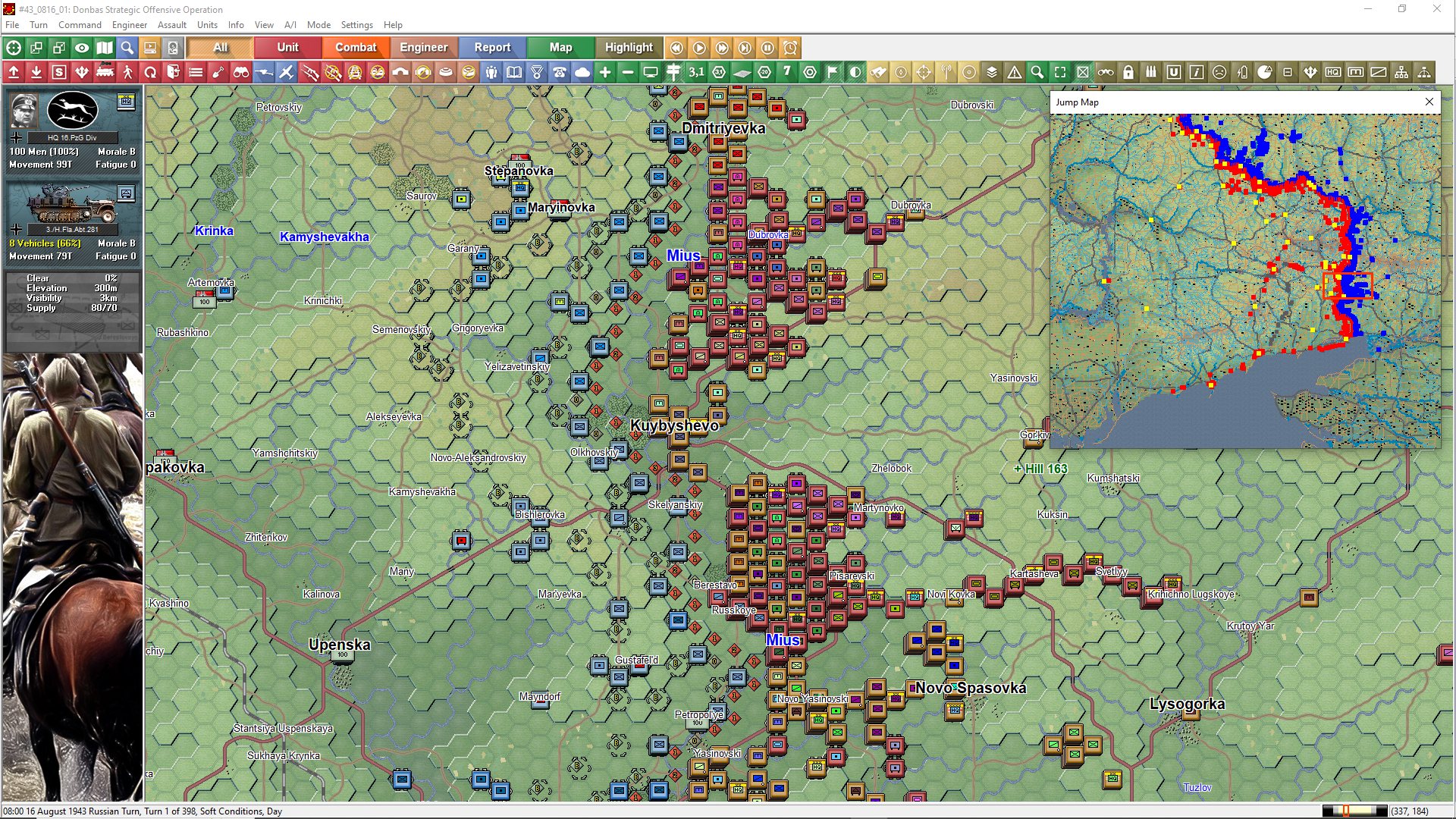
Donbas Strategic Offensive Operation |
August 16, 1943 |
|
The Southern Front Offensive, Battles on the Mius Front, and Taganrog |
August 18, 1943 |
|
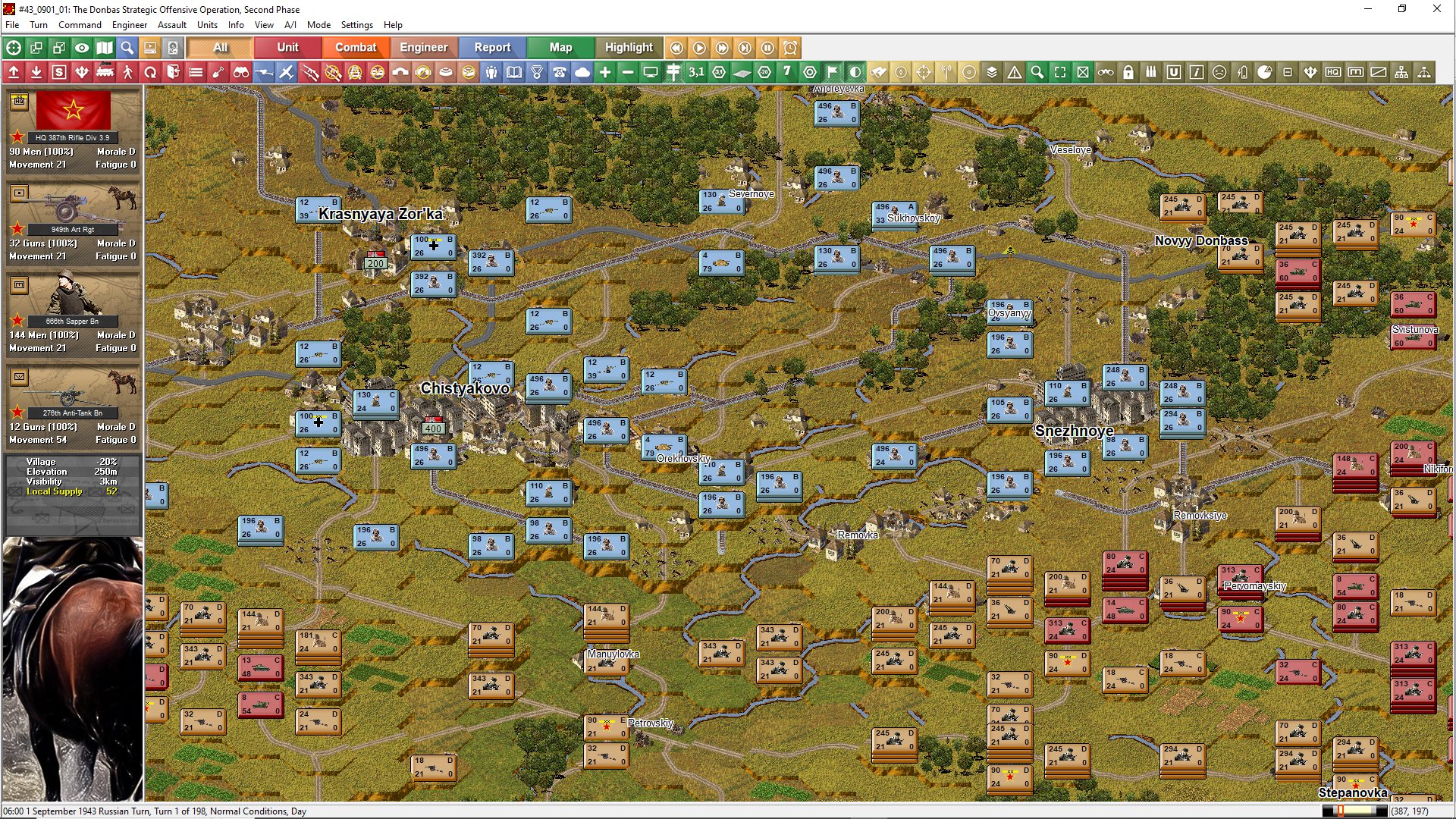
The Donbas Strategic Offensive Operation, Second Phase |
September 1, 1943 |
|
Counterattack at Znamenka |
September 9, 1943 |
There are 101 scenarios in total, including the operations mentioned above. The longest campaign scenario is 398 turns. Smaller scenarios, ranging from 8 to 198 turns, will provide players with plenty of challenges and battles of varying length and scale.
Features
Game features include:
Game scale is 1 hex = 1 km, 1 turn = 2 hours, with battalion and company size units.
101 Scenarios – covering all sizes and situations, including specialized versions for both head-to-head play and vs. the computer AI.
The master map (211,470 hexes) covers the entire area from the Dnepr River in the west to Izyum, Voroshilovgrad, Stalino, and Rostov-Na-Donu in the east.
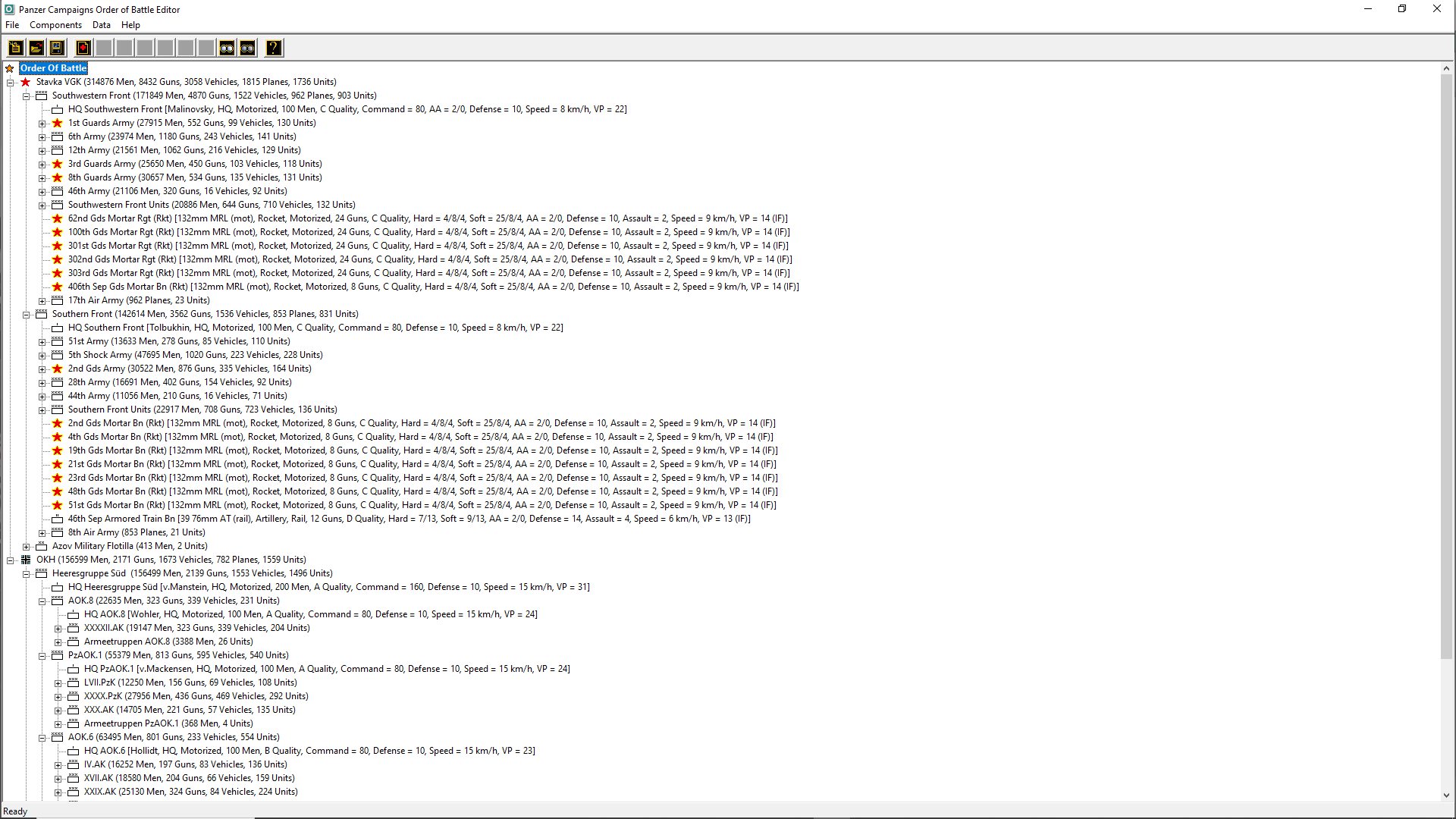
The order of battle file covers the Axis and Allied forces that participated in the campaign, with additional formations included for hypothetical scenarios.
Order-of-Battle, Parameter Data, and Scenario Editors, which allow players to customize the game.
The sub-map feature allows the main map to be subdivided into smaller segments for custom scenario creation.
Design notes that cover or include the production of the game, campaign notes, and sources the design team used to produce this simulation game.
Donbas '43 provides multiple play options, including play against the computer AI, Play by E-mail (PBEM), LAN & Internet "live" play, and two-player hot seat.
This title is the first game released with our latest 4.05.4 code. You can read more about what has changed below.
Donbas ‘43 Release 4.05.4 Changelog
Initial Release
Bug Fixes
· Bug: Do not apply Condition-related costs to units crossing Heavy bridges.
· Bug: Fixed support for Phased Play against the AI.
· Bug: Only check adjacent hexes for obstacle/WMD spotting.
· Bug: Unit Card fix for speed / MP display for 0 speed units.
· Bug: Fix for AI internal order generation, including AI pathing.
· Bug: Fixes to mitigate the AI leaving units in Travel Mode close to the frontline.
· Bug: Remove VPs from losses from the Strength Dialog.
· Bug: Fix infinite loop on exit objectives.
· Bug: Fix to prevent AI units from being left in Travel or Rail Mode when spotted.
· Bug: Fix when checking for the presence of the Notes and Changelog PDF files.
· Bug: Restored this fix from 4.05.2: Under the Optional Amphibious Rules, units now make use of existing bridges correctly.
Enhancements
· Scenario Editor - Warn if motorized units are in difficult terrain (swamp & marsh) with no paths out.
· Display Units is now a three-way toggle: All units on, units off, and fortifications on, units and fortifications off.
· Range ring drawing + shading ported from Panzer Battles.
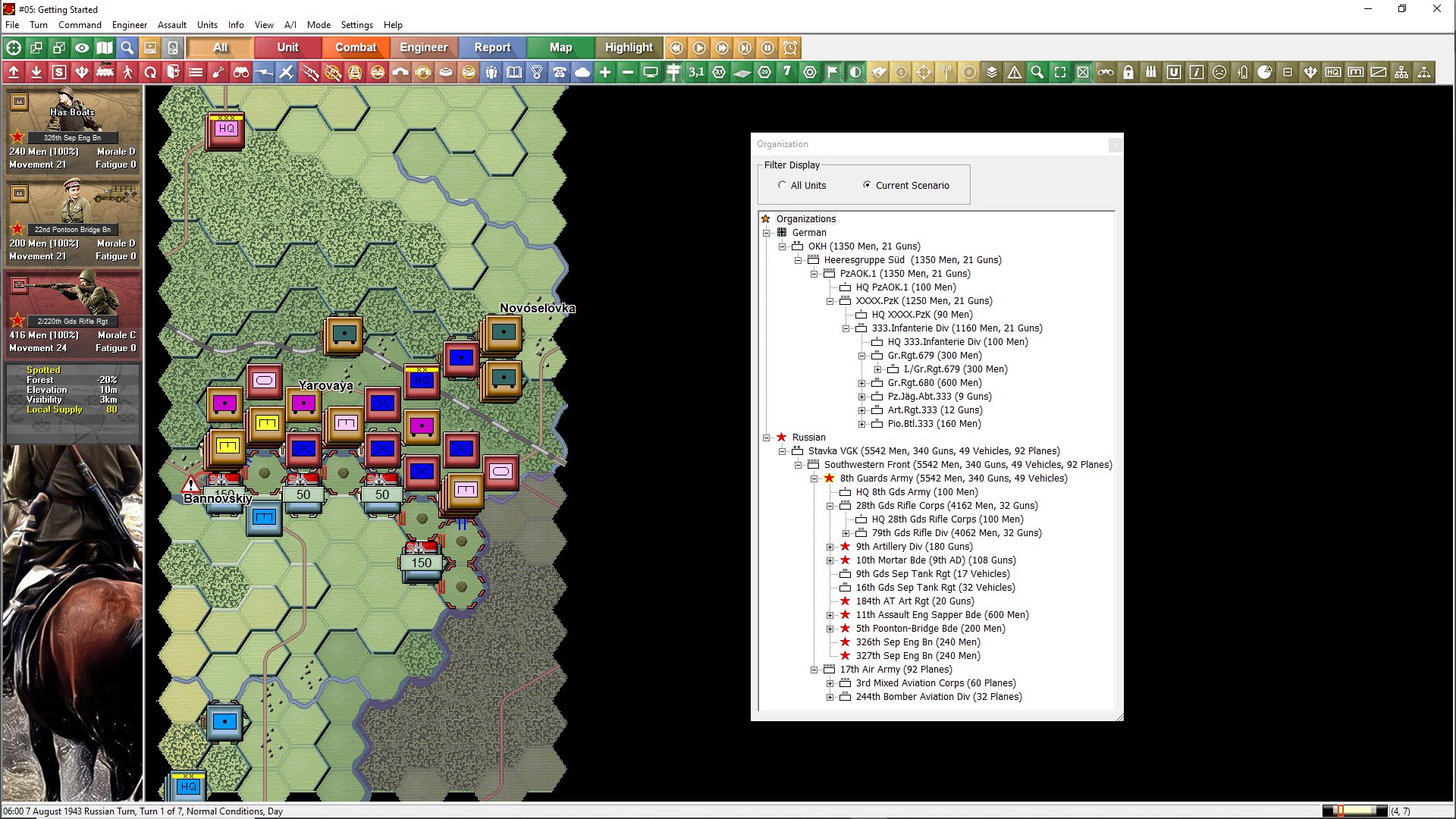
· The Show Organization Dialog includes a filter to only include units in the current scenario.
· A* Pathing enhancement to treat an enemy-adjacent hex as a "bad" hex for HQs and artillery.
· Reworked AI logic for all unit types for movement to contact.
· New entry in the *.ai file for Combat Odds Factor. The default value is 1.0. Higher values will increase the likelihood of assaults. Lower values will reduce the chance.
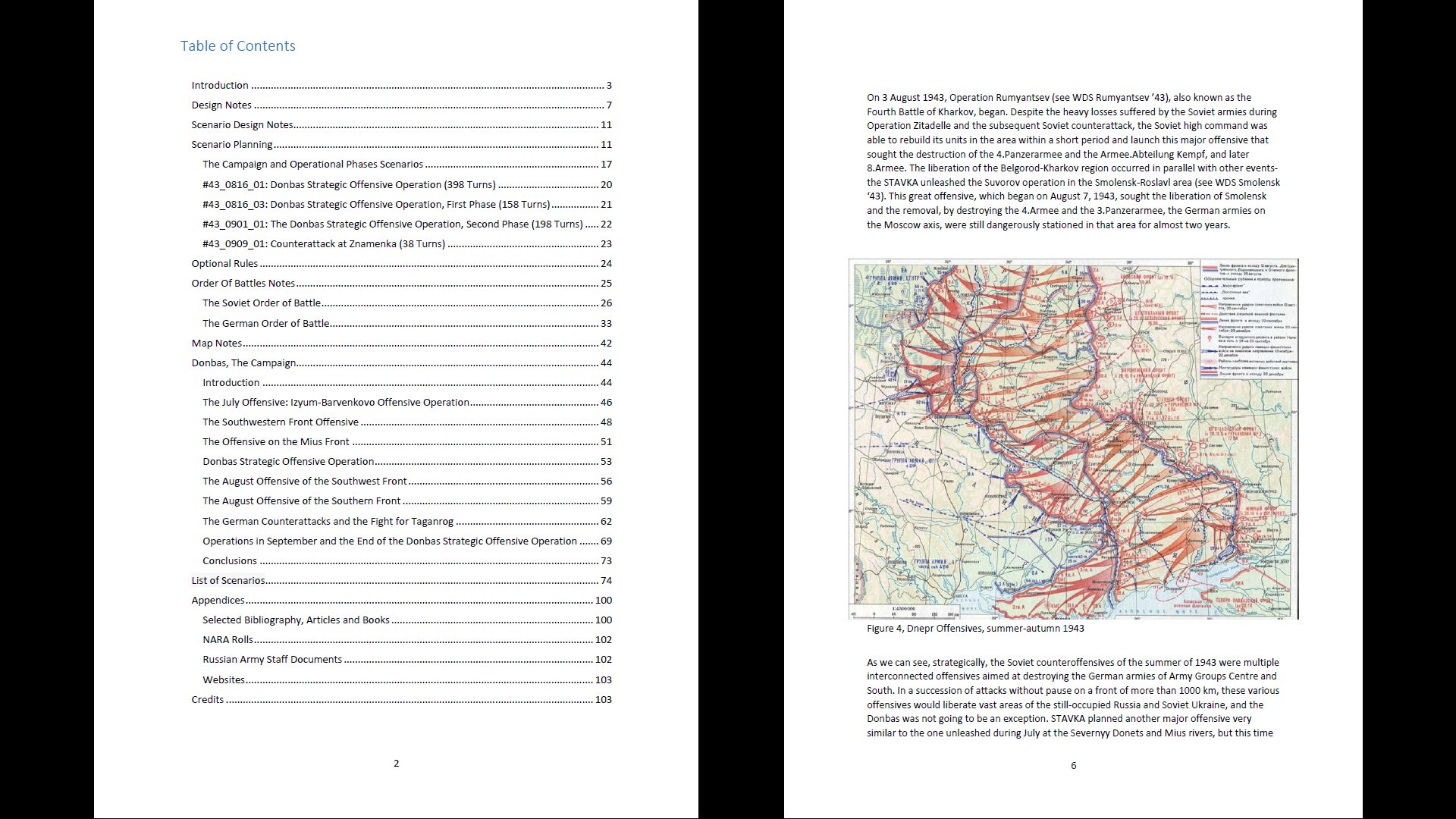
Dani has written some extensive Design Notes. You can click each image below to access the notes:

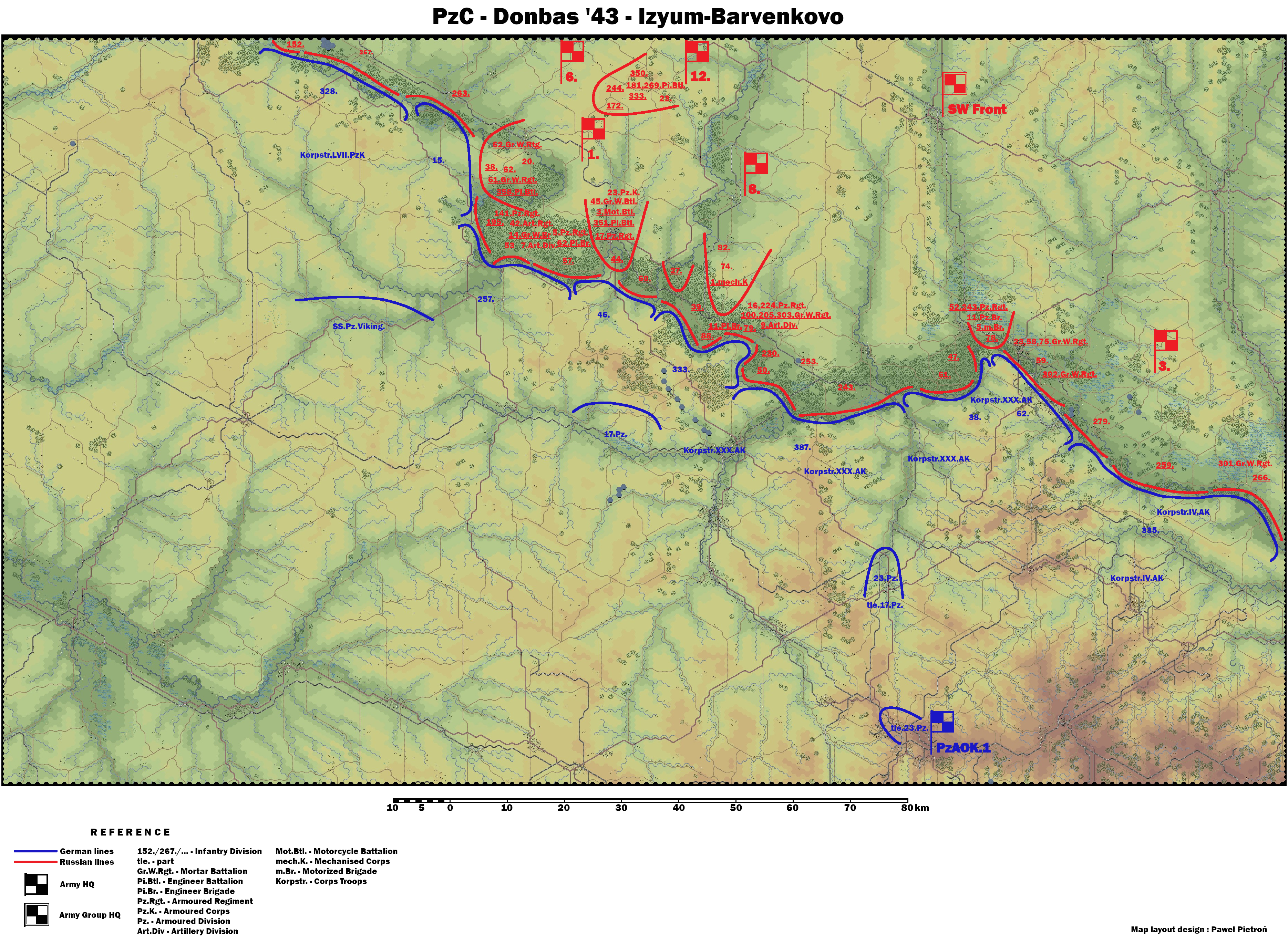
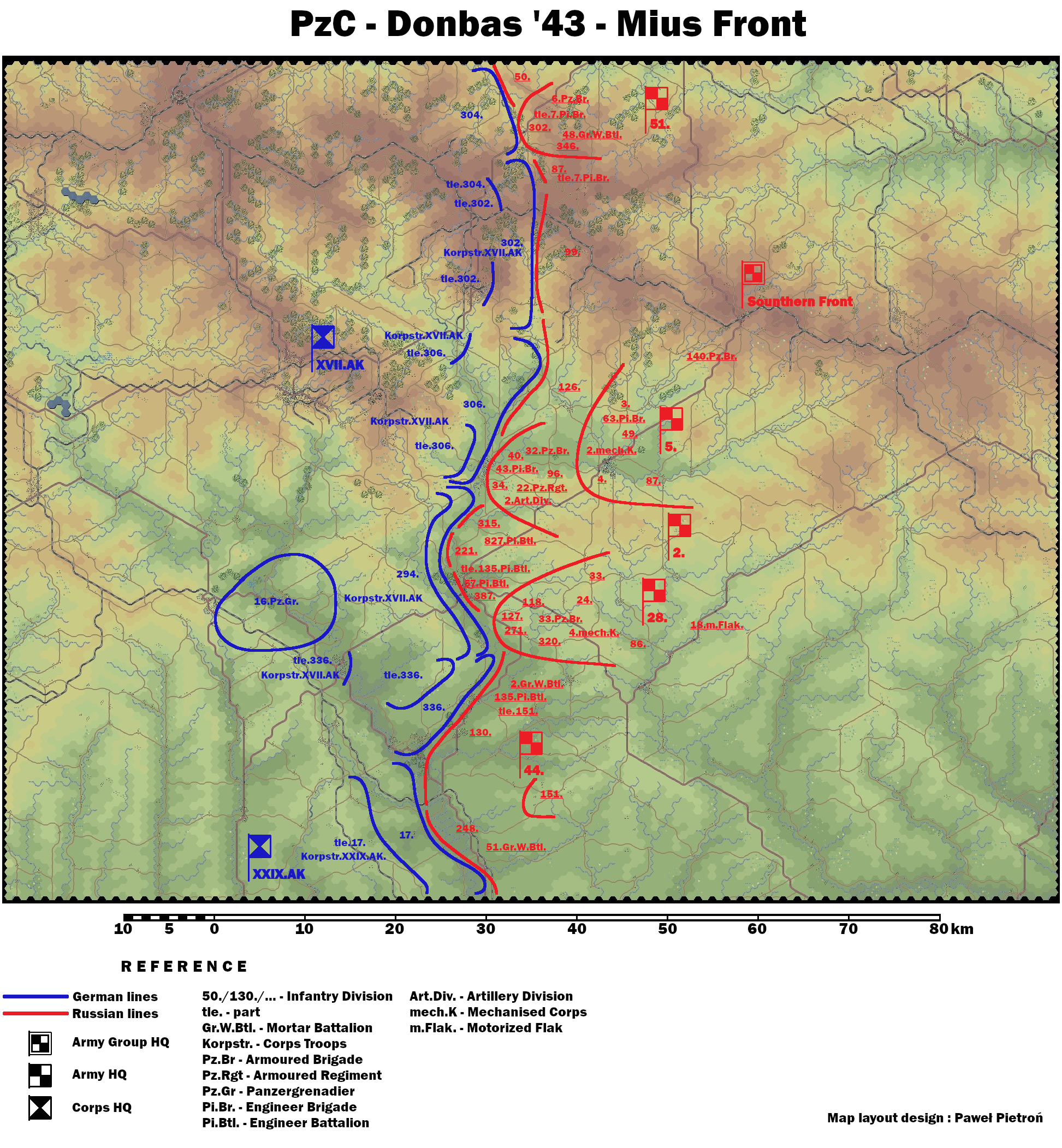
Paweł Pietroń very kindly created the situation maps for each of the major campaigns. You can see and download these by clicking on the image of each below.
Thomas’s essay is also available in the image below.

For those who want to understand more about the campaign we are simulating, here are some additional resources.
A great hour-plus documentary from Shadows of Conflict:
This is a 55-minute documentary from The Forgotten War:
And a favorite from World War Two:
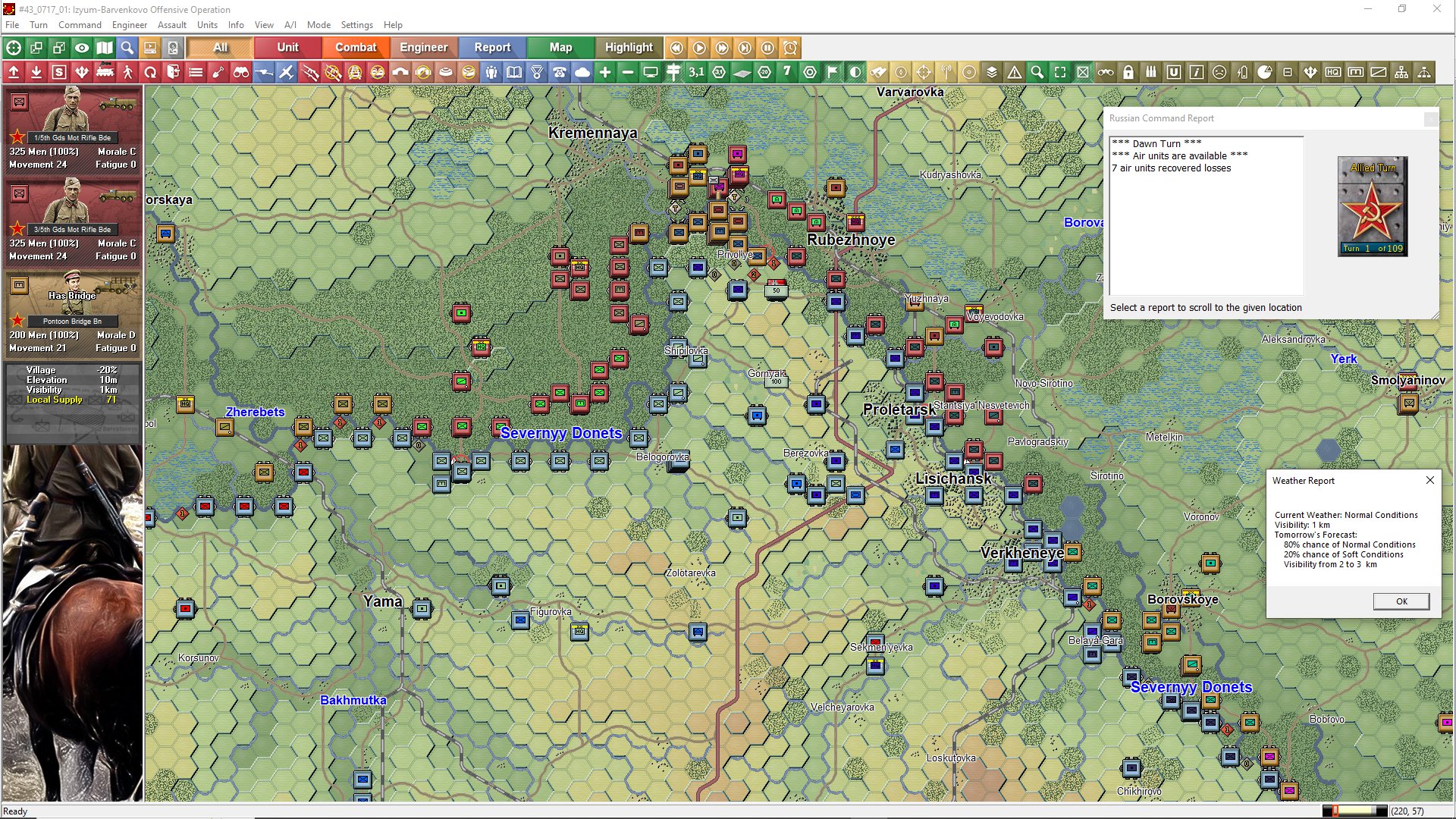
Here are some screenshots from the game:
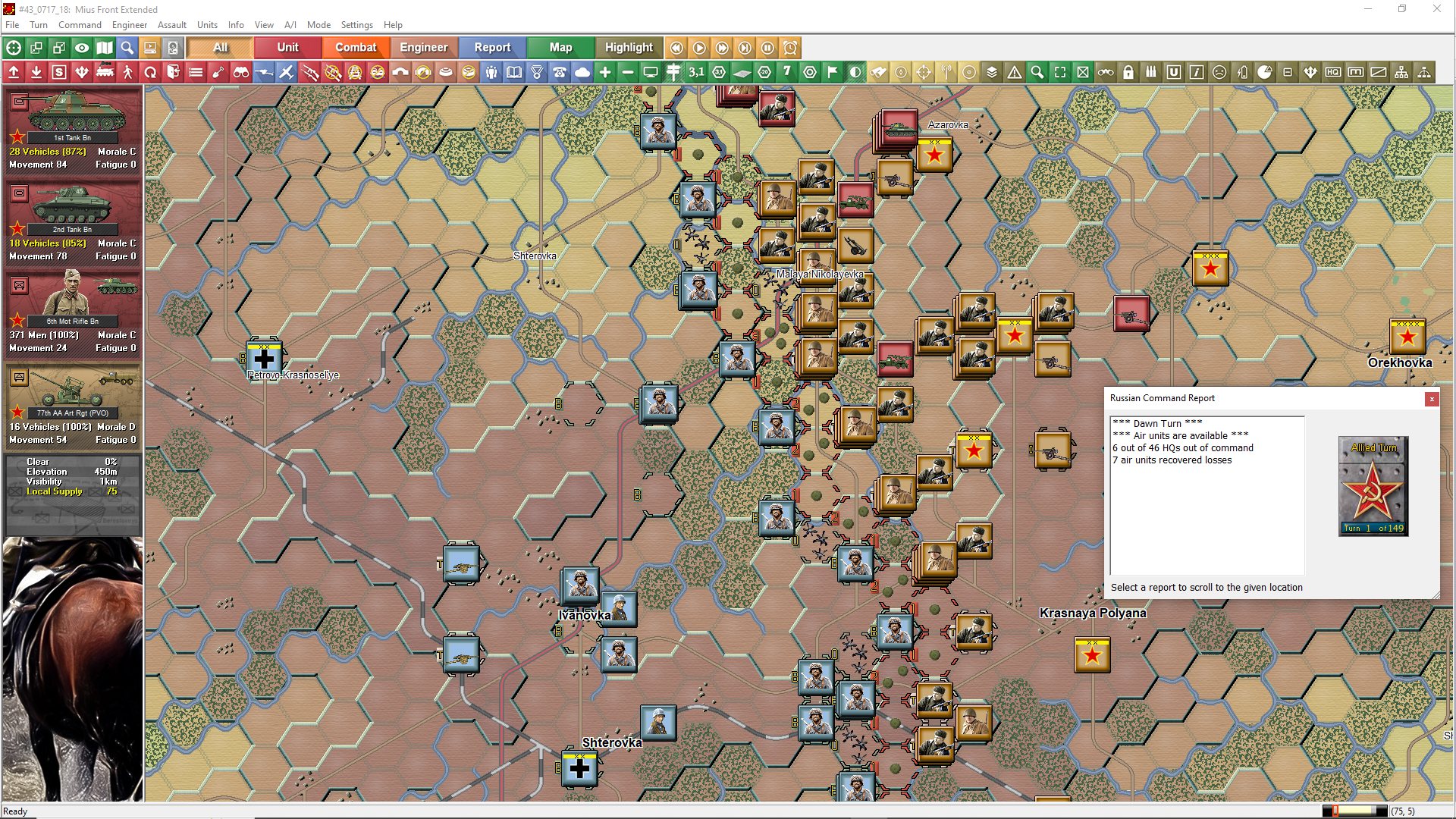
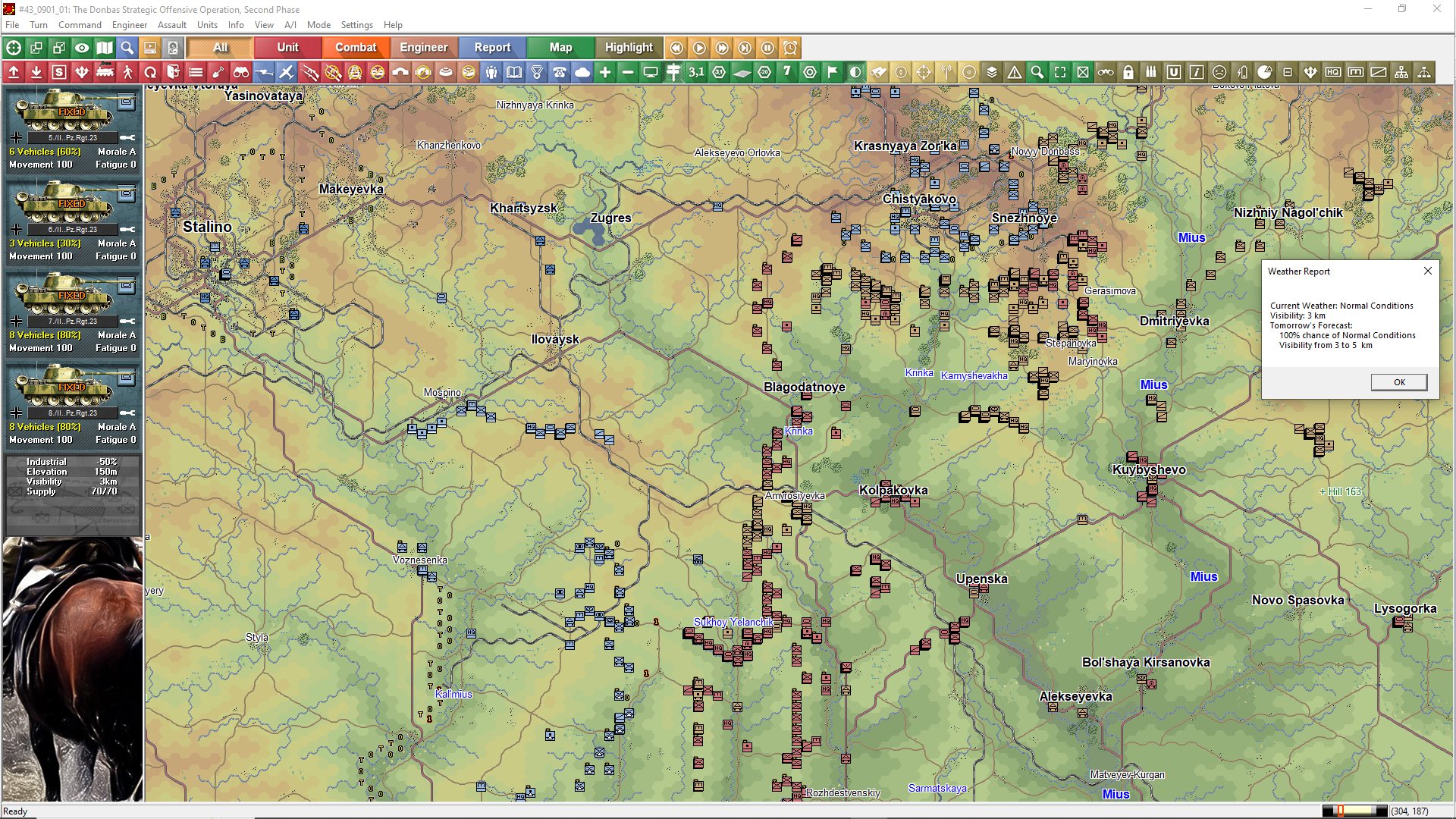
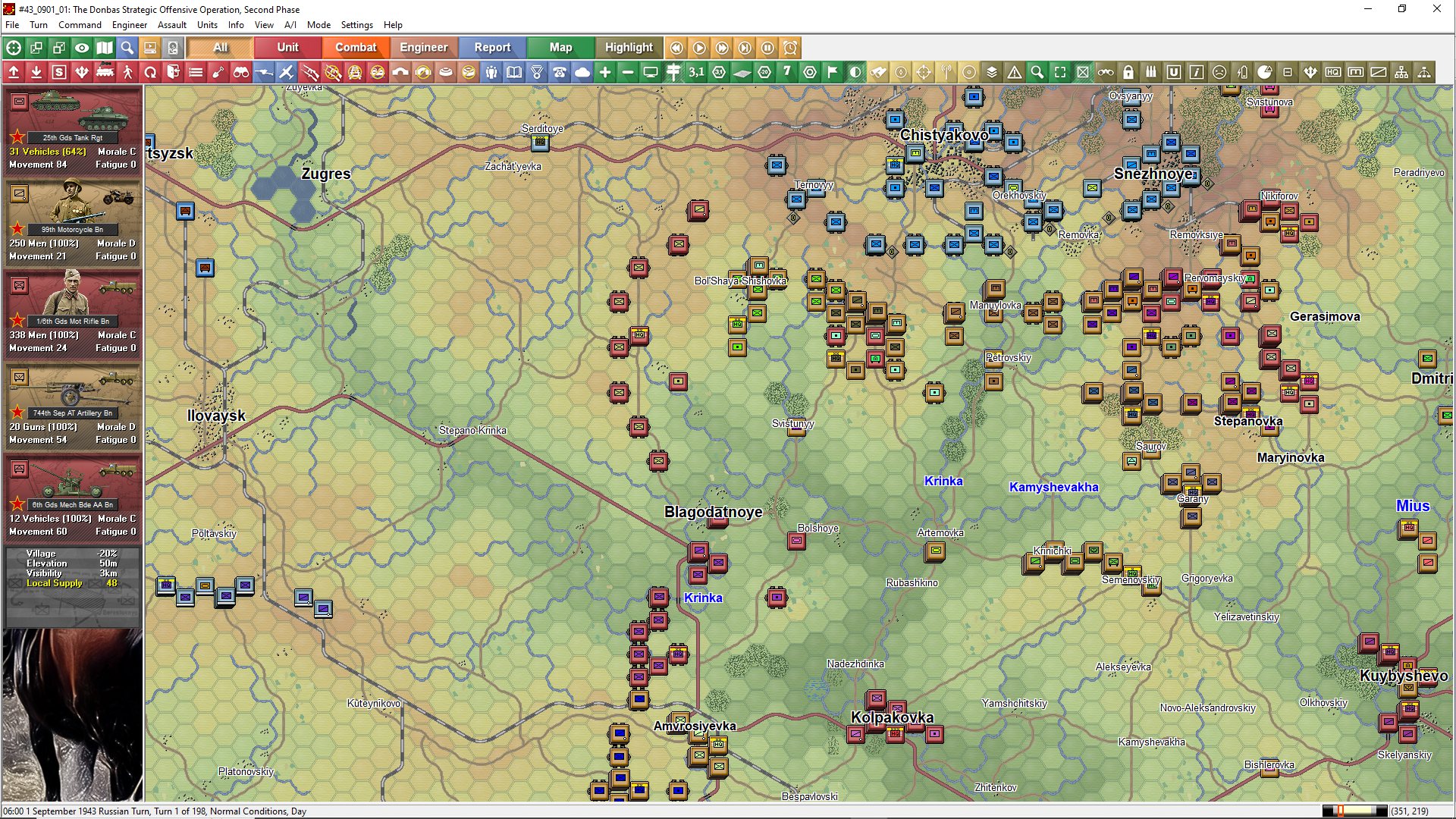
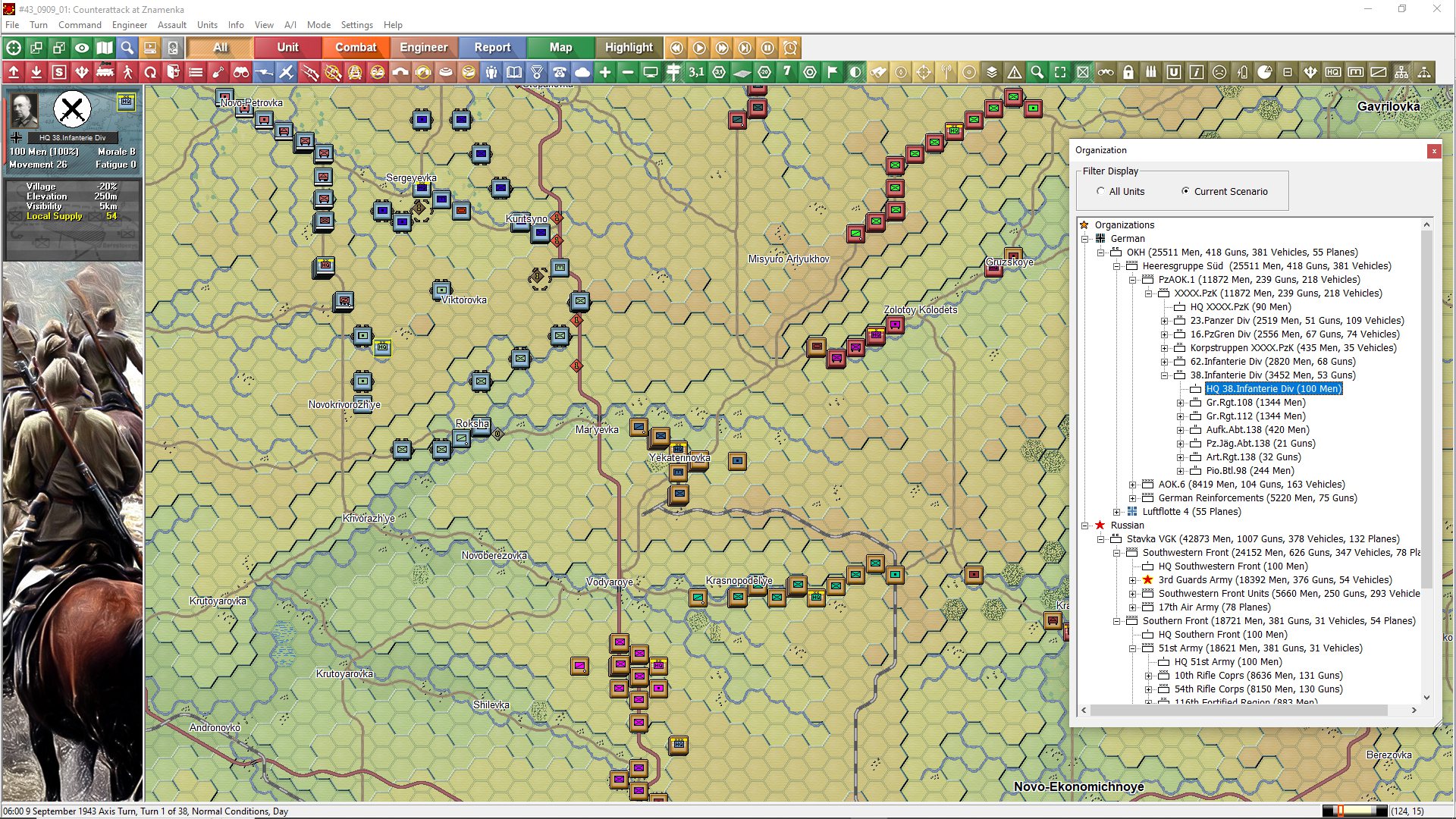
We hope you enjoy the latest Panzer Campaigns title, and a big thank you to Dani and all in the team again!
You can get the game now from Wargame Design Studio on this link: Donbas ’43 Product Page


Thanks a lot for the clarification. That’s genuinely great to hear. Knowing that projects from other years of the Eastern Front are already underway is very encouraging, and I’m really looking forward to seeing what comes next. I appreciate the transparency and the work you and the team put into these titles. Gracias en particular, Dani, y enhorabuena por este nuevo título.
Hi Juankar,
Thanks for the congratulations. I hope you and the rest of the community enjoy Donbas ’43.
Regarding new Panzer Campaigns in other years of the war, I can confirm that there are projects currently underway covering those periods of the Eastern Front. I’m currently working on one from a year other than 1943.
So be patient; I’m sure your wishes will come true.
Dani
It is always a pleasure to see a new Panzer Campaigns title announced, and my sincere thanks to the entire WDS team for their continued dedication. WDS consistently delivers high‑quality operational wargames, and that craftsmanship deserves real recognition. Still, the catalogue shows a noticeable imbalance: 1943 on the Eastern Front is richly represented, while major campaigns remain untouched. Barbarossa, arguably the defining setting for an operational engine, is still absent, as are the Winter War, most of the Pacific, and the Spanish Civil War. The Pacific alone offers ideal candidates for Panzer Campaigns, such as the Philippines 1941–42, Malaya, Guadalcanal/Solomons, Khalkhin Gol, Manchuria, the Sino‑Japanese War, or the Burma campaigns. The existing titles are excellent, but the gaps are becoming increasingly prominent. In that sense, Poland ’39 was a major step forward. Not a criticism, just an idea that comes to mind recurrently.
Another great success from WDS.
Only games I buy knowing with 100% confidence I will get more than my money’s worth of enjoyment.
Leave a comment